
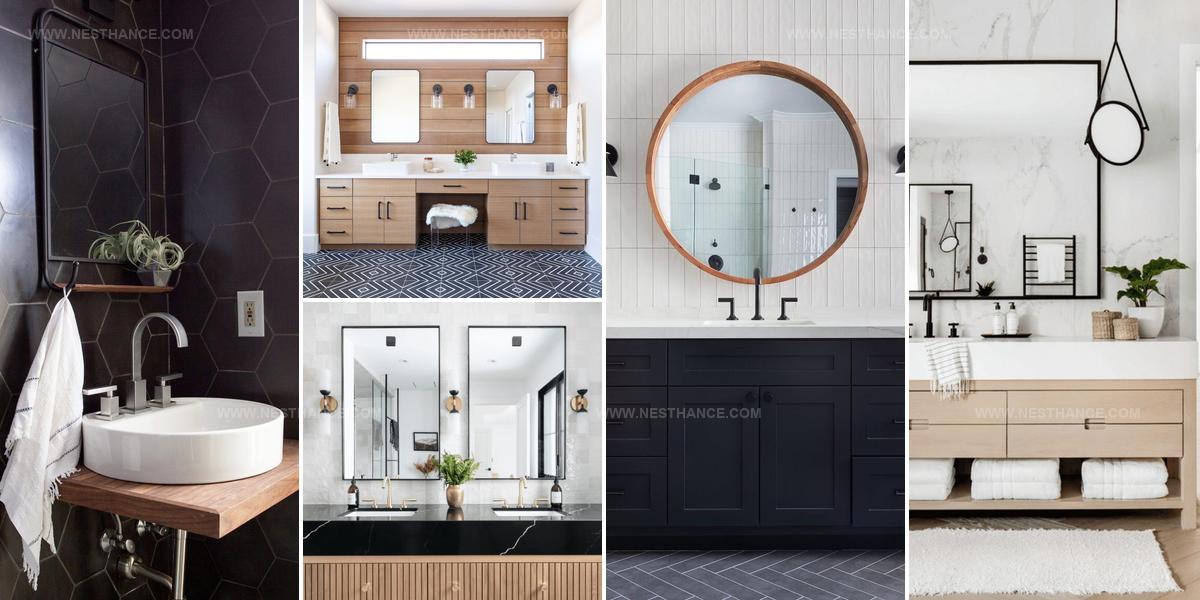
23 Creative Ways to Style Your Bathroom Backsplash Decor Ideas

Bathroom backsplash decor ideas open up a wonderful world of design opportunities that can completely refresh one of the most important spaces in any home.
The area behind sinks and vanities often gets overlooked, yet it holds tremendous potential for adding personality and style to what might otherwise feel like a purely functional room.
Whether you prefer classic subway tiles, dramatic natural stone, or something more unexpected like patterned cement tiles or shimmering glass mosaics, the right backsplash becomes a focal point that ties together all the other elements in the space.
Bathrooms deserve the same thoughtful attention to detail as kitchens, and a well-chosen backsplash protects walls from water damage while making a statement about who you are and how you want to feel when you step into the room each morning.
The beauty of backsplash design lies in how it balances practical considerations with aesthetic vision, creating something both durable and delightful.
Geometric Mirror Guides Kitchen Tiles
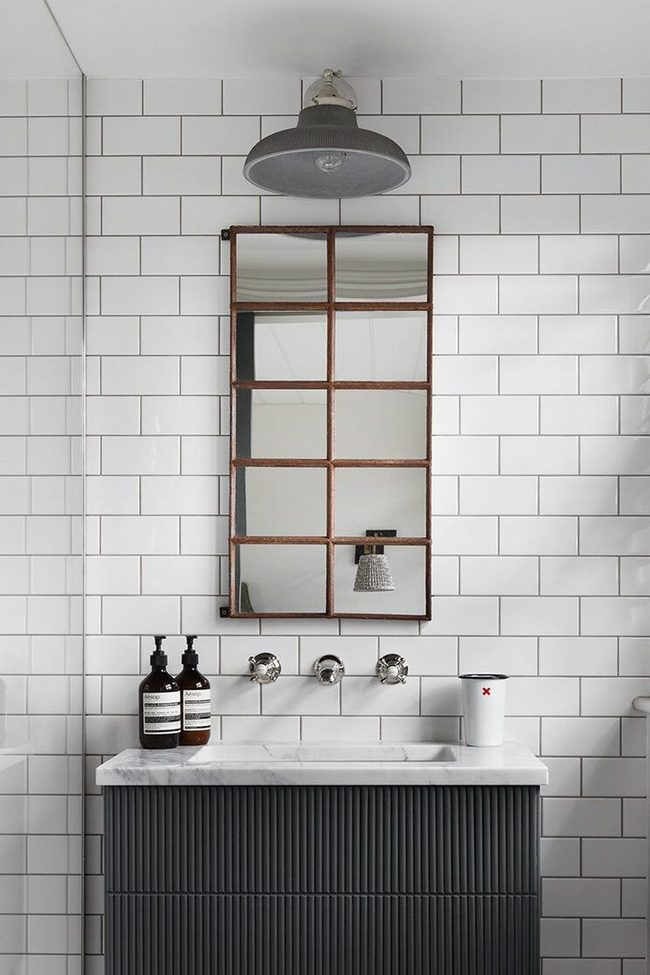
If you've found a mirror that really stands out, let the whole space grow from there and especially think about your backsplash first.
Dark grout can repeat the lines you see in a geometric mirror, while light tiles can bounce back the same brightness your mirror shows.
When your mirror has lots of shapes and colors mixed together, your tile choices can answer to those same elements too.
Building from your mirror outward means you get a room where things feel connected rather than random.
We love this approach because it keeps everything honest and grounded in one strong piece.
You don't need to hunt for lots of separate ideas when one good mirror can guide all your other choices.
Try pulling color samples next to your mirror and see which tiles actually feel right with it.
Integrated Backsplash Kitchen Sinks
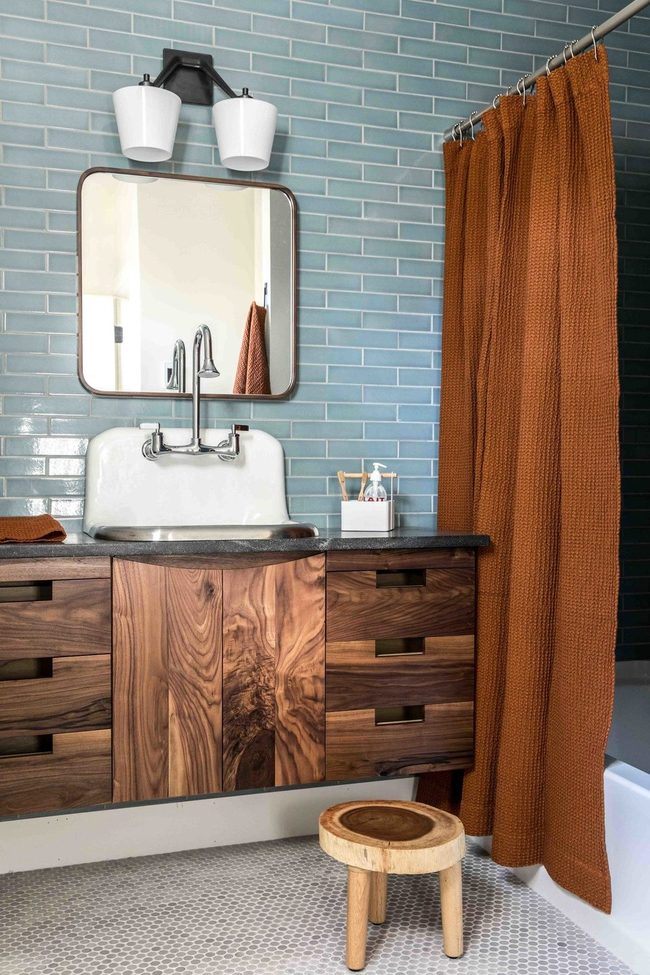
If you want a striking backsplash without the hassle of tiling or painting walls, consider getting a sink that has one built right in.
Many sinks on the market come with integrated backsplashes, which means you skip the labor-intensive installation process entirely.
We know that designing a bold backsplash can be exciting, though it often requires significant time and effort.
Built-in backsplash sinks give you a simple solution that still delivers visual interest to your kitchen.
You get the style you're after without needing to hire help or spend weeks on a renovation project.
This option works well if you want something low-stress that handles both function and design at once.
The best part is that you can swap out your sink and instantly refresh how your space looks.
White Backsplash Balances Bold Floors
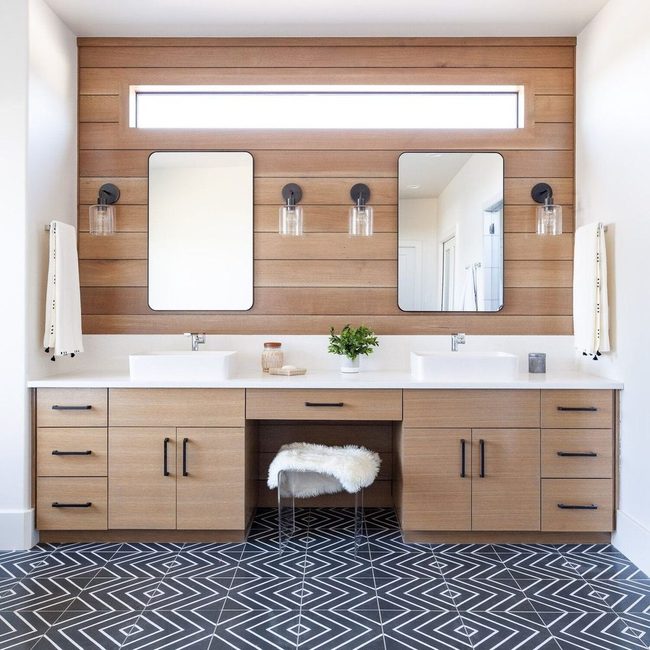
When your bathroom already has multiple design elements competing for attention, a simple backsplash can help balance things out and keep the space from feeling too busy.
Pairing a plain white backsplash with a wood-lined wall and eye-catching floor tiles means you get contrast without adding more visual noise.
White backsplashes might feel plain on their own in an all-white room, but positioning one next to natural wood tones and bold floor patterns actually brings a sense of calm and restraint to your design.
Striated Marble Meets Subway Tiles
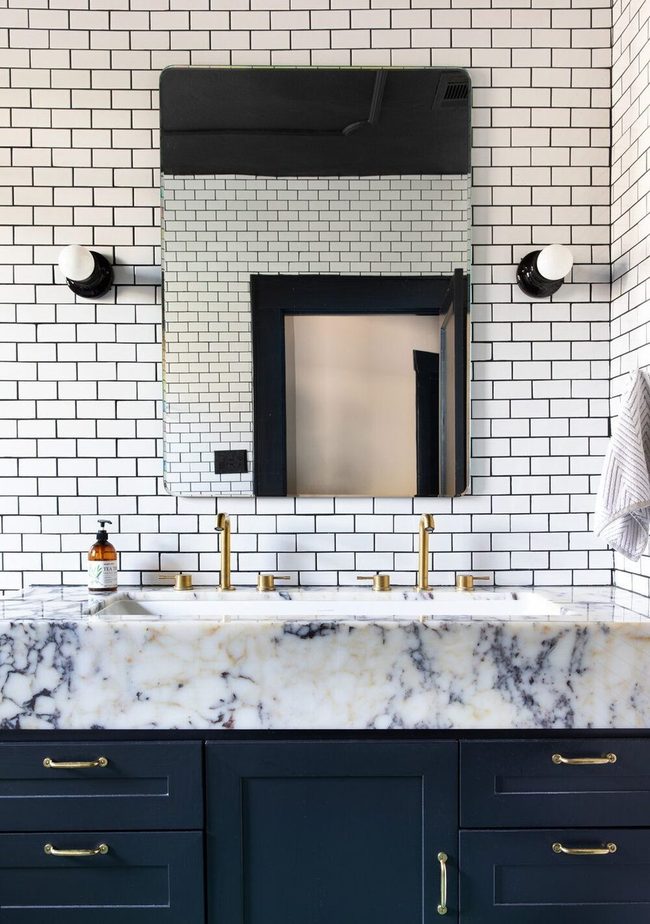
Bold countertops don't mean you have to play it safe with a plain backsplash, and mixing textures can actually work in your favor.
Striated marble counters paired with subway tiles creates visual interest without feeling chaotic.
Black grout connecting those tiles echoes the movement in your marble and ties the two materials together beautifully.
You get contrast between the smooth tiles and patterned stone, which keeps the space from looking flat or boring.
The darker grout lines also add depth and definition to your backsplash area.
Combining textures this way gives you both variety and a sense of balance, so nothing competes for attention too loudly.
This approach shows that mixing materials doesn't have to feel messy when you choose pieces that speak the same design language.
Vertical Tiles Transform The Ordinary
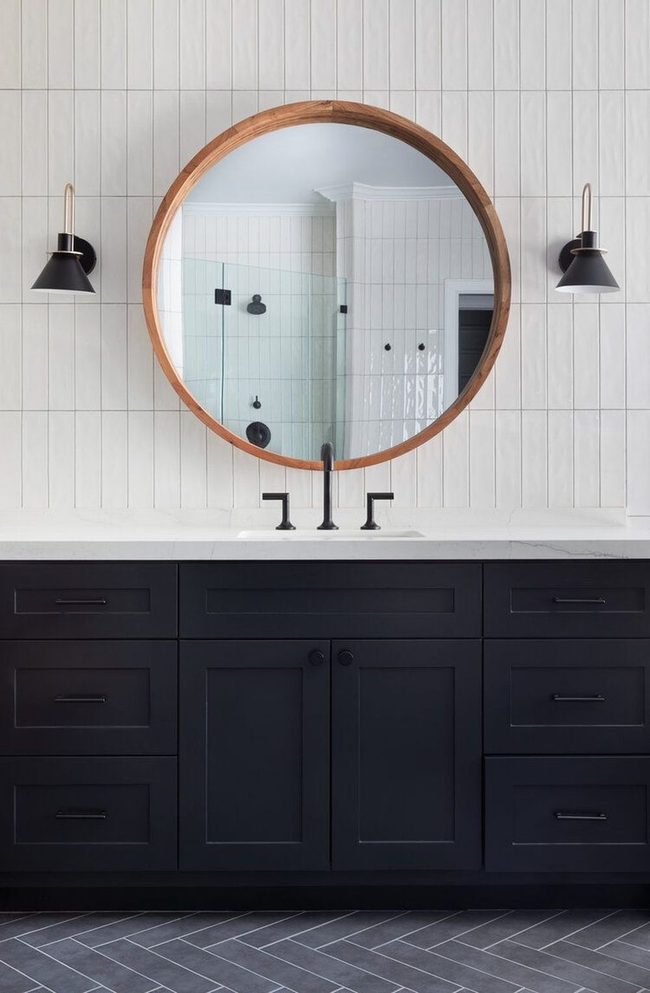
Laying tiles on their side completely changes how a room looks, and this simple switch is one of the easiest ways to shake things up visually if you want something different from what everyone else does.
Most rectangular tiles are installed horizontally, with the long edge running left to right and the short edge going top to bottom, which is the standard method we've all grown used to seeing.
Because this setup is so common, flipping your tiles vertically creates an instant wow factor that stands out in any space.
Even plain white tiles take on a fresh personality when you rotate them this way.
You don't need fancy or colorful materials to make this work either.
Many people stick with the horizontal layout because it feels safe and familiar, but switching it up is a quick decision that pays off.
It's one of those small moves that proves how much orientation matters in design.
The best part is that you can apply this idea to almost any tile project without extra cost or hassle.
Ceiling Mirrors Above Bay Window
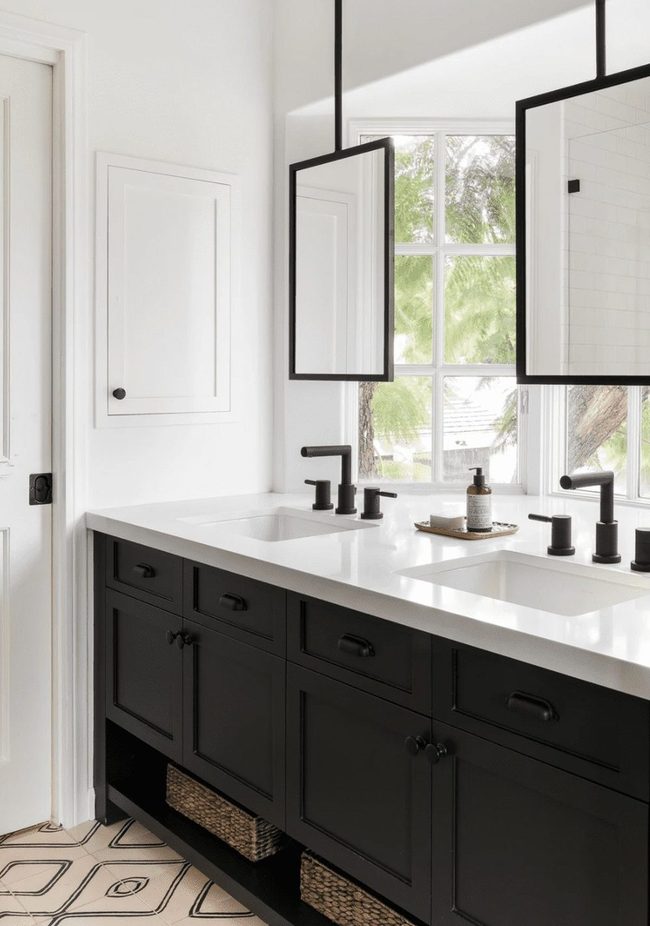
Bathrooms often follow familiar patterns, though some spaces break that mold with unique challenges like tight square footage or awkward layouts-and we've all seen one with a massive bay window that defies standard design rules.
Rather than hiding what makes your bathroom different, I'd suggest working with these quirks to your advantage.
One clever solution involves hanging mirrors from your ceiling to amplify light and space while letting that beautiful window do double duty as your backsplash.
You don't need to force traditional design choices onto an unconventional room.
Sometimes the best approach is leaning into what you already have and finding fresh ways to use it.
These unexpected features can actually become your bathroom's standout elements when you shift how you think about them.
Full Wall Tile Coverage
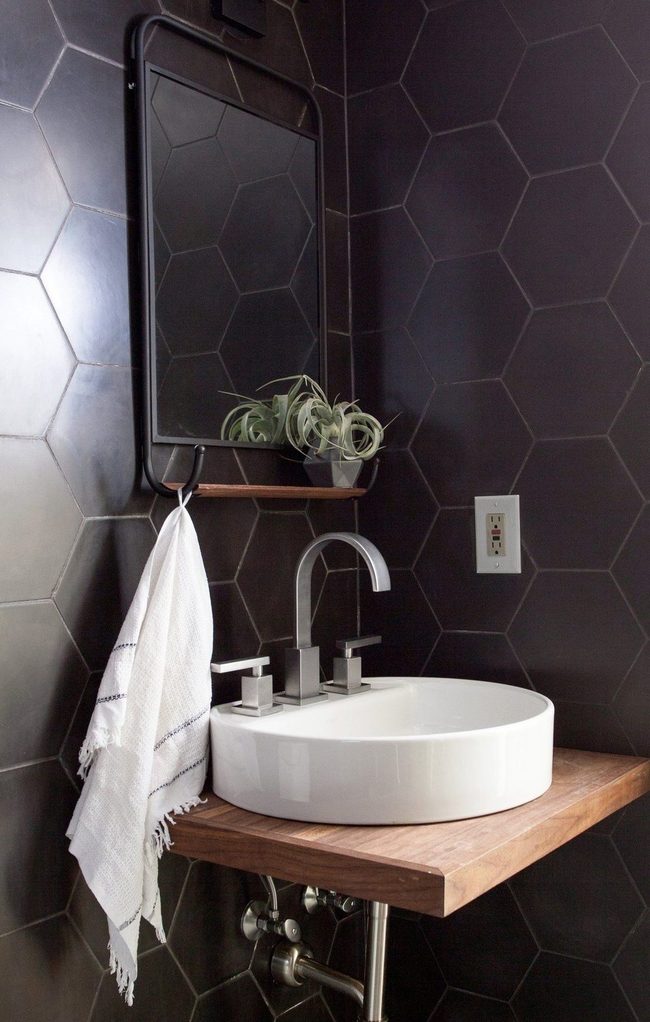
Covering your entire wall with tiles makes one of the boldest design moves you can make in any room, and it works especially well in bathrooms where moisture isn't a concern.
Rather than limiting your backsplash to just the area behind your sink, you can let those tiles climb all the way from floor to ceiling and spread across the whole wall Even if you go with neutral tones or simple styles, wall-to-wall tile coverage still delivers serious impact because of its sheer scale and presence.
You don't need fancy patterns or bold colors to pull off this look; sometimes the most striking effect comes from keeping things simple and letting the expansive tile work speak for itself.
It's a straightforward way to upgrade your room without overthinking it.
Floor-to-ceiling tiles give you a clean, finished look that feels polished and put-together.
This kind of full coverage is definitely worth considering if you want to refresh your walls and make them part of your room's overall look.
Wood Meets Marble Shimmer
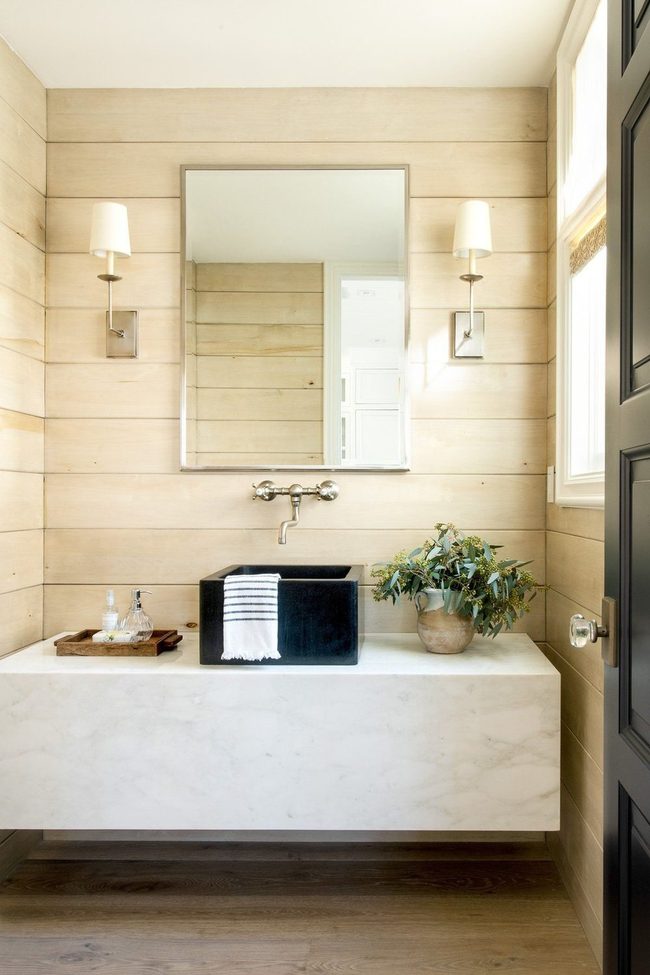
Wood paneling offers a fantastic way to bring texture and depth to your walls without settling for standard tiles, and when you pair unfinished wood with marble and polished metal, the result feels both modern and sophisticated rather than purely rustic.
If you've already installed wood paneling or another bold wall material in your space, you might skip the traditional backsplash altogether and let those walls do the heavy lifting instead.
This approach saves you money and keeps the focus on the striking surface you've chosen.
You get the benefit of a statement feature that anchors the entire room.
The contrast between raw wood and shiny surfaces really does shine, especially when light hits them at different angles.
Going this direction means you're not following the standard playbook, which makes your space feel more personal and considered It's simple, effective, and honestly one of the smartest ways to make a small investment have a big presence in your kitchen or bathroom.
Black Marble Kitchen Foundation
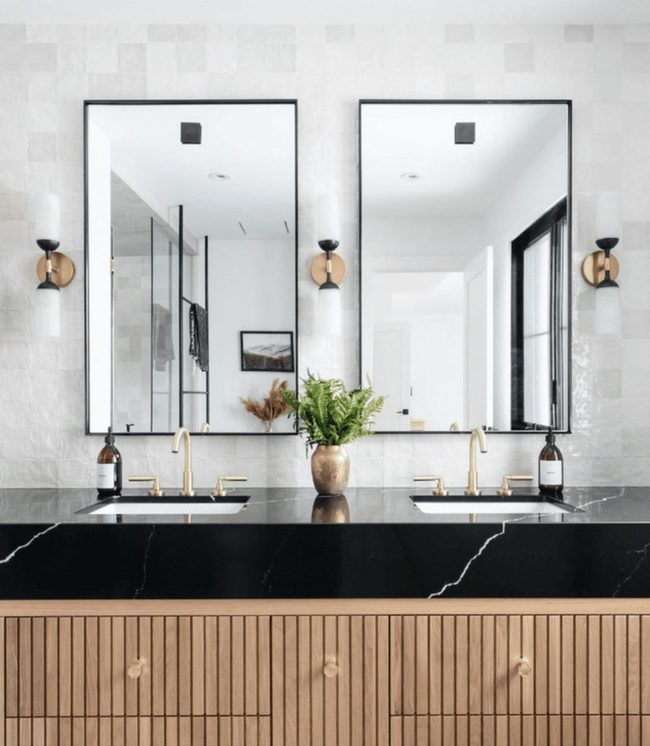
Black marble countertops have that sleek, dramatic presence that can anchor your entire kitchen design, so they're worth starting with if you're building your look from scratch.
Once you've locked in those counters, a shiny backsplash tile works beautifully alongside them and echoes that polished aesthetic.
Wooden cabinets then bring warmth and texture to balance out all that stone and shine.
When you're designing a kitchen, remember that your backsplash, countertops, and cabinets all need to feel connected as a group rather than like random picks.
Pick whichever element speaks to you first, and let that guide what you choose for the other two pieces.
If you start with one strong choice, the rest of your decisions become much easier and more satisfying.
You don't need complicated planning or expensive help to pull this off-just pick one piece you love and build your kitchen around it.
Bold Pattern Bathroom Statement
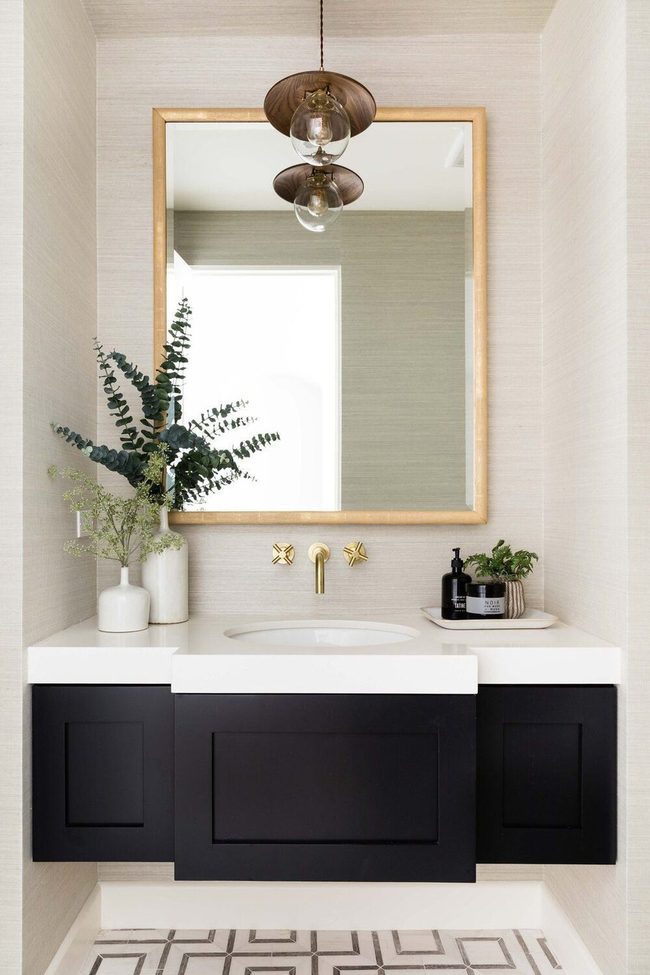
Wallpaper makes an excellent backsplash option for bathrooms since a bold print or pattern grabs attention immediately and can stand beautifully on its own without additional embellishment.
If you've already covered your walls with an eye-catching design, you don't need to add marble accents or colorful tiles on top of it.
We often feel tempted to layer in more decorative elements, but sometimes restraint works better than abundance.
You might worry that a single design element isn't enough, yet a striking wallpaper pattern actually does the job well by itself.
Adding marble or tiles can work if you prefer that approach, but it's worth considering whether your walls already provide all the visual interest your space needs.
Keeping things simple means you let what's already there shine, and that's often the smartest choice for a bathroom.
Unified Stone Counter And Backsplash
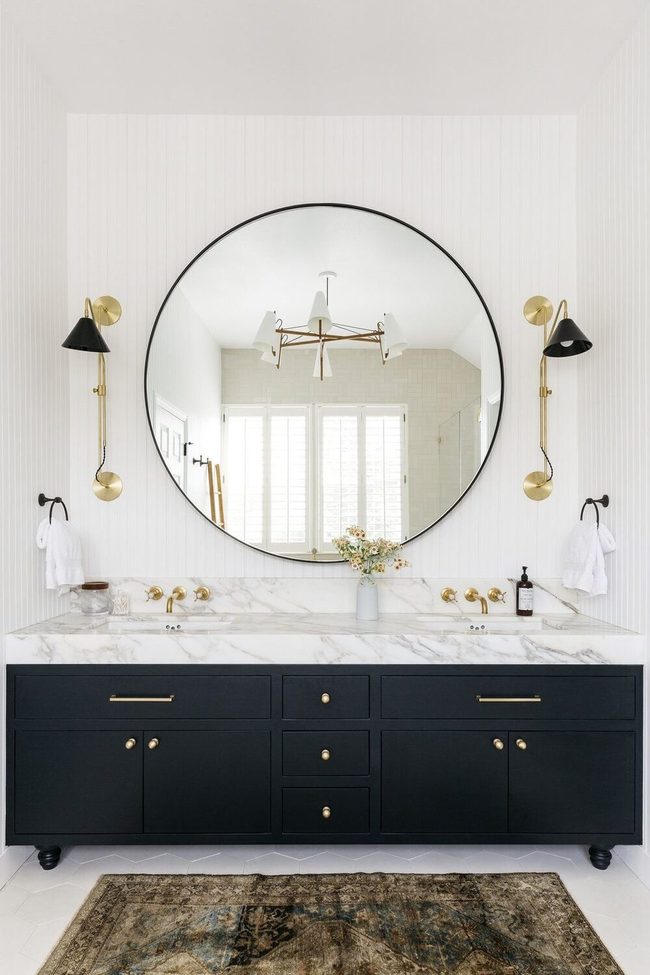
When you coordinate your backsplash and countertops, you can make your bathroom look polished and unified without much extra effort.
Many bathroom counters now come with built-in backsplashes made from the same material, so you get one seamless line running from the front of your counter all the way up the wall.
This matching approach eliminates the visual break that normally happens when different materials meet, and it keeps your space feeling organized and clean.
You don't need to search for separate pieces or worry about whether colors and textures will clash.
The result feels more finished than having your backsplash as an afterthought or contrasting element.
If you like this style, you'll find plenty of options in stone, tile, laminate, and other durable materials that work well in wet bathroom environments.
We think this simple choice makes a real difference in how pulled-together your whole bathroom design feels.
Vertical Stripe Backsplash Statement
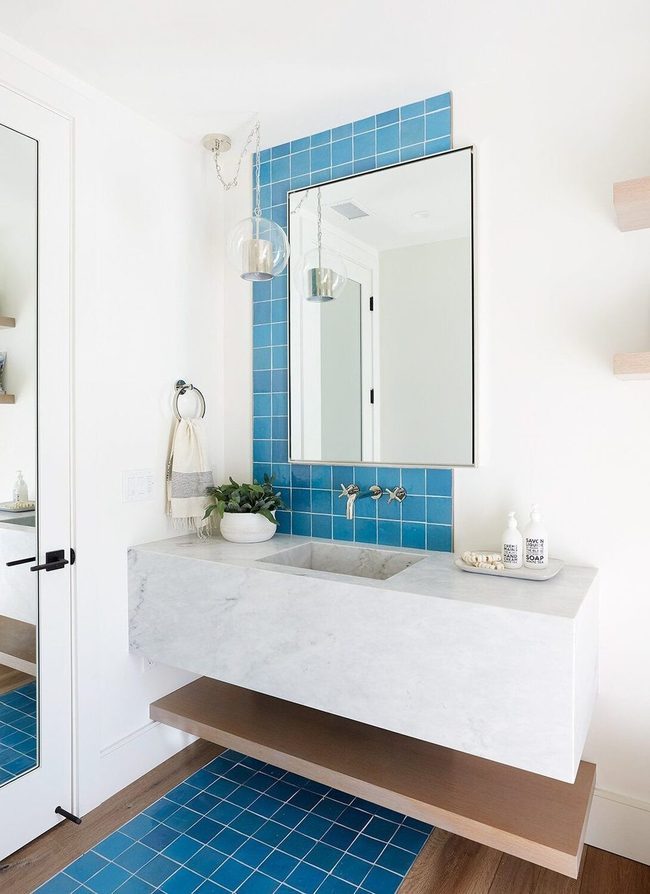
Stock up on tiles in a striking shade and use them to craft a stripe that runs from ceiling to floor-your backsplash doesn't need to cover the entire wall behind your sink.
By getting creative with your tile placement, you can turn this space into real art instead of following the standard approach.
Set the stripe off to the side just a touch rather than centering it behind your mirror, and this asymmetry makes your colorful backsplash stand out even more.
This simple shift in positioning gives the whole design an unexpected energy that catches attention right away.
You don't have to stick with traditional layouts when decorating, and small changes like this one prove how much personality you can add to a room.
Moving away from centered, symmetrical designs opens up so many possibilities for making your space feel uniquely yours.
Patterned Floors Guide Kitchen Backsplash
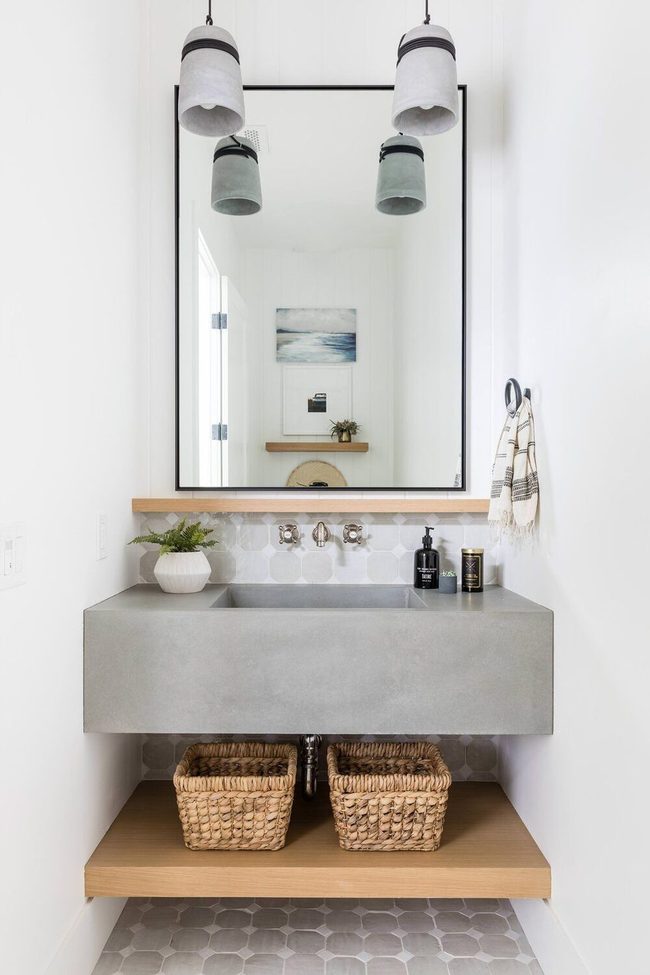
Colorful or patterned floor tiles deserve to shine, so why not extend that same visual energy to your backsplash and create a unified look throughout your kitchen?
You have two paths here depending on your style preference.
One option is to repeat the exact same tiles, material, or color on your backsplash for a seamless connection between both surfaces.
If that feels like too much of the same thing, you can always choose a backsplash that plays nicely with your floors without copying them directly.
High-contrast combinations work just as well and often feel more dynamic.
Either way, letting your floors guide your backsplash choices takes the guesswork out of decorating.
We find that this kind of coordination makes your space feel more put-together without requiring any complicated decisions.
The beauty is that you get to decide how bold or subtle the connection between these two elements should be.
Black Grout Transforms White Tiles
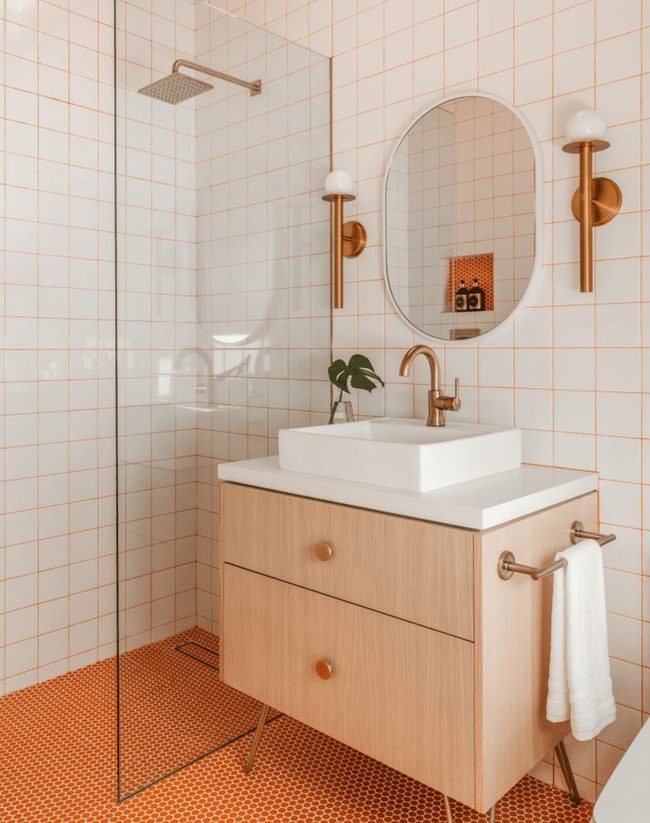
Grout comes in far more colors than most people realize, and picking something unexpected like black, gray, or orange can completely change how your tiles look, even if the tiles themselves are plain white.
You don't have to match your wall and floor tiles perfectly, so if your floors already feature bold colors, keep your walls neutral and simple.
Let your grout do the heavy lifting when it comes to tying colors together.
This approach gives you freedom to work with classic tiles and still make the space feel intentional.
Swapping out standard white grout for something bolder is one of the easiest ways to refresh a room without replacing anything else Going creative with grout proves that sometimes the smallest choices make the biggest difference in how your space feels.
Dual-Tone Wood Wall Drama
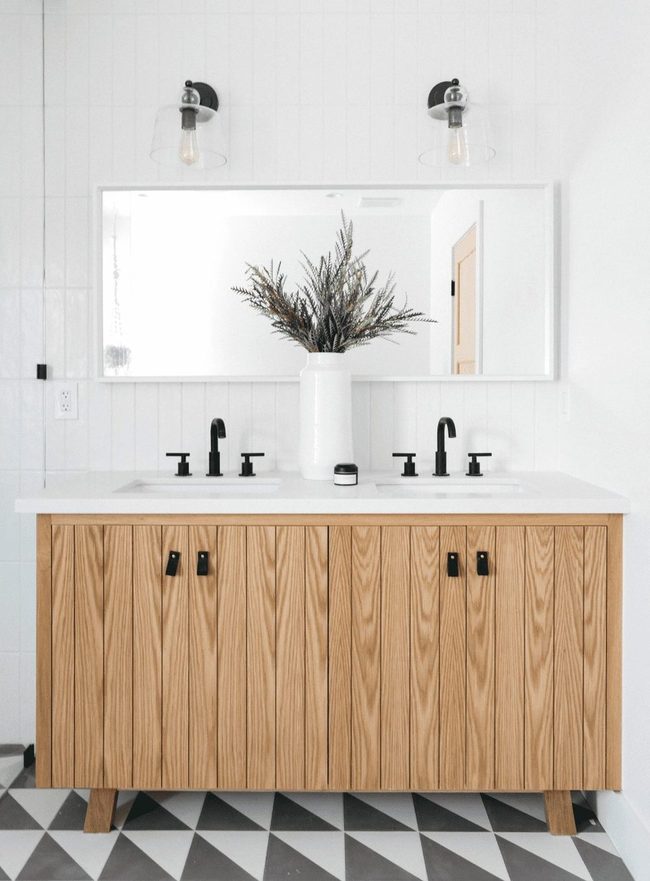
Wood paneling offers a textured option beyond basic tiles and paint, and using two different shades creates a striking visual statement that runs from floor to ceiling.
When you paint paneling across your walls, you establish a bold backdrop that feels both grounded and interesting.
Pairing this with matching wood paneling on your bathroom cabinets in a contrasting shade adds another layer of visual interest to the room.
This two-tone method gives your space variety while keeping everything connected and balanced Your bathroom gains depth and character through the interplay of the two paint colors.
The result is a space that feels put-together and dynamic without becoming overwhelming or fussy.
Clean White Tiles Foundation
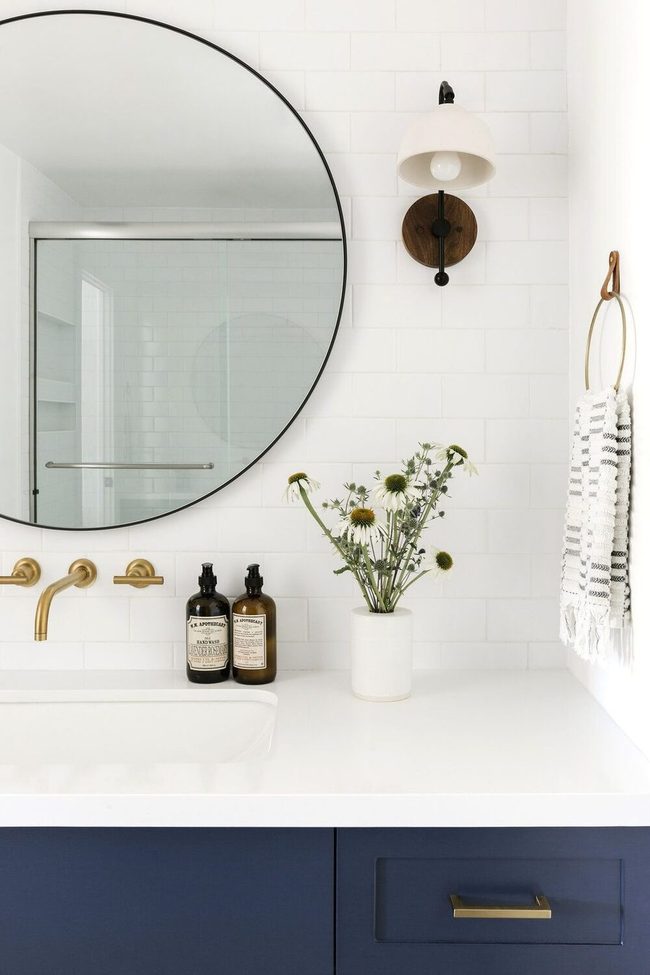
Subway tiles remain a smart choice for your kitchen backsplash because they offer clean lines and a timeless appeal that works with nearly any style you choose.
If you genuinely love how they look, there's no reason to skip them just because they're popular-go ahead and install them without hesitation.
Beyond the backsplash, you can introduce personality through other elements that deserve attention and stand out.
Your faucet becomes an opportunity to add character, whether you opt for something modern or vintage-inspired.
Mirrors above the sink or elsewhere in the kitchen can reflect light and make the space feel larger while adding their own visual interest.
Lighting fixtures like pendant lamps or under-cabinet lights give you another chance to express your style and improve how the room functions.
These accent pieces work together naturally and let your kitchen feel like your own space while the subway tiles provide a reliable, good-looking foundation.
Painted Wall Meets Tile Backsplash
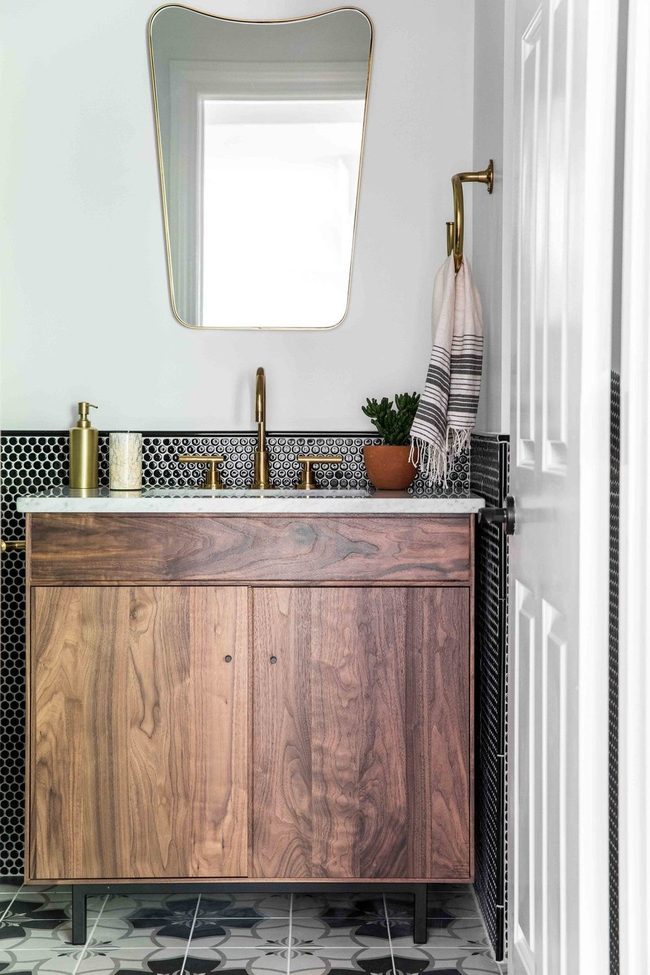
Two-tone wall treatment above your sink offers a bold and refreshing way to break up plain drywall without needing professional help.
You can paint the lower section one color and add tiles to the upper half, which gives you a custom backsplash that stands out and protects your wall from splashes at the same time.
This project requires just some tiles, paint, and basic tools that most people already have at home.
You get to choose colors and patterns that match your style, so no two kitchens will look the same.
Painting and tiling above the sink takes just a weekend and costs far less than hiring someone to do it.
Painted Walls Beat Tile Hassle
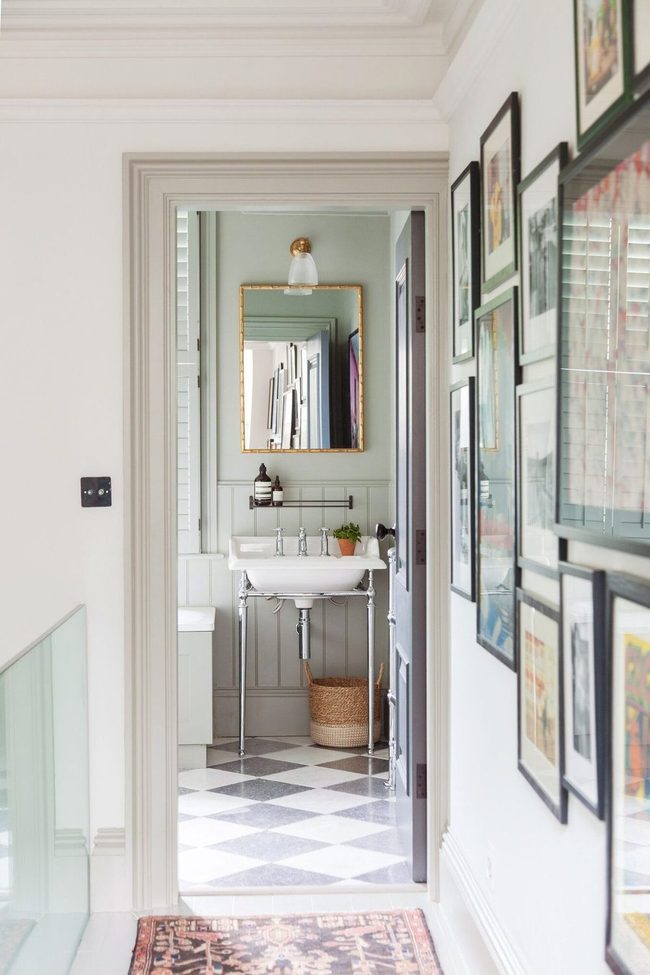
If you're planning a bathroom update, painted walls deserve serious consideration as an alternative to the typical tile backsplash that most people go with.
Paint offers a clean, straightforward look that works beautifully behind any sink setup, whether you have a traditional pedestal sink or a vanity style.
You can keep the approach simple and affordable by choosing a single solid color that complements your existing fixtures.
Wall paint gives you more flexibility than tiles since you can easily change the color later without the hassle of removal and replacement.
Many homeowners overlook this option because tile feels more standard, but honestly, a well-executed paint job can be just as polished and practical.
Consider your bathroom's lighting and size when selecting your paint color, as these factors will influence how the shade appears on your walls.
We recommend using bathroom-specific paint that resists moisture and mildew better than regular interior paint.
This approach lets you achieve a finished bathroom look without the expense and effort that tile installation demands.
Marble Wall To Ceiling Luxury
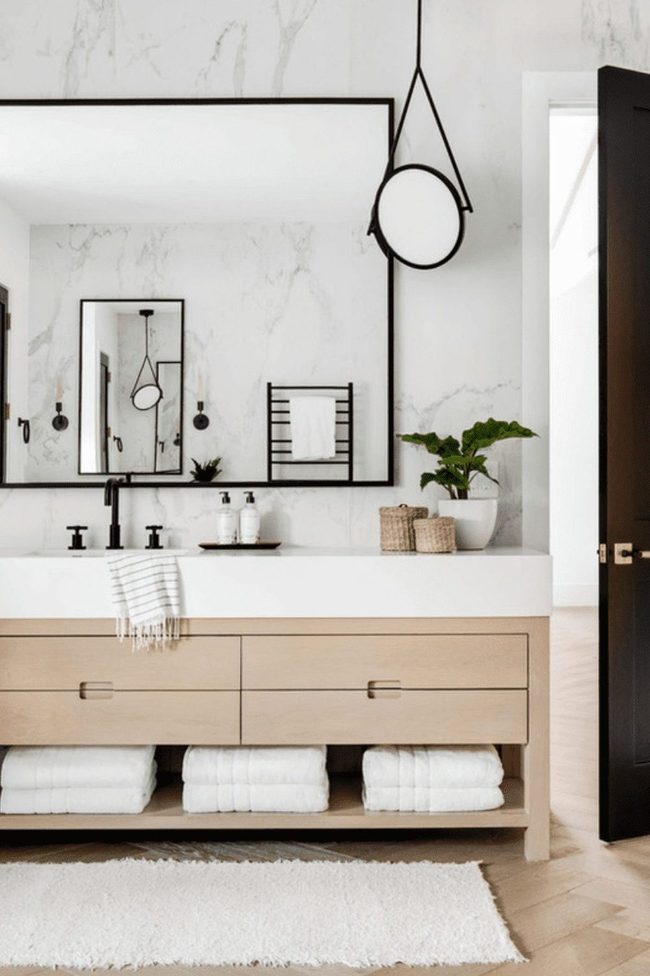
Floor-to-ceiling marble transforms a bathroom into something extraordinary and worth the investment if your budget allows it.
Marble's natural veining and smooth surface deliver an undeniable sense of luxury that few materials can match.
Beyond its beauty, this stone serves practical purposes too, standing up well to moisture and daily bathroom use.
You'll find that marble sets the entire mood of your space, making even simple fixtures feel more refined.
Going all-in on a marble wall rather than just a backsplash gives you maximum visual drama and consistency throughout the room If you're serious about bringing timeless elegance to your bathroom, marble is the material that delivers both style and durability.
Concrete Sink Meets Marble Gray
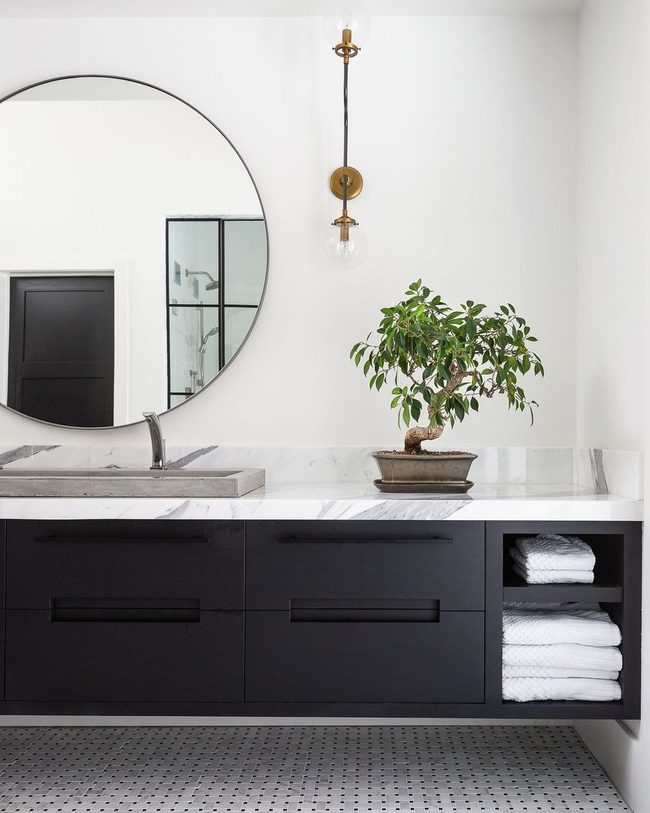
When you're deciding on a backsplash, your sink offers the perfect jumping-off point for design inspiration.
If your sink has dramatic features or an unusual material, let it guide your backsplash choice and build the look around it.
A concrete sink pairs beautifully with marble backsplash tiles that feature gray streaks running through them.
Metal sinks work well alongside shiny tiles that echo the same reflective quality.
You can also reverse this approach and pick a standout backsplash first, then select a sink that harmonizes with it.
Either way, connecting these two elements creates a kitchen that feels intentional and balanced.
The relationship between sink and backsplash becomes one of the most noticeable parts of your space, so taking time to match them pays off in how polished everything looks.
Hardware And Backsplash Harmony
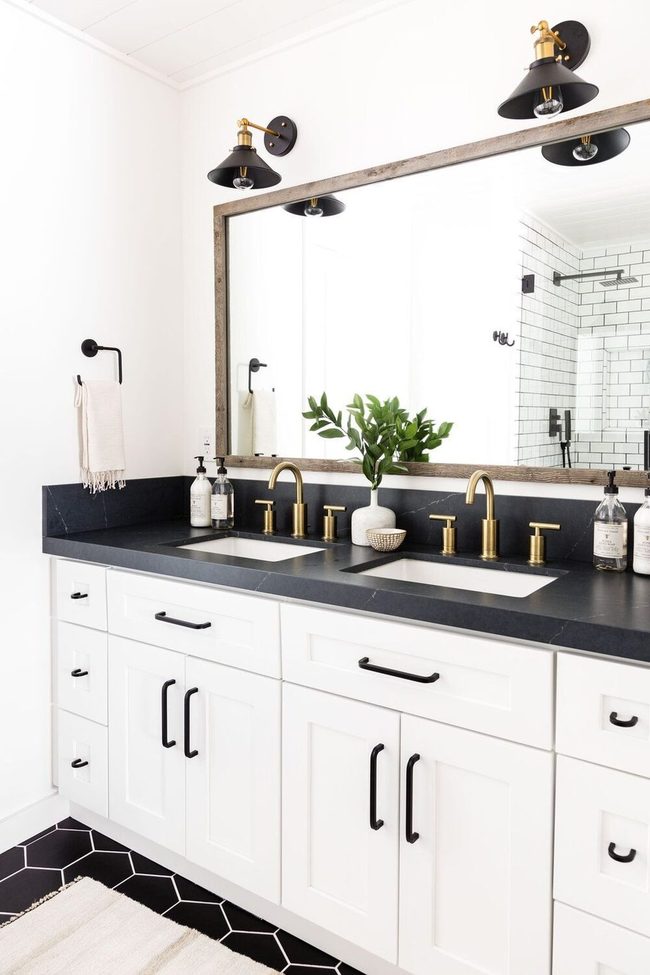
Your backsplash deserves serious attention because it occupies a prominent spot in your kitchen or bathroom, and matching it with your hardware creates a polished look throughout the room.
Aligning your drawer pulls, towel racks, and overhead lights with your backsplash material or finish makes everything feel intentionally connected.
You don't need to match them exactly, but pulling from the same color family or metal tone helps the space feel put-together.
Small touches like these add up quickly and transform how the room reads visually.
When your backsplash and hardware share a design language, people notice how thoughtful the space feels.
It's a simple strategy that prevents your kitchen or bathroom from looking like random pieces scattered around.
We often overlook these smaller elements, but they genuinely shape whether a space feels harmonious or chaotic.
Take time to coordinate these features, and you'll be surprised at how much more refined your space becomes.
Pink Terrazzo Monochrome Statement
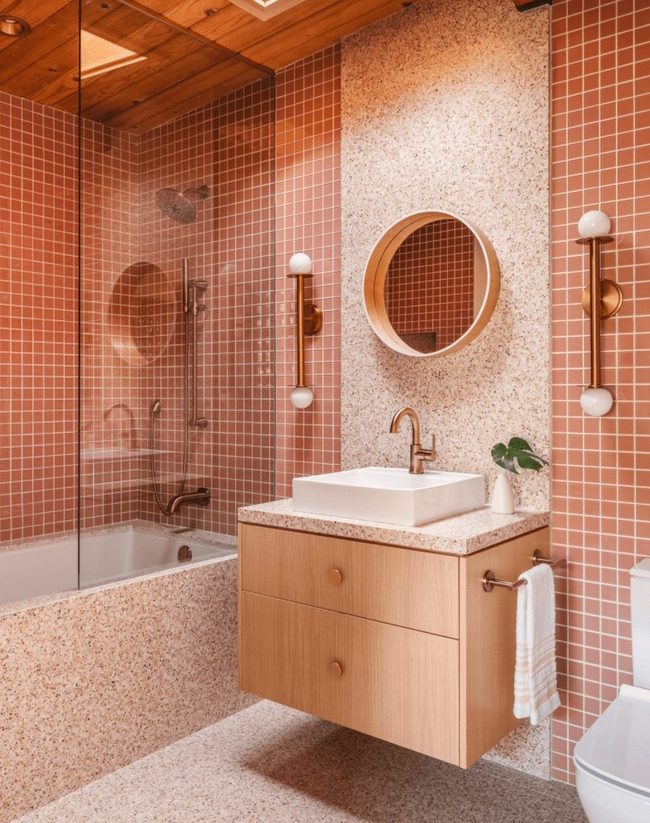
Monochromatic bathrooms make a bold statement from the moment you walk in, and your backsplash is the perfect place to amplify that effect.
If your shower features vibrant pink tiles, you can either mirror that same pink across your backsplash or go with a pink terrazzo option to add some visual interest while staying within the same color family.
One approach keeps everything harmonious and unified, while the other gives you a bit of texture and depth.
Both options show how you can use your backsplash to strengthen the overall look of your space.
The key is deciding whether you want consistency or a subtle shift in tone.
Playing with one color throughout a bathroom feels modern and deliberate.
You don't need multiple colors to make an impact-sometimes less really does mean more.
This strategy works especially well when you choose rich or bold shades that naturally command attention on their own.
Matching Tiles Through Two Spaces
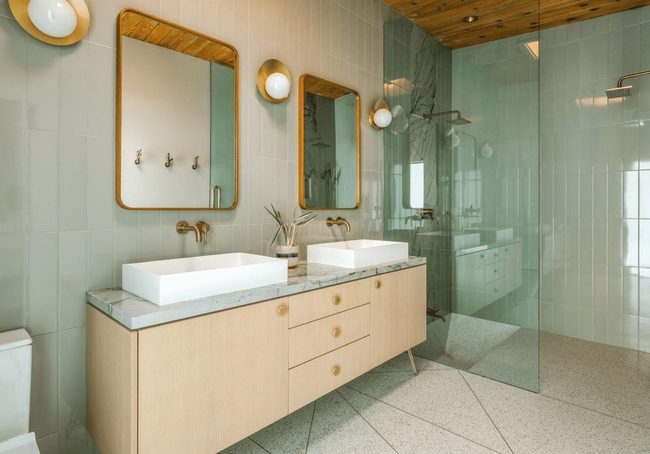
Tiles in your shower and backsplash share the same spotlight in your bathroom, so matching them makes perfect sense.
You can run the same pretty tiles across your shower walls and then extend that same design to cover the wall behind your sink, which creates a unified look throughout the space.
If covering the entire wall feels like too much for you, keep things simple by using those same tiles to build out a more traditional backsplash that sits just behind your sink instead.
This approach keeps your bathroom looking connected without overwhelming the room.
Both options let you pick tiles you genuinely love and see them work across different areas.
Whether you go bold with full coverage or stick with a smaller backsplash section, the repeated tile pattern ties your shower and sink area together nicely.
You get the best of both worlds: a bathroom that looks planned and coordinated, plus the flexibility to match your own style preferences.
Jasmine Lee
Content Creator & Style Advisor
Expertise
Content Creation & Engaging Writing, Home Project Ideas & Decorating Tips, DIY Projects & Creative Solutions, Trend Spotlights & Practical Styling Advice, Easy-to-Follow Guides for Home Decor
Education
University of California, Los Angeles (UCLA)
Jasmine Lee is a content creator and style advisor at Nesthance, making home décor feel fun and effortless. With a degree in communications from UCLA, she has a knack for turning decorating ideas into easy, step-by-step guides that anyone can follow.
She loves sharing practical styling tips, creative DIY projects, and trend insights to help readers refresh their spaces without stress. Her work focuses on making design approachable and inspiring for all.
Outside of writing, Jasmine enjoys discovering new design trends, attending workshops, and curating inspiration boards to keep ideas fresh and exciting.