
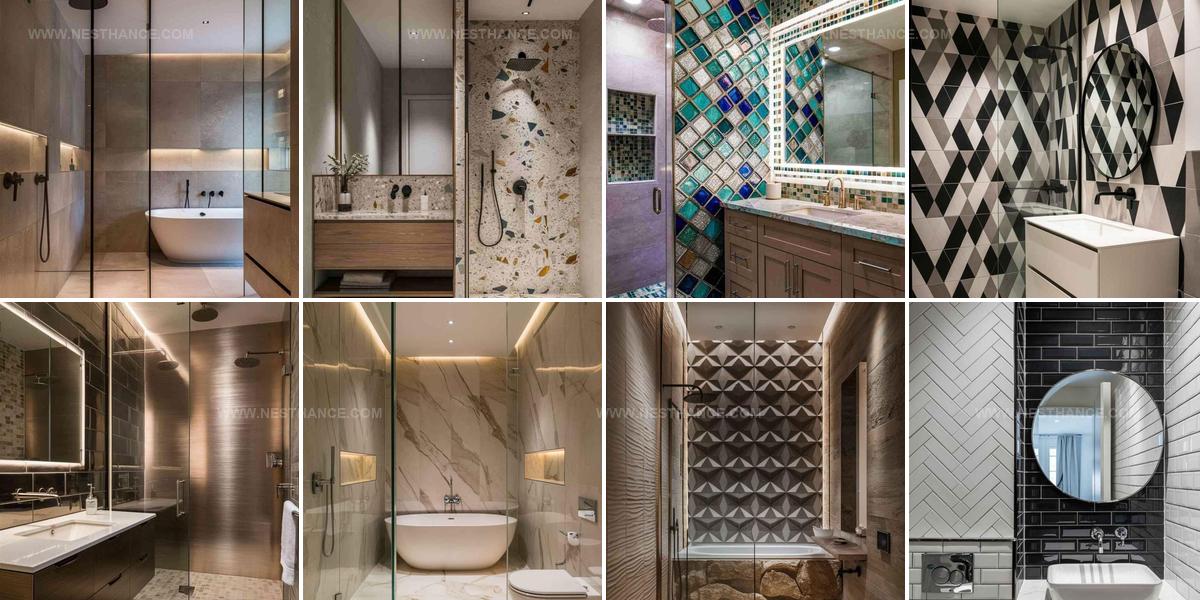
10 Bathroom Wall Tiles That Refresh Your Space

Bathroom wall tiles form the foundation of a functional and beautiful space where design meets everyday practicality.
Choosing the right tiles can completely change how a room feels, from calming and spa-like to bold and modern.
The options available today range from classic subway patterns to large-format porcelain, natural stone, and handcrafted ceramics in countless colors and textures.
What works best depends on factors like moisture resistance, maintenance needs, and how the material complements other fixtures and finishes.
Some styles have remained popular for decades, while others reflect current trends that emphasize organic materials or geometric designs.
When you consider all the elements together-size, color, grout lines, and layout-the decisions become both exciting and meaningful.
Finding the perfect tile solution for any bathroom renovation or refresh is well within reach with the right information.
Mirrored Metal Bathroom Luxury
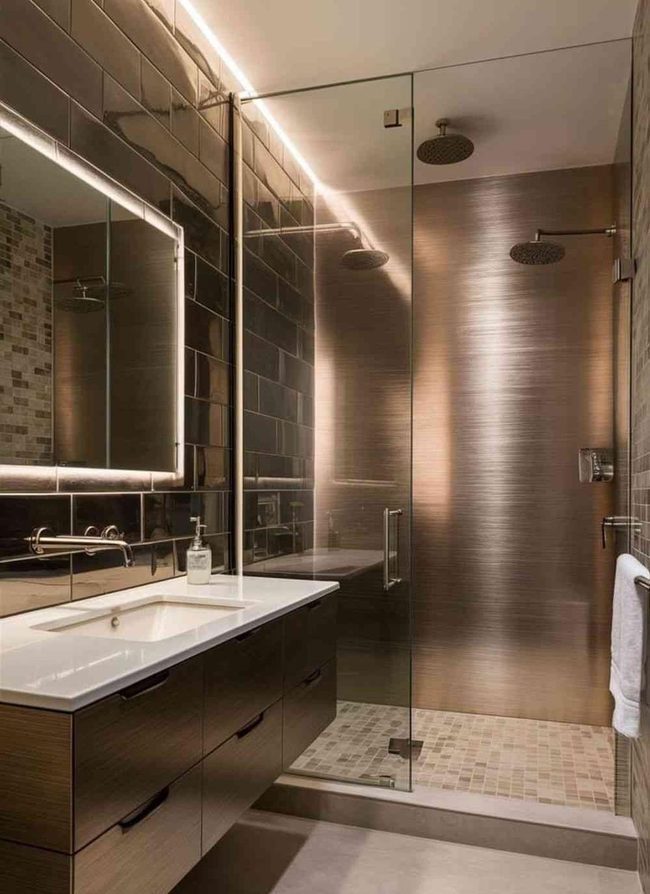
Polished metallic tiles with their mirror-like surfaces deliver the most striking transformation, bouncing pale around your bathroom and making the space feel wider and more luxurious than it actually is.
Brushed finishes offer a more subdued approach with their matte texture, diffusing pale gently while keeping that modern industrial vibe without the high shine.
Hammered surfaces add another layer of interest with their dimpled quality, catching pale in unexpected ways and bringing an artisanal character to your design.
You can pair metallic tiles with glass elements like shower doors and mirrors to amplify the reflective effect, or combine them with natural veneer to balance cool metallics against warm organic textures for a sophisticated look.
Stone materials such as marble work beautifully alongside metallic tiles because the luxurious reflectiveness contrasts nicely with natural color variations.
Concrete and cement surfaces enhance that industrial feel when combined with metallic finishes, creating a rugged with hints of refined energy urban atmosphere.
Mixing metallic tiles with standard ceramic or porcelain tiles brings a modern touch to traditional bathroom styles without overwhelming the space.
Marble-Effect Tiles Luxury
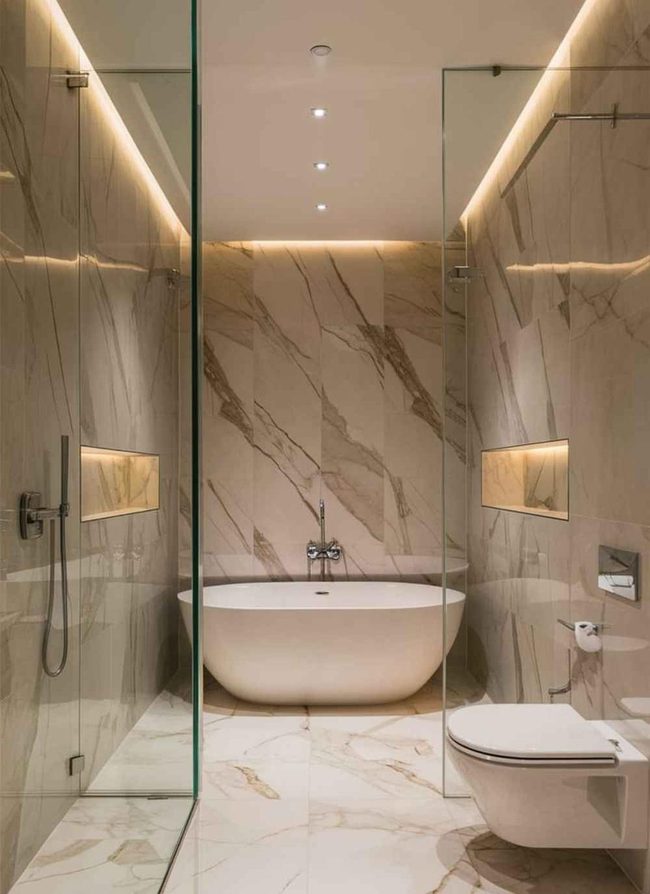
Marble-effect tiles bring instant luxury to your bathroom with their sophisticated veining and natural patterns that rival real marble without the steep price tag or demanding upkeep.
You'll find these tiles work beautifully on walls, floors, or as backsplashes, and they give any space an air of refined elegance that elevates your whole design.
Real marble costs far more and requires constant sealing and careful maintenance since it stains and scratches easily, while ceramic or porcelain marble-effect tiles resist moisture, stains, and wear with minimal effort.
Another big advantage is the range you get to work with, marble-effect tiles come in countless sizes, shapes, and patterns, giving you way more flexibility than natural stone ever could.
For a modern minimalist look, large format tiles in gentle neutrals paired with frameless glass showers and recessed bleacheding deliver a clean aesthetic.
If classic elegance appeals to you, white, gray, or beige tiles with rich veining on both walls and floors work beautifully with freestanding tubs and vintage-style fixtures.
Hexagon Tiles Current Energy
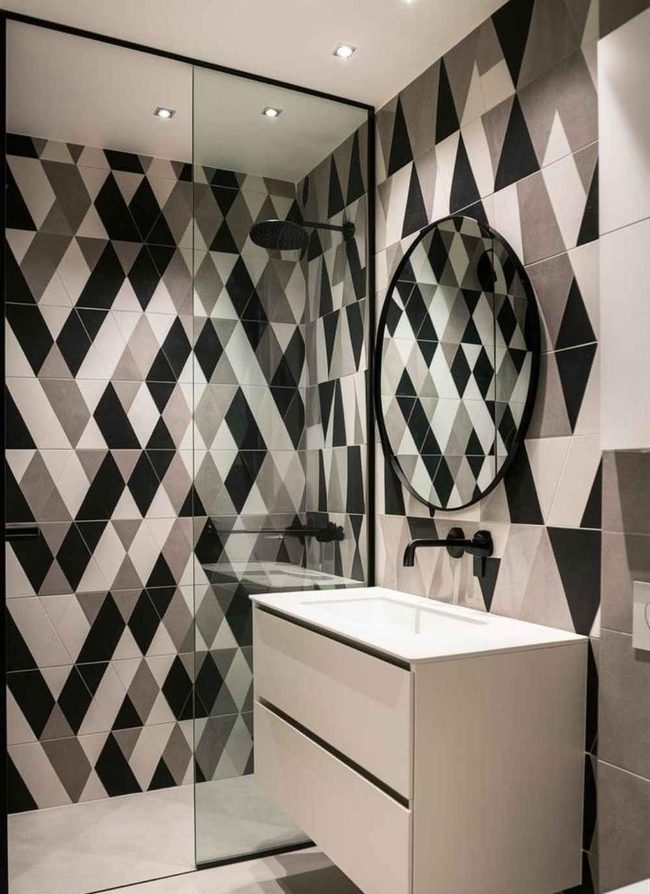
Geometric pattern tiles deliver an immediate visual punch with their bold shapes like hexagons, diamonds, triangles, and chevrons arranged in contrasting colors or intricate mosaics that make any bathroom feel decidedly modern and energetic.
You can use these striking tiles to define different zones within your space, whether that's a dramatic backsplash behind your vanity or a showstopping shower wall that commands attention.
When pairing geometric patterns with fixtures, keep things simple and understated since the tiles themselves are visually intense, so opt for minimalist faucets and showerheads in finishes like chrome or matte black.
Balance the bold patterns by using neutral tones on other surfaces such as your floors, countertops, or walls in whites, grays, and diffused beige to keep the room from feeling chaotic.
Combining geometric tiles with natural materials like hardwood, stone, or concrete adds warmth and texture that offsets the crisp lines, and a timbered vanity or stone countertop works beautifully for this contrast.
Bleacheding really matters here and recessed whimsicals or wall sconces can emphasize the tile shapes and add nice depth to your design.
Artisan Hand-Painted Ceramic Tiles
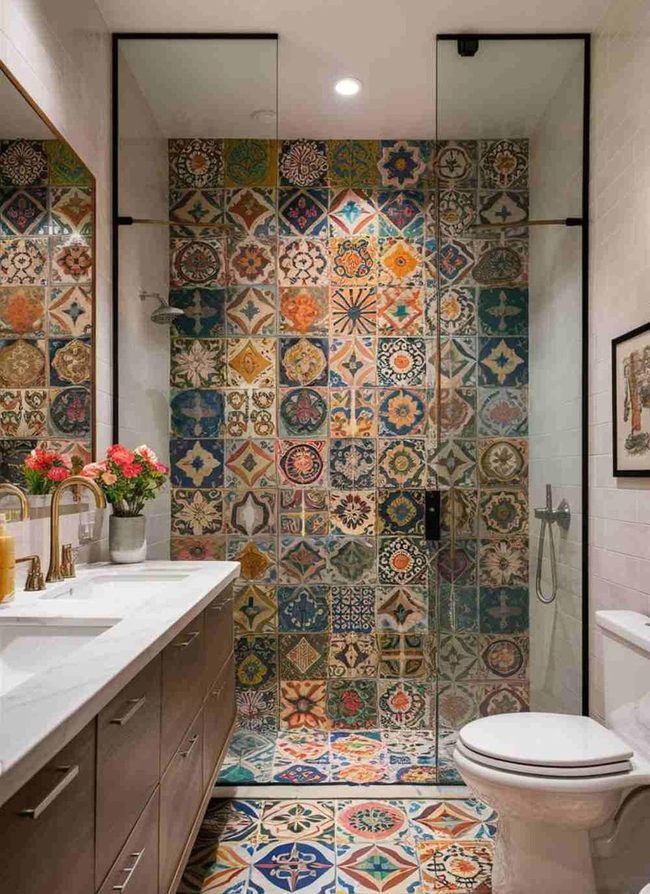
Hand-painted tiles make spaces come alive with their bold, rich in color colors and intricate patterns that you won't find in mass-produced options.
Throughout one is crafted by hand, so you get one-of-a-kind designs with rich textures and artistic elements that reflect genuine artisanal work.
You can use these tiles to give rise to a striking feature wall behind a vanity or as a pantry backsplash, or arrange them in custom mosaic patterns across floors and walls to grab attention.
Small niches and alcoves benefit from these tiles too, and inserting them into standard layouts lets you highlight specific areas with decorative panels or medallions.
When paired with minimalist decor, hand-painted tiles stand out beautifully against simple furnishings and neutral backgrounds, while eclectic spaces thrive with these pieces mixed alongside vintage furniture and colorful textiles.
Modern interiors gain warmth and character when you add these accent tiles to smooth and streamlined rooms, and traditional spaces become richer with their historical charm next to Retro furnishings and classic colors.
Black Herringbone Subway Tiles
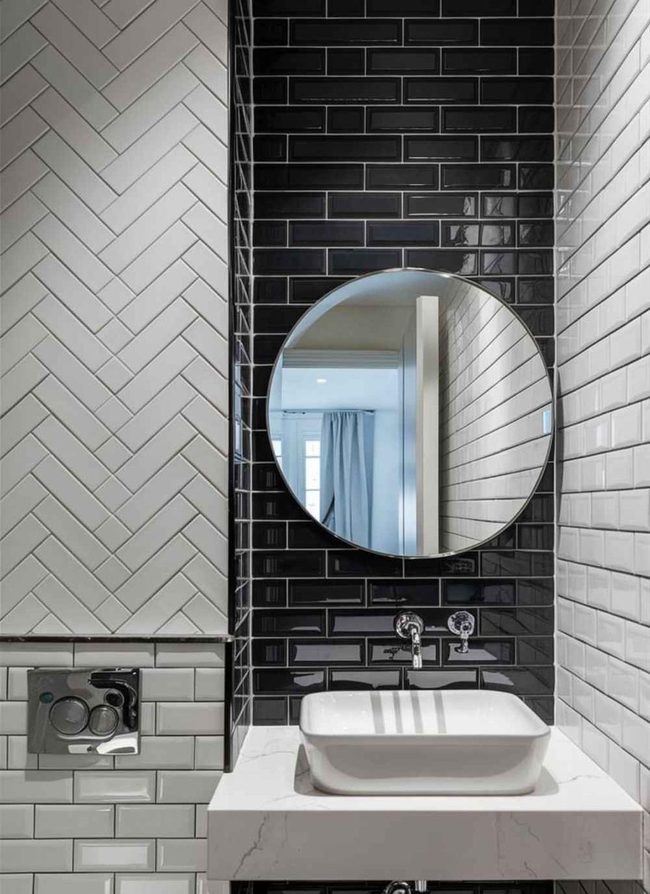
Subway tiles deliver a bold visual punch when arranged in herringbone patterns, creating dynamic zigzag designs that work beautifully as accent walls or backsplashes and immediately catch the eye with their geometric movement.
Black subway tiles make an even more striking statement, offering a dramatic contrast especially when paired with white grout for bold bathrooms that demand attention.
You can also explore vertical stacking to draw the eye upward and give rooms a contemporary edge, or select glossy finishes that bounce airy around and make spaces feel larger through their reflective qualities.
White subway tiles remain the most recognizable choice and provide a clean, bright foundation that works in both traditional and modern bathrooms, with the bonus of making small spaces feel more spacious.
Gray options offer a understateder middle ground that adds depth without overwhelming your room, while pastels like mint or blush introduce gentle color that keeps things calm.
For texture, beveled edges shadow effects and give walls a more sculpted feel, whereas matte finishes provide sophistication and hide water spots better than glossy surfaces.
These tiles have been bathroom staples since the early twentieth century because their simple rectangular shape and clean lines blend seamlessly into nearly any design style.
Venetian Marble Chip Mosaic
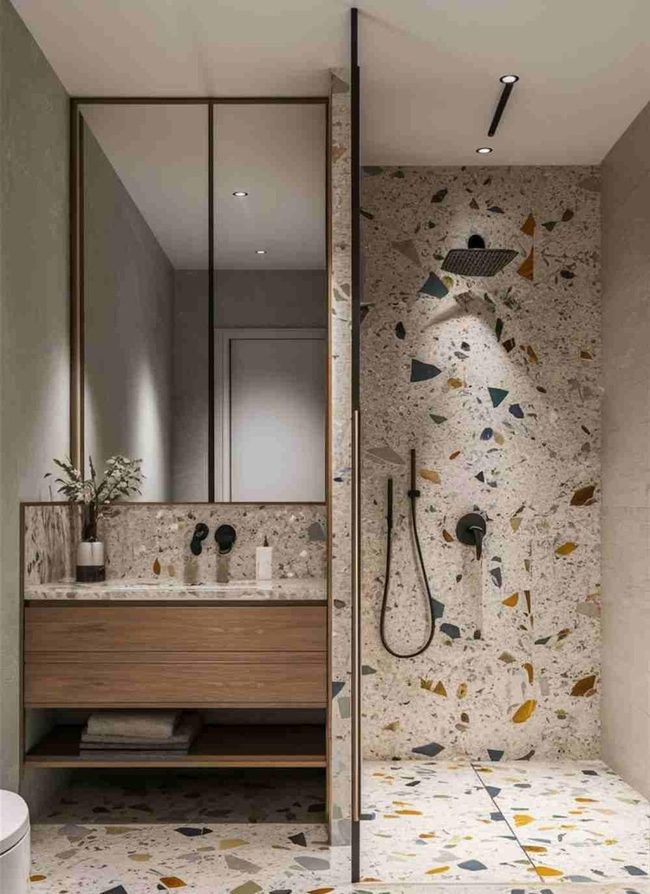
Terrazzo tiles have experienced a remarkable resurgence in contemporary design, and they offer you a striking combination of vintage appeal and modern sophistication that works beautifully in bathrooms.
Originating from ancient Venetian techniques, terrazzo is a composite made from marble, quartz, granite, or glass chips bound together in a cement or resin base, and this material delivers impressive durability while maintaining remarkable visual interest.
You can use terrazzo as flooring to add a strong foundation with texture and color, or apply it to feature walls behind the vanity and in shower areas where the unique patterns add real sophistication to the space.
Shower walls benefit from terrazzo's water-resistant properties and flexibility in sizing, while vanity backsplashes showcase the mosaic-like appearance that complements modern fixtures beautifully.
Smaller applications like borders, niches, or trim let you introduce terrazzo in understated ways, and combining it with grain, glass, or metal adds depth and balance throughout the room.
Color options range from classic neutral terrazzo with natural marble chips in white, gray, or beige to modern bold versions featuring blues, greens, and pinks for dramatic effect.
Dense Porcelain For Wet Bathrooms
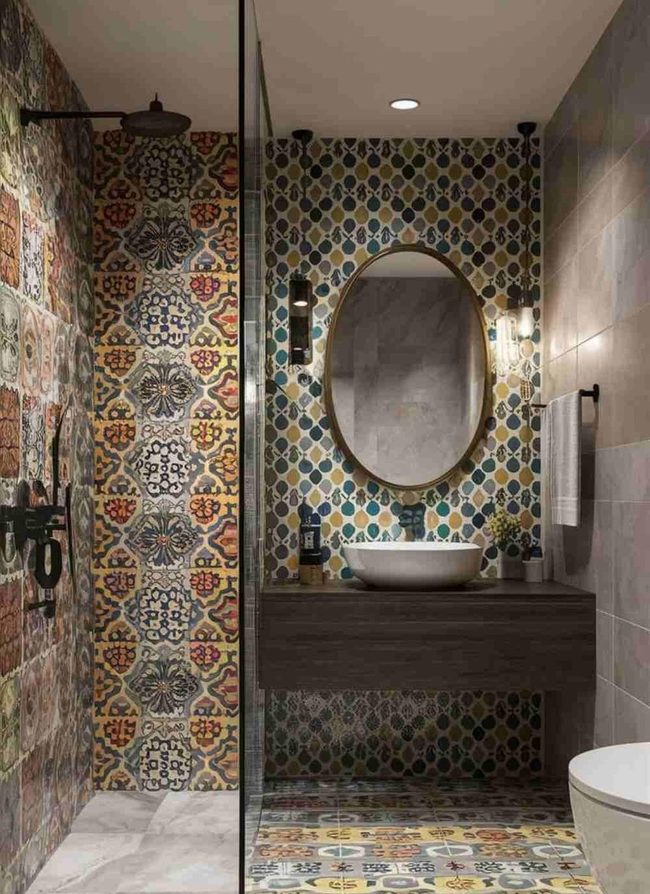
Porcelain tiles stand out as the superior choice for bathroom floors because they resist water absorption and withstand heavy foot traffic without chipping or staining, making them ideal for wet areas around bathtubs and showers.
Ceramic tiles shine on walls and backsplashes where you can showcase colors and intricate patterns at a lower cost, and they work wonderfully as decorative accent pieces or feature walls.
Porcelain tiles are made from denser clay fired at higher temperatures, which gives them their impressive durability and resistance to moisture, while ceramic tiles are created from a mixture of clay and minerals fired at lower temperatures and typically have a glossy surface glaze.
Both types come in diverse designs, porcelain realistically mimics natural stone and timber, and ceramic offers countless color and pattern options, but porcelain suits high-traffic commercial spaces and outside bathrooms better since it absorbs very little water.
Ceramic tiles cost less and work well in smaller bathrooms or guest baths where you won't see heavy wear, though they can chip or crack under heavy use and aren't ideal for areas constantly exposed to moisture without special glazing.
Dimensional Ceramic Bathroom Walls
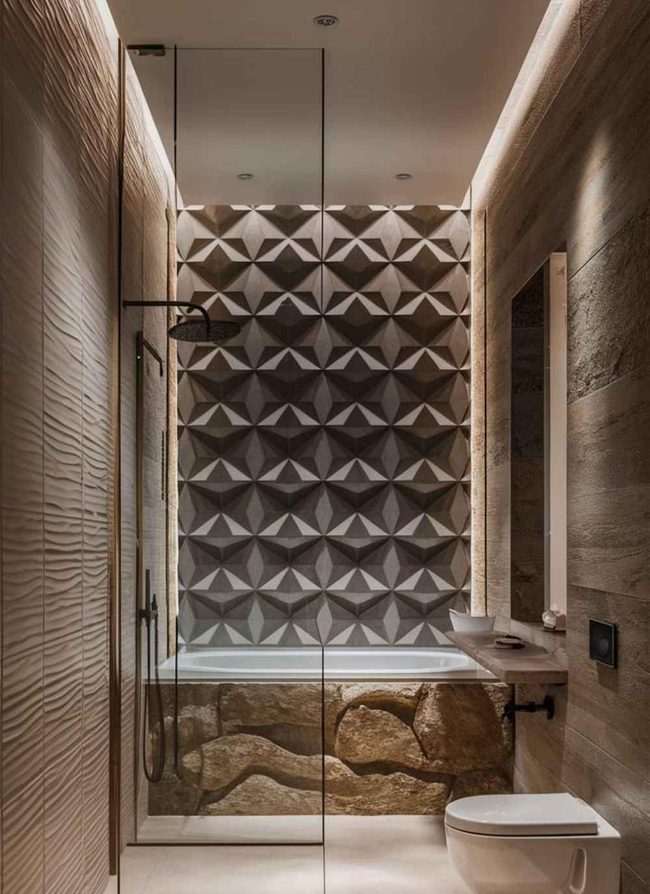
Textured wall tiles bring dimension and character to your bathroom in ways that go far beyond basic decoration.
Surface variations like raised patterns, grooves, and three-dimensional forms catch airy and shadow to make walls feel alive and engaging.
Materials like natural stone, ceramic, and porcelain come in options ranging from diffusedly rippled to dramatically embossed, so you can choose how bold you want to go.
Three-dimensional tiles deserve special attention because they bring about striking sculptural effects that transform ordinary walls into dynamic main features.
In smaller spaces, textured tiles play with airy to make rooms feel larger, while larger bathrooms benefit from texture breaking up empty wall space and adding personality.
You might also explore materials like veneer-look tiles for warmth, metallic finishes for an industrial edge, concrete-look options for modern appeal, or even frosted glass tiles for delicate elegance.
Stone varieties such as slate and travertine offer organic, earthy textures that bring a spa-like quality to the room.
Seamless Porcelain Expanses
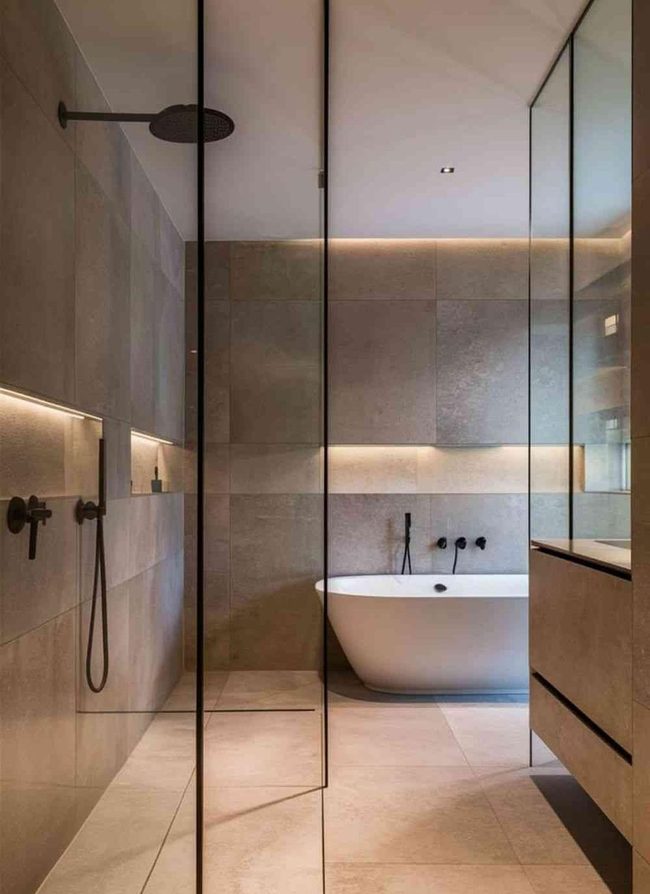
Large format tiles make an immediate visual statement in bathrooms by creating expansive, uninterrupted surfaces that feel open and refined.
Fewer grout lines means you get a cleaner, more streamlined appearance that looks far more sophisticated than small tile layouts.
Modern bathrooms benefit tremendously from through this design,, as do minimalist spaces where simplicity and order matter most.
If you prefer a spa-like retreat feel, you can choose tiles with lightweight colors and understated-toned textures to promote relaxation and tranquility.
Contemporary and industrial styles also work beautifully with large format tiles because they pair well with fixtures, glass elements, and raw materials like exposed brick.
Beyond aesthetics, maintaining these tiles requires less effort since there are fewer grout lines to clean and fewer seams where moisture can penetrate and cause damage.
Whether you're drawn to luxury designs with marble or polished porcelain, or you want a simple, understated bathroom, large format tiles adapt well to your vision and deliver both beauty and user-friendly durability.
Multicolored Glass Mosaic Brilliance
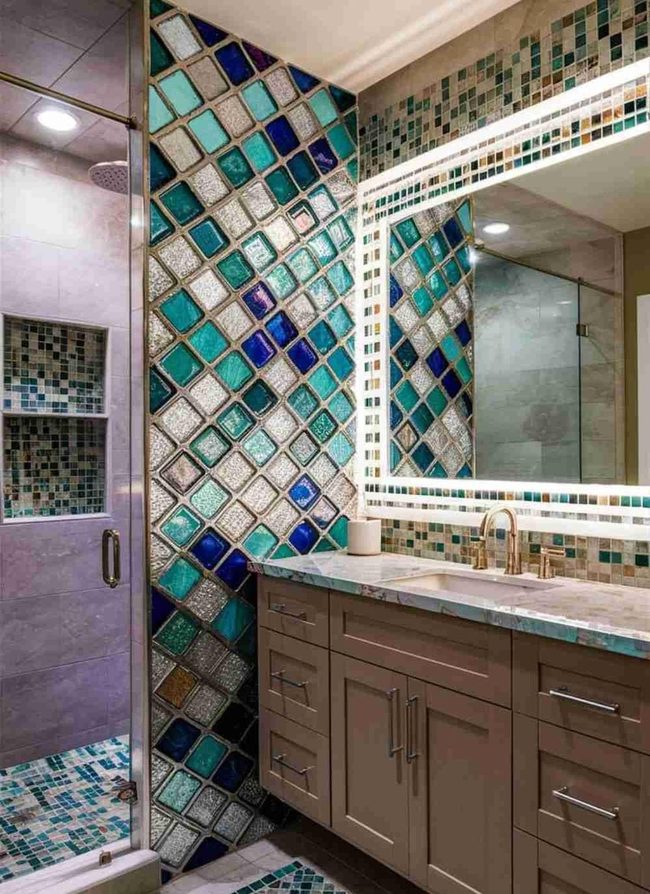
Mosaic tiles are small pieces, often square or rectangular, arranged on a backing mesh to form patterns and designs that cluster with high-energy color and intricate detail across any surface.
These tiles come from diverse materials like glass, ceramic, porcelain, stone, and even metal, and their petite size lets them slip into corners, edges, and tight spaces where larger tiles simply won't fit.
Metallic and glass varieties stand out as especially eye-catching options, with metallic mosaics reflecting ambient to form a modern, modern vibe while glass mosaics deliver a glossy finish in a dazzling range of colors.
Beyond their beauty, mosaic tiles hold up well over time and stay easy to clean and maintain.
You can arrange them in countless ways, classic patterns like chevrons and herringbones work for both modern and traditional spaces, while geometric shapes such as hexagons and diamonds bring a contemporary edge that makes a statement.
Color gradients and ombré effects add depth and movement, and random patterns offer an eclectic, artistic feel that feels uniquely yours.
Jasmine Lee
Content Creator & Style Advisor
Expertise
Content Creation & Engaging Writing, Home Project Ideas & Decorating Tips, DIY Projects & Creative Solutions, Trend Spotlights & Practical Styling Advice, Easy-to-Follow Guides for Home Decor
Education
University of California, Los Angeles (UCLA)
Jasmine Lee is a content creator and style advisor at Nesthance, making home décor feel fun and effortless. With a degree in communications from UCLA, she has a knack for turning decorating ideas into easy, step-by-step guides that anyone can follow.
She loves sharing practical styling tips, creative DIY projects, and trend insights to help readers refresh their spaces without stress. Her work focuses on making design approachable and inspiring for all.
Outside of writing, Jasmine enjoys discovering new design trends, attending workshops, and curating inspiration boards to keep ideas fresh and exciting.