
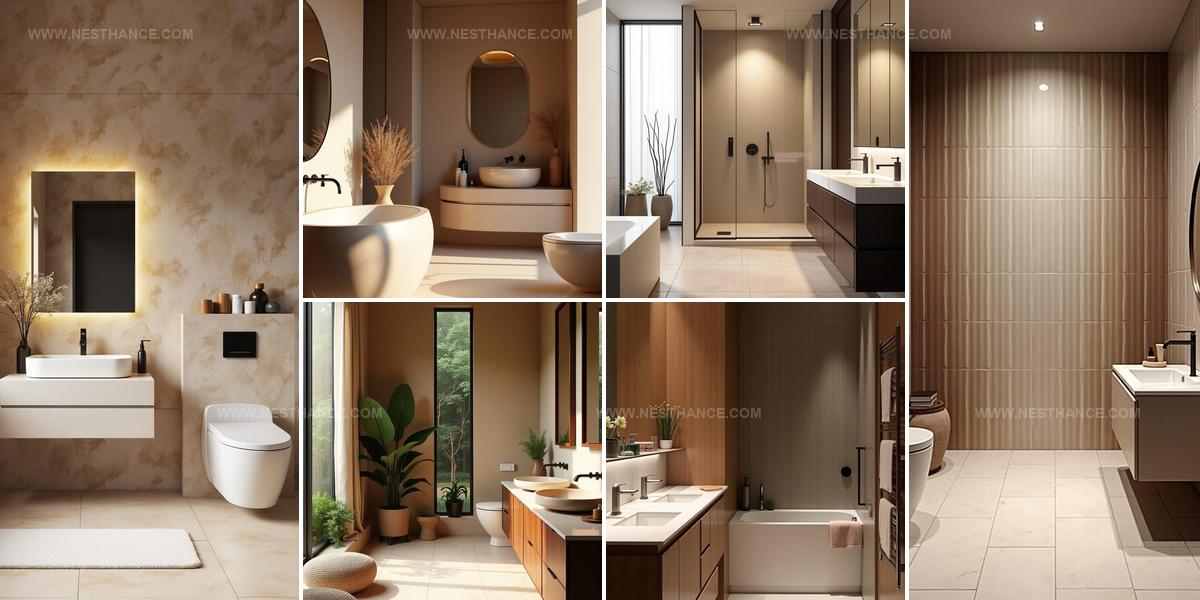
10 Warm Brown And Beige Bathroom Design Ideas

A brown and beige bathroom offers a warm and inviting atmosphere that feels both timeless and sophisticated.
These neutral tones work beautifully together because they complement nearly any design style, from modern minimalism to rustic farmhouse charm.
The combination creates a calming retreat where you can unwind after a long day while maintaining an elegant aesthetic that never goes out of fashion.
Rich chocolate browns paired with soft sandy beiges add depth and visual interest without overwhelming the senses.
Natural materials like wood, stone, and woven textures enhance the organic feel of this color palette.
The versatility of these hues means they adapt seamlessly to changing trends and personal preferences over time.
Continue reading to see how simple choices in fixtures, finishes, and accents can help you achieve a cohesive and beautiful space.
Brown Wood Bathroom Statement Pieces
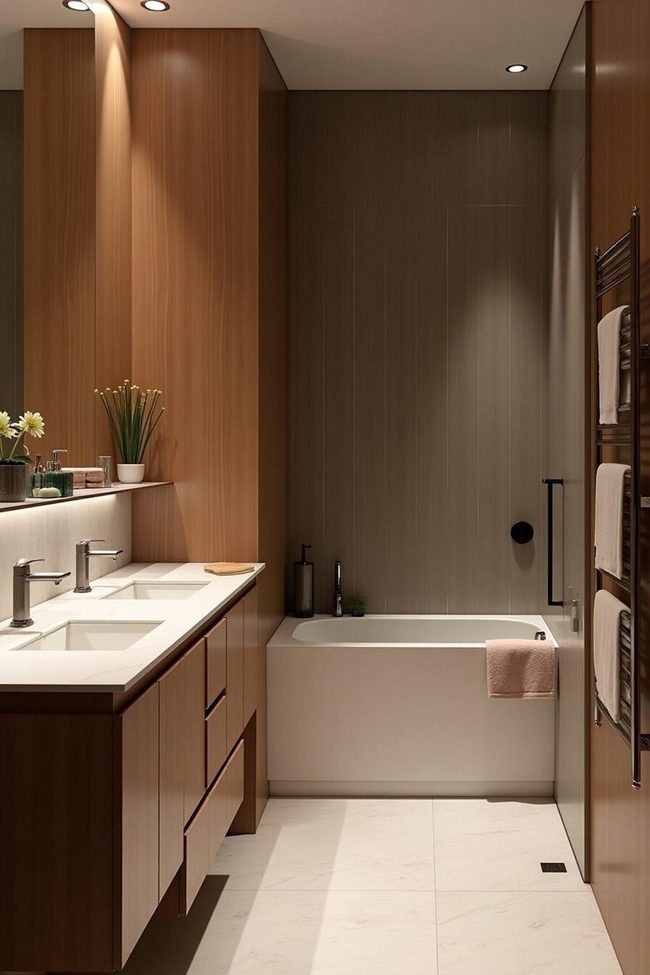
Wood is making a dramatic return to bathroom design, and it's moved far beyond small accents to become the main attraction in brown and beige spaces.
Large-scale wood applications like full wall cladding, custom vanities, and built-in storage now dominate modern bathrooms, showcasing rich walnut, golden oak, and honey-toned woods that bring real warmth to rooms that might otherwise feel sterile or flat.
Modern sealants and finishing techniques have made wood easy to maintain in moisture-rich environments, opening up possibilities like wooden shower benches and tub surrounds that weren't feasible before.
Live-edge design touches preserve the natural contour of the tree in countertops or shelving and add character that draws the eye.
Reclaimed wood with its knots, nail holes, and color variations tells a story and makes your bathroom feel deeply personal and unique.
Wooden slat walls or ceilings build visual rhythm and also improve acoustics in bathrooms that typically echo.
For a standout option, consider a wooden soaking tub as a functional sculpture that centers your entire design around it.
Smaller elements like wooden shower floors, bath trays, and accessory holders extend the wood theme throughout the space.
When working with wood, varying tones within the brown spectrum build more interest than perfectly matched pieces and give your bathroom a collected-over-time feeling that feels more sophisticated.
Chocolate Brown Meets Glow Beige
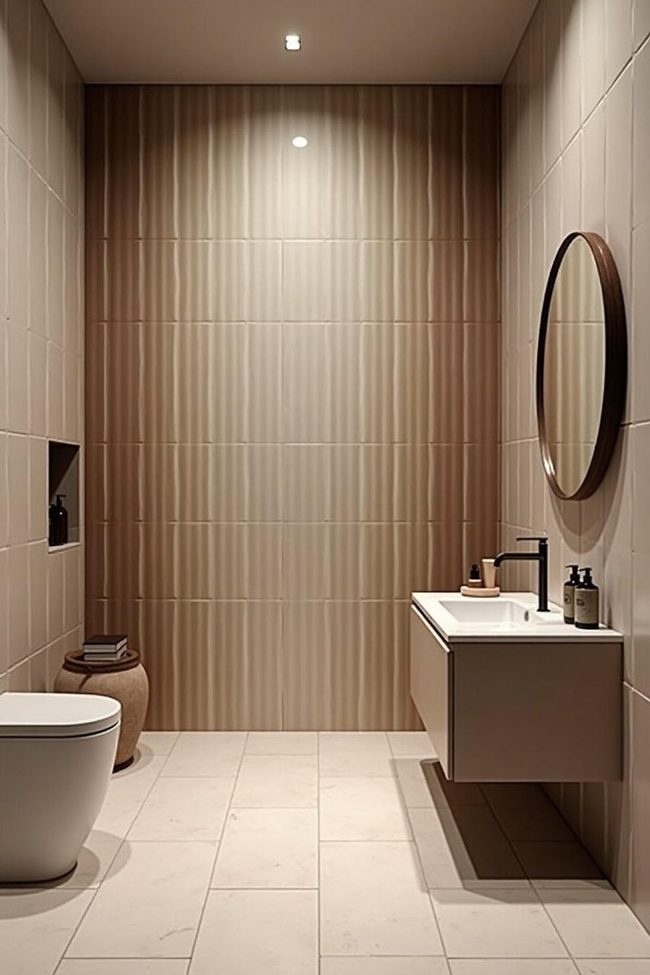
Pairing light beiges with deep chocolate browns in the same bathroom creates notable visual contrast that draws immediate attention and defines even modest spaces.
Darker brown tones work best on grounding elements like floors or lower walls, while lighter beiges belong on upper walls and ceilings, following classical design principles that make spaces feel stable and.
One of the most dramatic uses is wrapping a freestanding tub alcove in chocolate brown, which instantly it into a distinctive special retreat.
In larger bathrooms, these contrasting neutrals naturally zone different areas, separating your shower from your vanity space without requiring walls or barriers.
Rather than splitting your space 50/50, designers recommend using roughly 70 percent of your dominant tone and 30 percent of the accent shade for better balance.
You get enough visual interest to skip additional colors entirely, and the result feels sophisticated rather than plain.
Two-tone neutral schemes work across any style, whether you're drawn to modern color-blocking or traditional beadboard wainscoting painted in contrasting shades.
What makes setup particularly appealing is how it stays timeless, it references design principles that have worked for centuries while still feeling current and relevant today.
Curved Beige Bathroom Forms
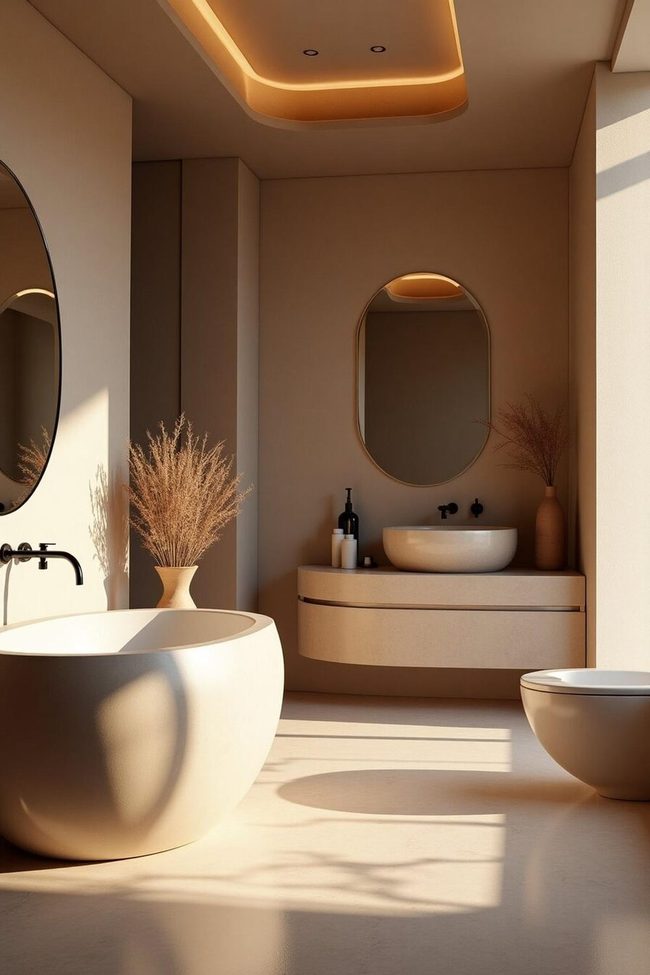
Curved mirrors and egg-shaped freestanding tubs with sculptural forms are steering bathroom design away from straight edges and rigid angles, bringing flowing shapes that echo natural landscapes in beige and brown tones.
Rounded shower enclosures with curved glass panels sweep away harsh corners and make the space feel more visually interesting.
Hand-formed sink basins with irregular edges add character to everyday functional pieces.
Fish scale tiles, pebble patterns, and zellige with naturally imperfect surfaces bring organic beauty into these spaces.
Arched doorways and curved niches carved into walls add architectural interest and en how different areas connect to one another.
Oval soap dishes, round mirrors, and curved hardware reinforce this er approach throughout the room.
You don't need to eliminate straight lines entirely, and we recommend balancing curved and straight elements instead because removing all angles can make the space feel too whimsical and lose its structure.
Green Walls Brown Bathroom Spa
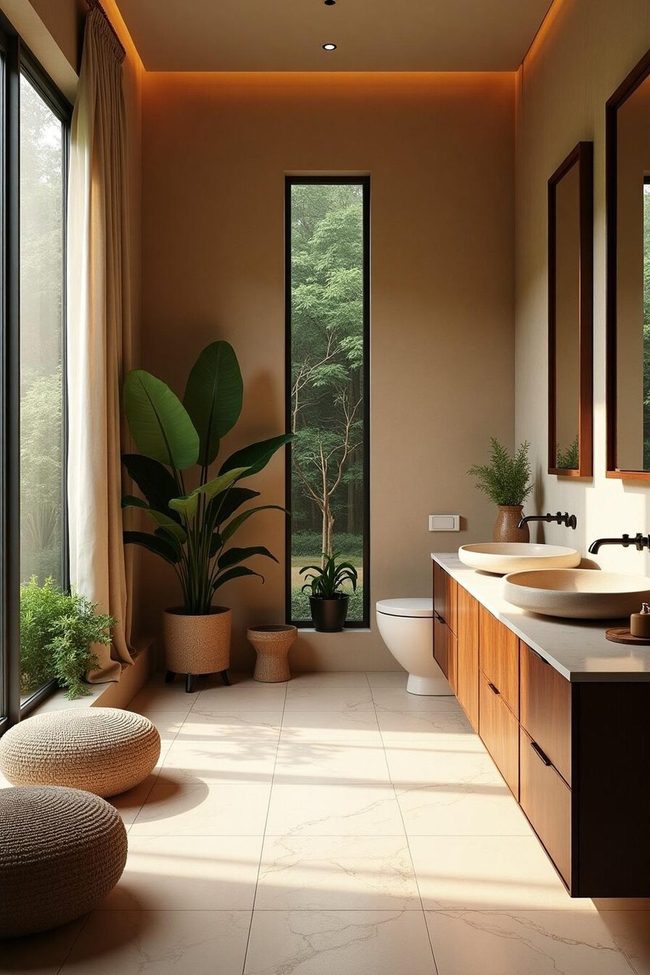
Brown and beige bathrooms inspired by nature blend living plants and raw materials into spaces that feel connected to the earth and its rhythms.
Living walls of trailing ivy and moisture-loving ferns add color-driven texture while purifying the air, and custom shower niches with grow lights let tropical plants flourish in the humid environment like mini ecosystems you interact with daily.
Natural stone vanity tops display visible fossils and distinctive veining that tell stories of geological time, while warm brown tones echo soil, tree bark, and wood to comfort you through colors your body recognizes from nature.
Large windows or skylights flood the room with changing daylight throughout the day and blur the line between indoor and outdoor spaces.
Water features beyond basic fixtures, small fountains or gentle channels, add soothing sounds that deepen your sense of calm and relaxation.
Stone floors with texture encourage bare feet, and wooden surfaces with visible grain encourage you to run your hands across them and experience natural materials tactually.
Building an environment this way means connecting yourself to natural cycles and elements every time you walk in.
Seamless Beige Plaster Bathroom Surfaces
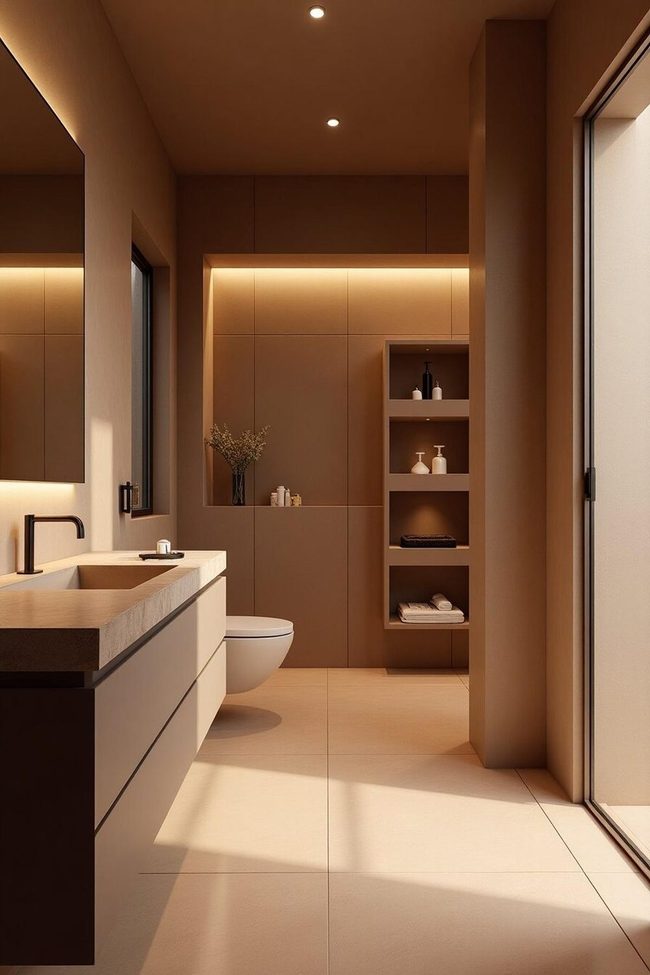
Hand-applied tadelakt and microcement finishes shimmer with light throughout the day, casting understated movement across monochromatic bathroom spaces in ways that standard tiles simply cannot replicate.
Both techniques originate from ancient plastering methods and are now reshaping modern bathroom design by offering seamless, waterproof surfaces in gorgeous beige and brown gradations.
Tadelakt comes from Morocco and uses lime plaster to add water-resistant areas without grout lines, making it excellent for shower enclosures and bath surrounds.
Microcement serves as the contemporary option, delivering similar waterproofing with slightly more durability and a matte finish that suits minimalist spaces beautifully.
You can tint either finish to match your exact preferences, ranging from pale sand to rich cocoa, and even blend different tones across surfaces for custom color gradients.
The hand-applied nature of both materials means natural variations and minor imperfections emerge, and these features tell a story of skilled craftsmanship that factory-made products cannot match.
When these finishes cover multiple surfaces throughout your bathroom, they merge floors, walls, and built-in elements into one relaxing environment that feels both luxurious and spa-like.
Beyond their visual appeal, we appreciate that these surfaces resist the maintenance headaches of traditional materials, no discolored grout lines to worry about and no cracked tiles to replace.
Warm Speckled Terrazzo Surfaces
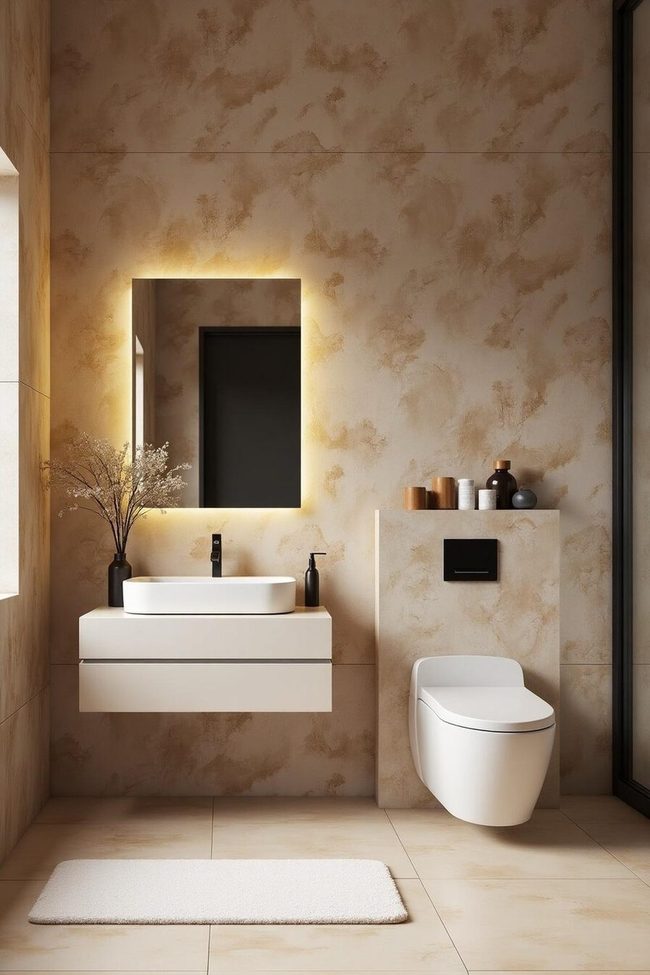
Earth-toned terrazzo is making a major comeback right now, and what sets this revival apart is the shift toward warm speckles of amber, cinnamon, and cream rather than the cooler tones we saw before.
Shower walls with larger aggregate pieces deliver the most dramatic visual punch and let you showcase this textured trend in full force.
For a more understated option, countertops with fine-grained terrazzo in caramel and sand tones still capture the essence of the look without overwhelming your space.
If you're feeling bold, terrazzo flooring that blends multiple shades of brown with unexpected pops of terracotta or burnt orange makes a real statement.
Modern tile options now make this aesthetic way more accessible than traditional poured terrazzo, which demanded specialized installation skills.
One built for regular use bonus is that earth-toned terrazzo hides water spots and soap scum far better than stark white surfaces, so you get both style and easier maintenance.
When you're selecting your terrazzo pieces, go for varied brown tones instead of a uniform appearance and you are able to build depth and richness throughout your bathroom.
Pairing terrazzo with matte black fixtures creates striking contrast against the textured neutral background and keeps the room from feeling too busy.
Aged Brass Redefines Neutral Bathrooms
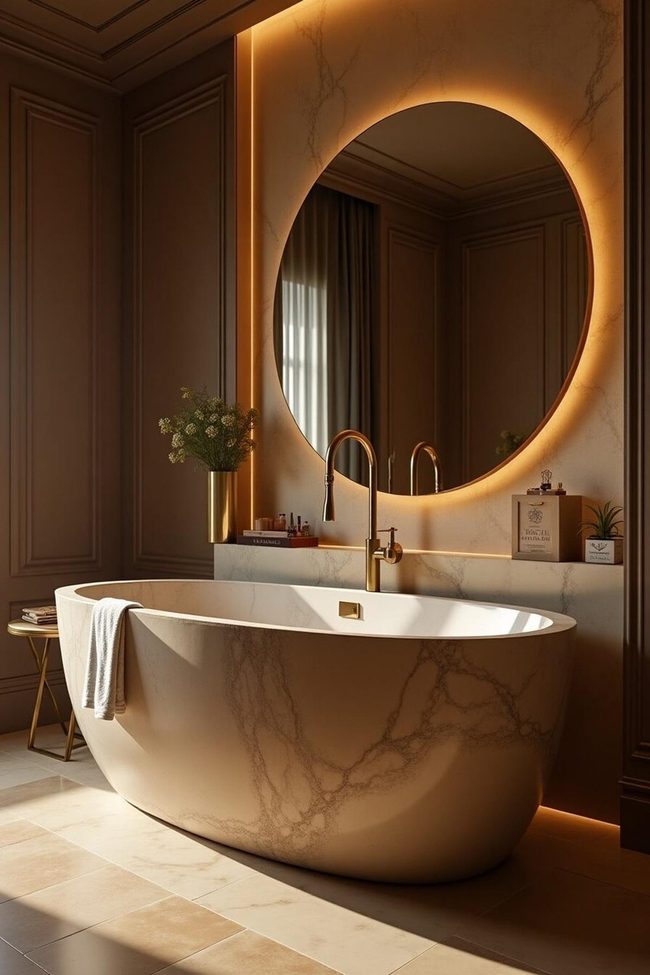
Antique brass fixtures have replaced the cold chrome of the past, becoming the standout choice in brown and beige bathrooms with their warm, rich tones that deepen into beautiful patinas over time.
Mixing different metal finishes together, brass, copper, and bronze, is now not just accepted but preferred, giving spaces a collected and sophisticated feel.
Statement brass mirrors and lighting work hard to anchor a room and add visual interest to simple spaces, while specialty manufacturers now offer brass in shades ranging from honey gold to deep amber so you can match your exact neutral palette.
Beyond fixtures, brass extends into decorative pieces like shelving, towel warmers, and even shower drains, transforming everyday functional items into real design features.
Brass's reflective quality contrasts beautifully against matte wall finishes, and this textural play adds dimension throughout your bathroom.
Choosing substantial brass pieces with real weight matters; lightweight fixtures tend to look cheap and fake.
You could notice that the warm undertones in these metal finishes pair perfectly with beige and brown schemes, enhancing the overall warmth your space naturally holds.
Beige To Brown Tile Gradient
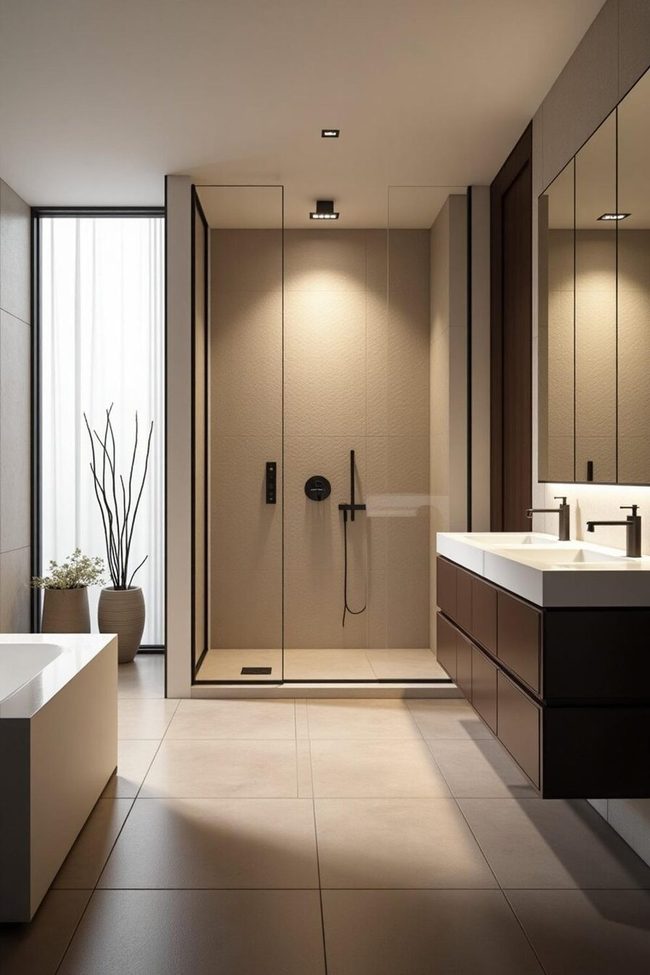
Gradient tile installations bring the color-flow aesthetic from fashion directly into your bathroom through transitions that shift smoothly from light beige to deep chocolate brown across shower walls, behind vanities, or spanning entire surfaces for real impact.
Most installations maintain the same tile shape while shifting the color palette, which keeps things unified without sacrificing visual interest.
You can go delicate with small mosaic tiles that blend almost invisibly from one tone to the next, resembling watercolor washes, or choose larger format tiles in notably different shades arranged to a bold, obvious progression.
Horizontal gradients suggest a landscape horizon, while vertical ones can make ceilings appear taller.
Tile manufacturers now offer color families specifically designed to flow together in these progressive arrangements, making custom gradient installations much more accessible than before.
Shower niches work particularly well with this technique since the gradient can turn ordinary daily items into something worth displaying.
When you're planning your own gradient, think about where natural light enters the room and how it will play across those color shifts to enhance the transitions.
Smaller bathrooms especially benefit from gradients because the visual movement helps the space feel more expansive and lively.
Warm Brown Bathroom Design Japandi
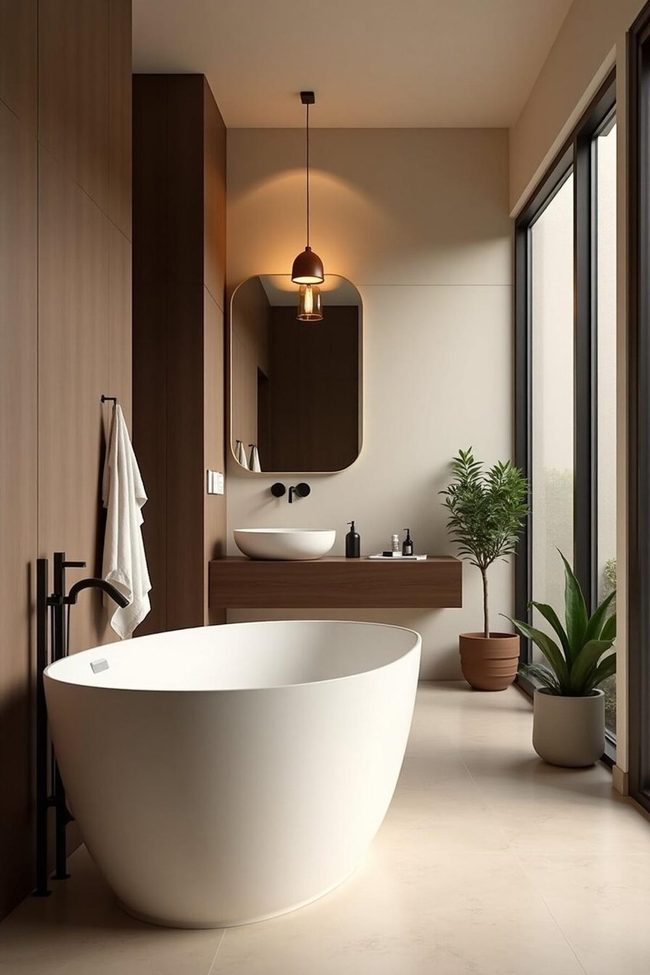
Japandi design, blending Japanese minimalism with Scandinavian practicality, shines in warm brown and beige bathrooms through rich wood tones and clean architectural lines that make spaces feel larger and more grounded than typical white minimalist rooms.
Wall-mounted vanities in natural oak or walnut dominate the space, bringing warmth while keeping floors visually open and uncluttered.
Lighting comes through simple, well-designed fixtures that spread understated, even glow instead of harsh overhead brightness.
Nature-inspired neutrals like sand, stone, walnut, and clay form the backbone of the color scheme with minimal contrast or variation throughout.
You can add dimension through texture alone, ribbed glass shower doors, hand-troweled plaster walls, and woven linen towels all give your fingertips something interesting to experience without breaking the calm aesthetic.
Storage hides away cleverly through custom niches and drawers so toiletries and personal items stay out of sight and out of mind.
Quality materials matter far more than quantity of objects, and across piece serves both a purpose and a visual role.
When you design your space this way, focus on repeating the same shapes and tones throughout rather than relying on patterns or decorative extras, and you are able to find the room develops a peaceful rhythm that feels thoughtfully balanced rather than bare.
Beige Walls With Dimensional Relief
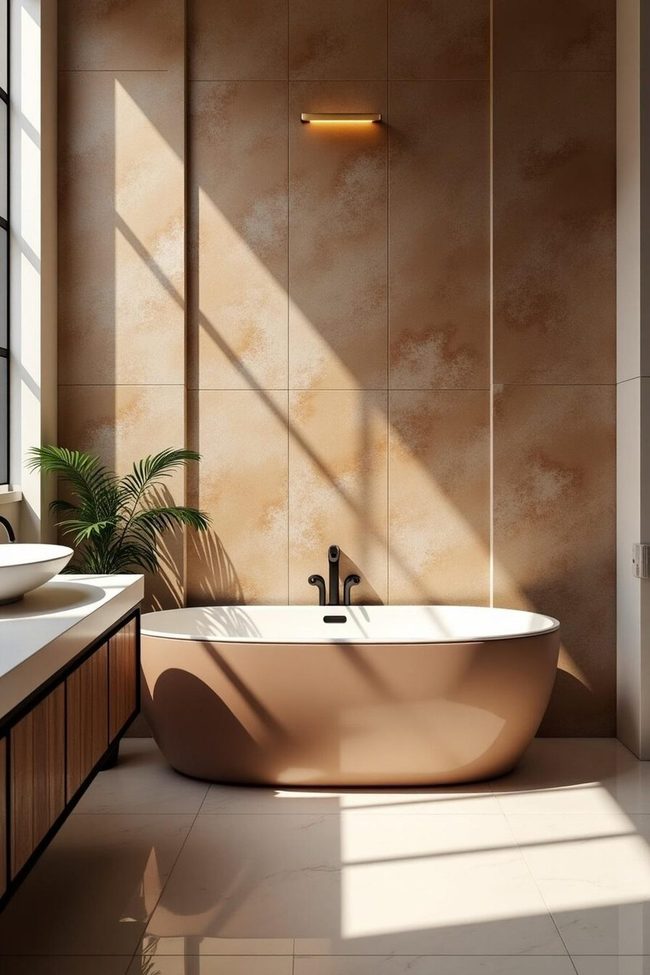
Textured walls have moved far beyond flat beige, with designers now embracing lime washing, Roman clay, and hand-applied plaster that catch light and shadow in constantly shifting patterns throughout your day.
These techniques reference ancient Mediterranean and North African building methods, bringing history and permanence into modern bathrooms while transforming simple beige into something far more interesting.
Surfaces with natural irregularities from hand application add sophistication to any layout and often eliminate the need for additional artwork since the walls become the main feature themselves.
Contemporary options include fluted or ribbed panels in warm wood tones or beige-tinted concrete that introduce vertical lines and make your ceilings feel taller.
Three-dimensional tile installations offer another approach, using geometric patterns through physical relief rather than color alone.
Jasmine Lee
Content Creator & Style Advisor
Expertise
Content Creation & Engaging Writing, Home Project Ideas & Decorating Tips, DIY Projects & Creative Solutions, Trend Spotlights & Practical Styling Advice, Easy-to-Follow Guides for Home Decor
Education
University of California, Los Angeles (UCLA)
Jasmine Lee is a content creator and style advisor at Nesthance, making home décor feel fun and effortless. With a degree in communications from UCLA, she has a knack for turning decorating ideas into easy, step-by-step guides that anyone can follow.
She loves sharing practical styling tips, creative DIY projects, and trend insights to help readers refresh their spaces without stress. Her work focuses on making design approachable and inspiring for all.
Outside of writing, Jasmine enjoys discovering new design trends, attending workshops, and curating inspiration boards to keep ideas fresh and exciting.