
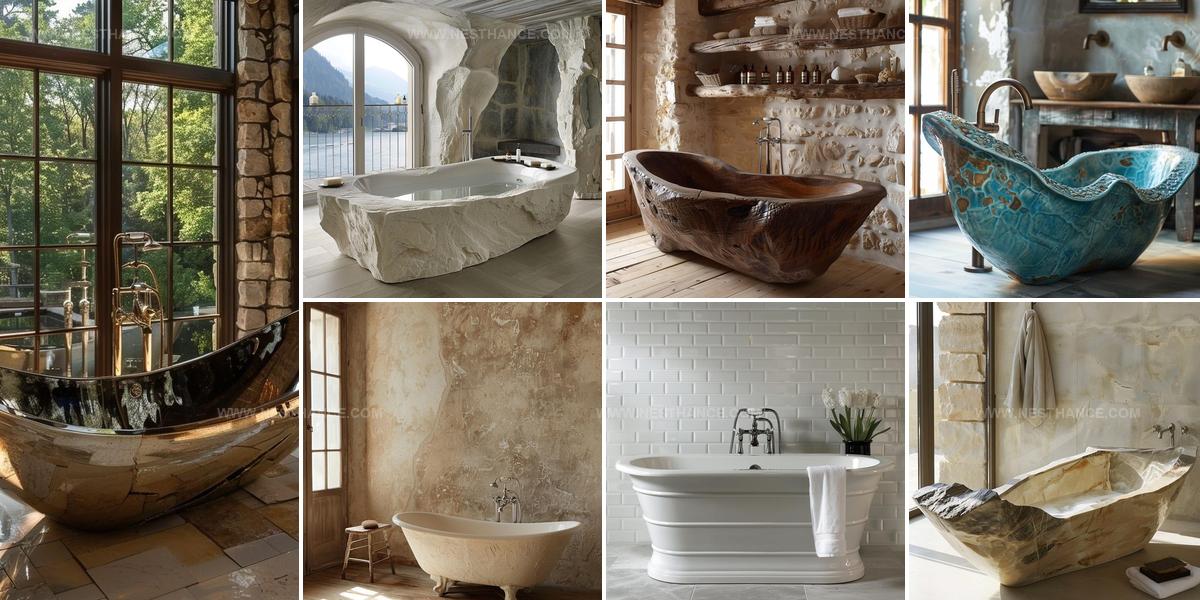
13 Wabi Sabi Bathroom Ideas for Imperfect Beauty

A wabi sabi bathroom embraces the beauty of imperfection and finds peace in natural elements that speak to authenticity rather than polished perfection.
This Japanese aesthetic philosophy celebrates organic textures, weathered materials, and the kind of simplicity that makes you feel grounded the moment you step inside.
The approach honors age and wear as marks of character, turning what others might see as flaws into features worth appreciating.
Stone with visible veining, wood that shows its grain, and ceramics with irregular glazes all contribute to an atmosphere of calm acceptance.
Such spaces reject sterile uniformity in favor of warmth that comes from honest materials and thoughtful restraint.
The philosophy connects us to nature and reminds us that beauty exists in transience and impermanence.
Finding harmony in simplicity can help you see how less truly becomes more when every element has meaning.
Oval Stone Soaking Tub
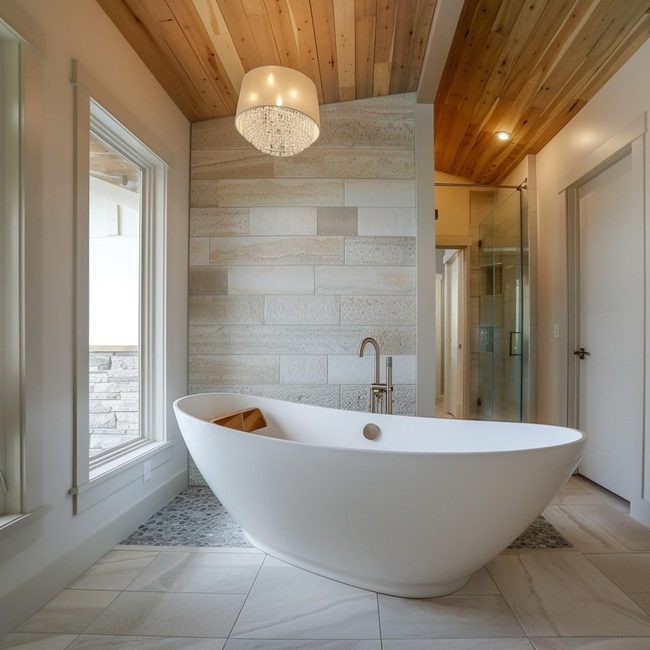
That freestanding soaking tub in sculptural shapes like ovals, eggs, or circles becomes the showstopping centerpiece of your wabi-sabi bathroom, and materials such as stone, copper, or enameled cast iron ensure it lasts for years while delivering that therapeutic soak you deserve.
If you prefer a more understated look, built-in tubs with clean lines and minimalist design work just as well for the space you have.
Positioning your tub near windows that frame views of trees and plants lets you connect with nature during your soak, and surrounding the area with natural textures like linen curtains, woven fabrics, wooden shelving, and pebble flooring strengthens that bond with the outdoors.
A small wooden bath caddy holds candles, fresh flowers, and essential oils to enhance the mood and ritual of your bathing time.
Handmade ceramics, asymmetrical sconces, and antler hooks scattered throughout bring in those imperfect wabi-sabi touches that keep the space feeling honest and grounded.
Beyond the physical comfort, soaking in stillness cultivates mindfulness in the Japanese tradition and gives your mind and body the rest they need.
This quiet ritual becomes your personal space for rejuvenation and calm.
Hand-Troweled Plaster Walls Earth
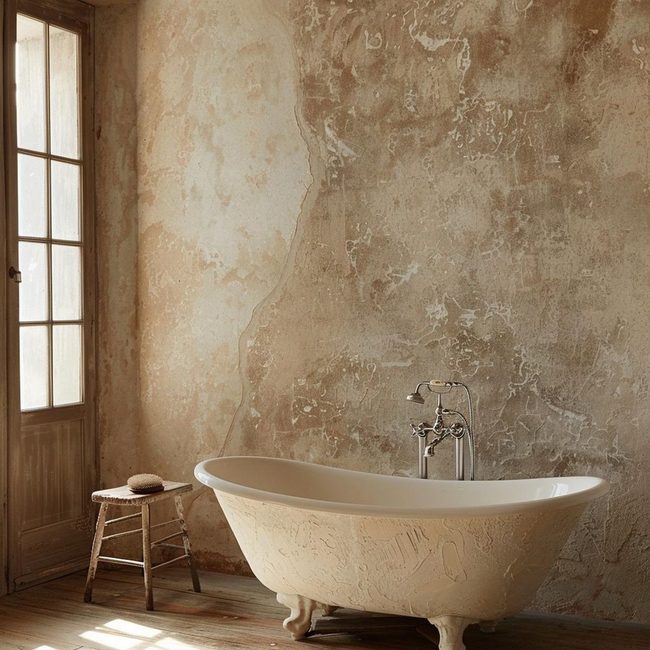
Textured plaster walls bring raw, organic character to any space and stand out as a bold alternative to flat drywall surfaces.
Hand-troweled finishes in earthy shades like sand, fog, sage, timber, or flax give rooms an authentic, aged quality that feels connected to nature.
Lime-based Venetian plaster works especially well when you apply techniques such as troweling, stippling, or fresco work to build up dimensional, mottled surfaces with natural variation.
Exposed brick or stone masonry peeking through the plaster adds even more depth and history to your walls.
Wood boards positioned as a base layer complement the plaster beautifully and provide visual contrast.
Visible trowel marks left behind during application preserve that handmade quality, and rounded corners paired with handmade ceramic tiles echo this natural aesthetic.
Plaster adapts to your vision and allows you to build spaces inspired by wabi-sabi principles that celebrate imperfection.
Those mineral-rich, irregular walls evoke the peaceful calm you'd find in an ancient monastery or traditional bath.
Aged Mirror Fragments Catch Light
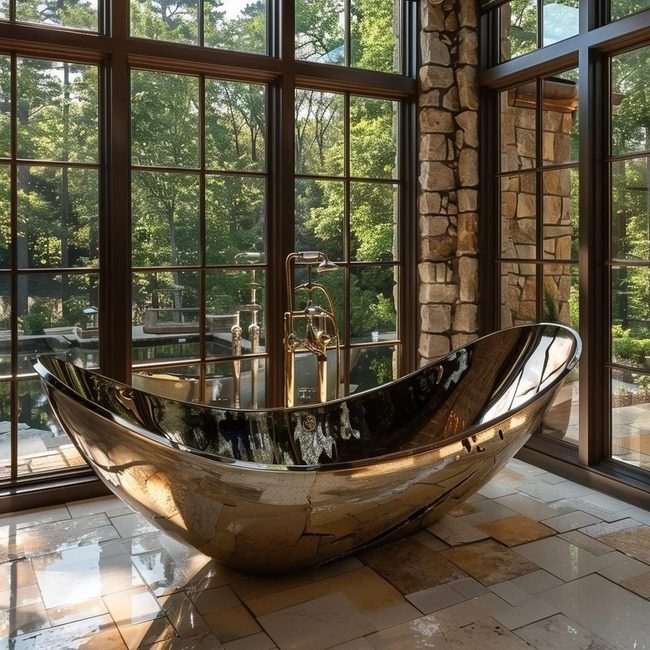
Salvaged mirrors bring a mesmerizing quality to your bathroom through their fractured reflections and aged surfaces, especially when you arrange mirror shards into a mosaic accent wall or collage frame using pieces of different shapes and sizes that scatter light across the space in unexpected ways.
You can hunt for antique mirrors with dark spots, clouding, and slight distortion that whisper their history, or search out ornate frames with chips and worn gilt edging that enhance their weathered character.
Consider hanging a scalloped or curved mirror asymmetrically rather than covering your entire wall, since a single statement piece often speaks louder than a full installation.
Mirror fragments work beautifully as a custom vanity skirt or backsplash above your sink, transforming everyday fixtures into something with more personality.
Vintage mirrors fit perfectly into wabi-sabi style bathrooms because their flaws and oxidation become adornments rather than things to hide.
Choosing secondhand pieces means your bathroom reflects both light and the poetic story of where those mirrors have been.
Reclaimed Grain Bathroom Vanity
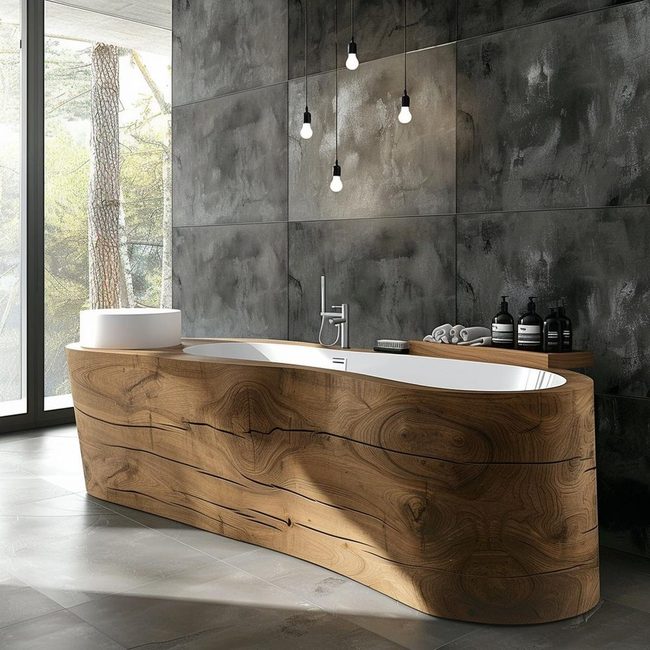
Wood vanities bring warmth and natural character to a wabi-sabi bathroom, and reclaimed pieces with visible imperfections celebrate the beauty of age and wear.
Distressed, washed, or smoked finishes blend seamlessly with this aesthetic, while pairing wood with stone countertops marries two natural materials in harmony.
You might choose an old-fashioned washstand style with legs and a towel bar for authentic vintage appeal, or look for round or oval sinks that soften the overall look.
Unfinished, raw wood showing knots and grain adds texture and depth, and authentic antique vanities or new pieces designed to look distressed both work well.
Aim for a vanity that appears handed down through generations, complete with dents and faded patina that tell a story.
Weathered wood brings a rustic, calming quality to the space and pairs beautifully with the wabi-sabi philosophy of embracing imperfection.
This natural material connects your bathroom to the earth and creates a sense of timelessness that your family will appreciate.
An unassuming wood vanity becomes a lovely focal point that radiates warmth and harmony throughout your bathing space.
Uneven Stone Tiles Earth Tones
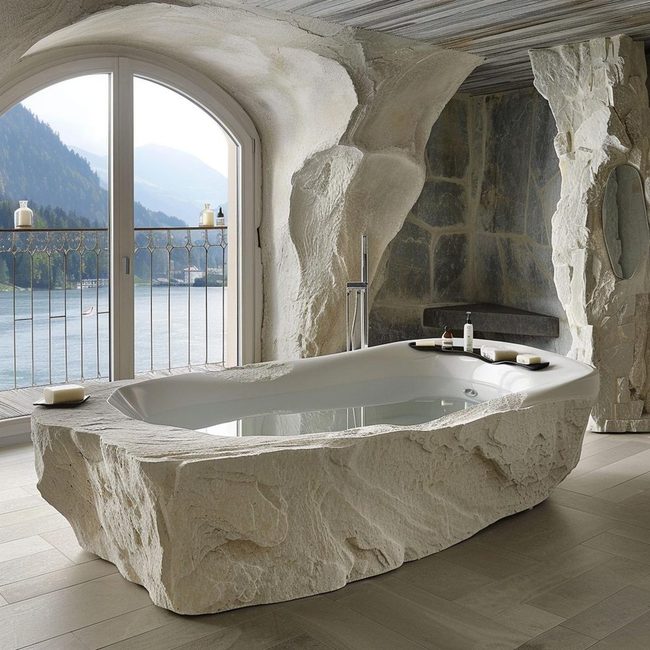
Natural stone tiles bring genuine texture and imperfect beauty into a wabi-sabi style bathroom with their raw, unpolished surfaces and weathered character.
You can choose from slate, travertine, limestone, river rock, or pebbles for your flooring or walls, and salvaged stone pavers work wonderfully as repurposed options too.
Mixing different tile sizes and shapes keeps the look wonderfully asymmetric and flawed, while varying shades and veining in every piece prevent any uniform sameness.
Hand-cut irregular stones or tumbled rocks celebrate natural diversity and the unique marks from their previous lives as roof tiles or old flooring.
Wide grout lines enhance the historic, aged feel you're going for, and rough surfaces with cracks and chips add visual interest that suits the wabi-sabi philosophy perfectly.
Neutral, earthy hues help you achieve harmony with nature, and the low-key variations in pattern and texture throughout your stone work reflect the genuine beauty found in the earth itself.
Every imperfection in the material tells a story and embodies the wabi-sabi ideals of finding beauty in what's flawed and time-worn.
Aging Brass Develops Natural Patina
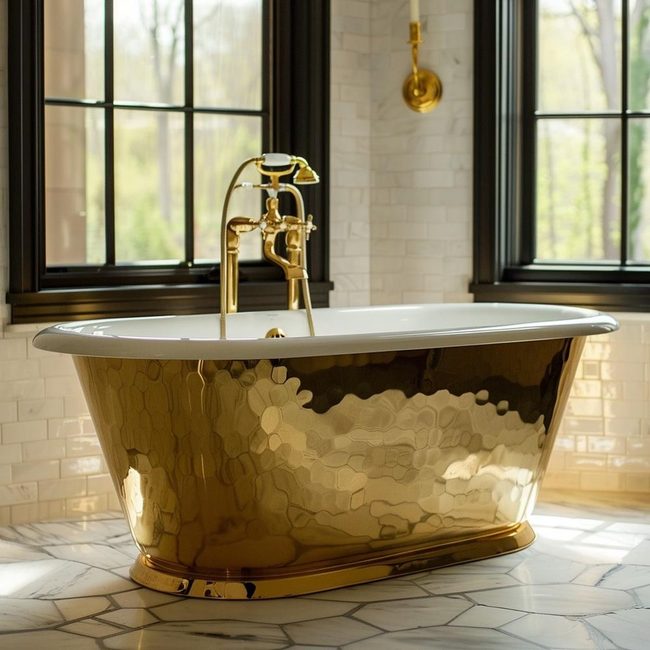
Unlacquered brass fixtures develop a stunning patina over time, transforming your bathroom with natural aging and weathered character that suits wabi-sabi design perfectly.
Water stains, fingerprints, and small scratches accumulate on uncoated brass, and these marks tell the story of daily use rather than detracting from the look.
You can select raw brass or remove the finish from existing fixtures to watch how they oxidize into low-key black and brown tones as months and years pass.
Matte, brushed, or satin brass offers a quieter patina, while polished brass delivers bolder, brassy tones depending on your preference.
Vintage-style basin taps, tub fillers, and shower heads take on a charming, timeworn quality as the unsealed brass ages and changes.
Solid brass hardware and accessories throughout your space gain that same lovely, organic patina and evolve naturally alongside your fixtures.
This living finish approach means your bathroom becomes more beautiful the longer you use it, and the weathered beauty aligns with an aesthetic that truly values aged and imperfect materials.
Aged Maple Bathroom Furniture Revival
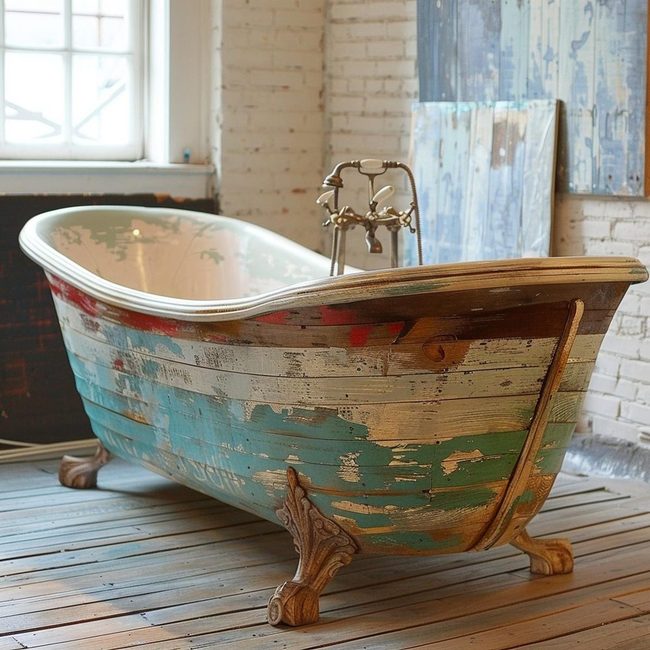
Old wooden ladders leaning against your bathroom wall hold towels in a way that catches the eye immediately, while upcycled farmhouse cabinets serve as sink vanities and salvaged shipping crates become open shelving with rustic charm.
Repurposed industrial stools work as quirky side tables, and you can find pieces that reveal their history through nicks, stains, carvings, and peeling paint that make them worth keeping.
Look for mismatched drawers stamped with faded hotel numbers or cushioned seats with worn upholstery, then add your own touch by sanding, staining, or rewrapping them in natural fabrics.
Wabi-sabi philosophy teaches us that age and imperfection enhance rather than diminish beauty, and this Japanese aesthetic fills bathrooms with soul by honoring worn things and irregular shapes.
Stone, wood, and plaster bring the spirit of nature indoors, while handcrafted pieces add an earthy human quality that asymmetrical arrangements and visible marks amplify.
Breathing new life into vintage finds and well-loved antiques rewards your space with character and history that grows richer over time.
Surrounding yourself with furnishings that bear the marks of living well creates an intimate, welcoming oasis where textures and colors connect you to the natural world.
Cream White Ceramic Subway Perfection
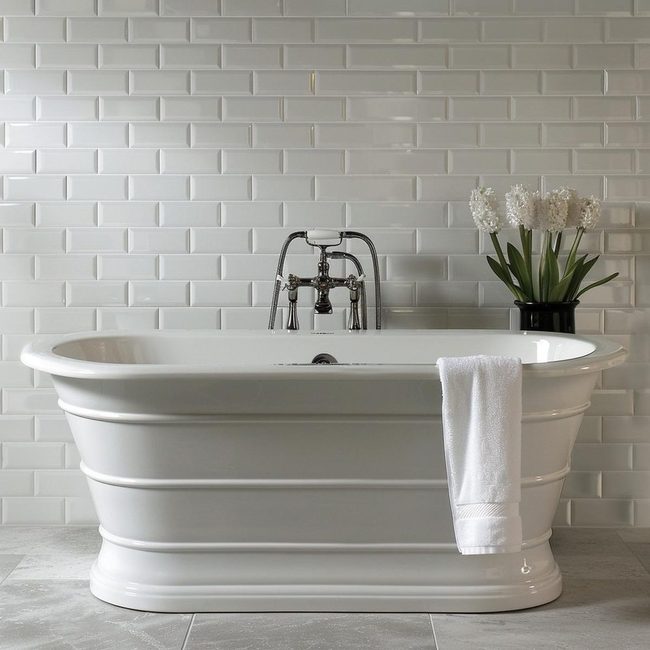
Subway tiles bring authentic character to wabi-sabi bathrooms, and their rectangular 3 x 6 inch shape originated in busy urban stations over a century ago where smooth surfaces made cleaning simple in high-traffic areas.
You can layer different shades of white, cream, and gray across your walls and mix in textured accent tiles like handmade ceramics or moroccan fish scale patterns to build visual interest and depth.
Look for vintage variations that show real signs of age, slight chips, cracks, and stains that tell a story of time passing, since glossy tiles develop an opaque patina while matte finishes display delicate wear beautifully.
Arranging tiles in offset or herringbone patterns adds movement, and varying your grout colors with uneven grout lines introduces authentic imperfection that feels honest and lived-in.
Your bathroom gains warmth and dimension when you layer multiple elements together rather than focusing on one dominant feature.
Simple subway tile proves that sometimes the most understated choices provide the best foundation for a space that feels both timeless and deeply personal.
Unpolished Granite Soaking Tub
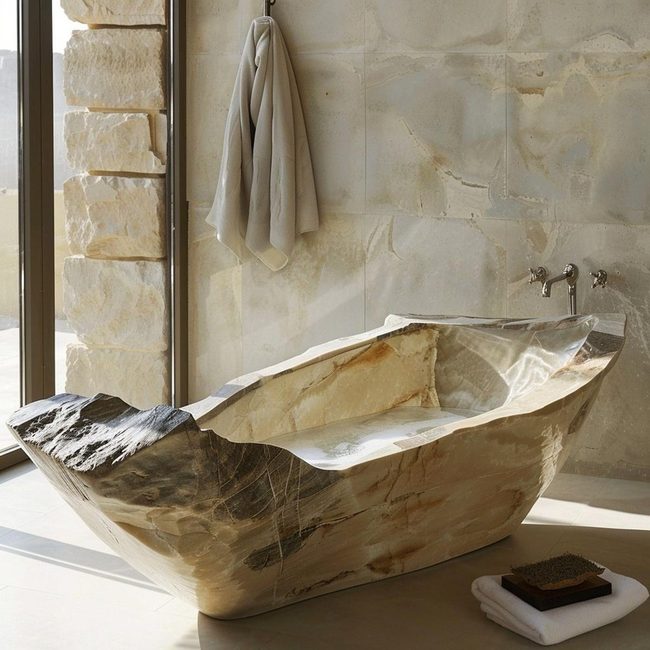
Every natural stone bathtub stands as one of the most striking elements you can add to a wabi-sabi bathroom, with its raw texture and irregular beauty immediately drawing attention as soon as you enter the space.
Granite, marble, and limestone across bring their own unique veining and organic variations, and these imperfections are exactly what makes the design work so well.
Oval or asymmetrical shapes feel especially authentic, and you could want to let the stone's natural character show rather than polishing it smooth and glossy.
You can position your tub as a freestanding piece or build it directly into the floor and surround it with complementary wood or stone surfaces.
Beyond its refined appearance, a stone bath offers real benefits like durability that lasts decades, natural antibacterial properties from the stone's minerals, and that grounding sensation of cool, solid material against your skin.
Neutral shades like white, gray, black, and brown work beautifully in this style and won't compete with other elements in your bathroom.
Soaking in heated stone provides genuine therapeutic relief for your body and mind, connecting you to nature in a way that feels genuinely Zen.
This single piece anchors your entire space with its solid presence and aligns perfectly with the wabi-sabi philosophy of celebrating natural imperfection and timeless simplicity.
Unglazed Clay Vessels And Imperfection
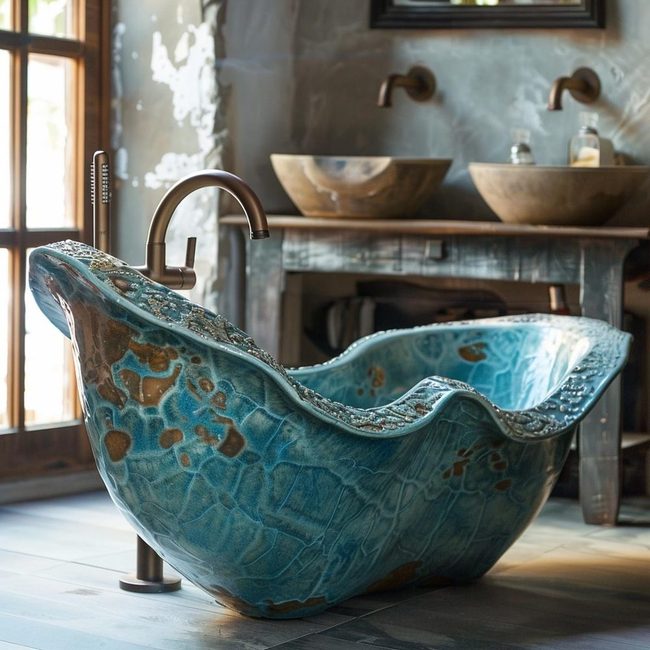
Handcrafted ceramic pieces with visible cracks, uneven glazing, and asymmetrical shapes become striking feature areas in a wabi-sabi bathroom, celebrating imperfection as true artistry.
Local artists introduce these one-of-a-kind works with minimal glaze that emphasizes raw, earthy surfaces and the maker's hand in every piece.
Simple forms like bowls, vases, and stoneware soap dishes work best, and you can arrange them on wood shelves, place them along the bathtub's edge, or use them as plant vessels throughout the space.
Neutral tones and natural clay textures connect these pieces to the earth and ground your bathroom in organic warmth.
Muted firing variations and deliberate imperfections in throughout ceramic item showcase human creativity and handmade character that mass-produced items simply cannot match.
Consider commissioning custom basins, tiles, or soap dishes from local makers who hand throw, slab build, or pinch their clay into functional art.
Vintage Clawfoot Tub Centerpiece
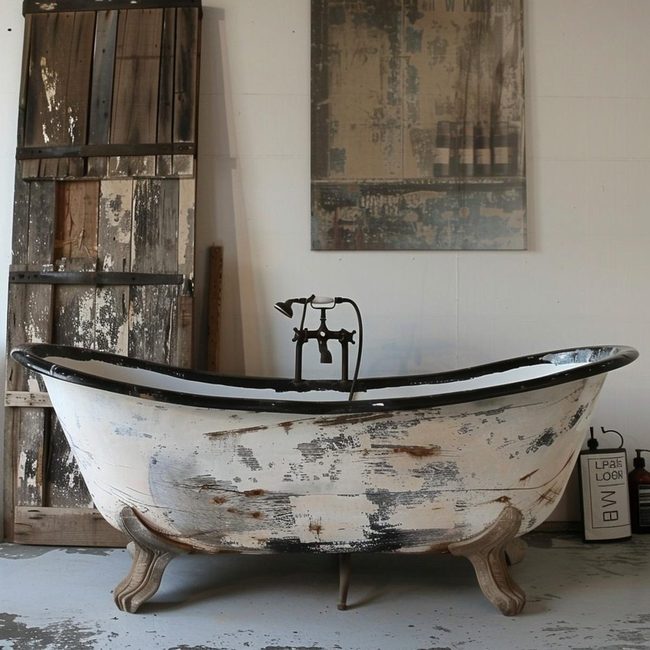
An old bathtub can become the centerpiece of your bathroom when you give it new life through salvage and repurposing.
Clawfoot tubs from the early 1900s stand out as freestanding pieces that naturally draw attention in any space.
You might also find wall-mounted or inset models that can be converted into pedestal-style tubs with custom inserts for that standalone appeal.
Depending on what condition your tub is in, you can restore it for actual use or transform it into a planter, fountain, or storage solution instead.
Keeping the chips, scratches, and worn spots visible honors the age and history of the piece, or you can refinish it with rubbed bronze, gloss black, or matte white to refresh it while maintaining that timeless quality.
Distressed metal, weathered porcelain, and vintage enamel over steel all work beautifully for this kind of project.
Pairing your salvaged tub with vintage-style plumbing fixtures and adding a rusted patina or hand-applied finish keeps everything connected to the past.
With the layout, to bathroom design is both sustainable and meaningful, turning forgotten objects into something you may use and enjoy for years to come.
Raw Hardwood Shelves Natural Storage
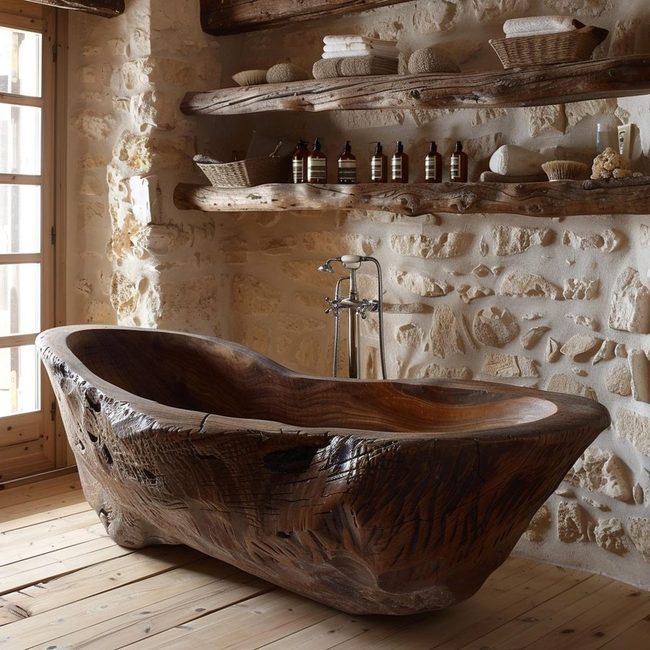
Rough wood shelving brings genuine earthiness to your bathroom through natural materials that celebrate imperfection and age.
Reclaimed barn beams or unfinished logs become functional art when you leave the bark edges raw and allow the wood to remain unpainted, revealing all the cracks, splits and knots that make eachpiece unique.
You can lean floating shelves at asymmetrical angles against the wall for that casually imperfect feel, or mount live edge slabs for a modern take on rustic storage.
Wood grains and rich textures show their warmth when allowed to age naturally without stain or finish, and this unpretentious approach balances manmade construction with the organic world around us.
Whether you use these shelves for storage or display, they bring honest earthiness and welcoming character that feels both handcrafted and timeless.
The wabi-sabi style celebrates what nature gives us, and rough wood shelving does exactly that by honoring the material's authentic beauty and flaws.
Aged Ceramic Mosaic Bathroom Walls
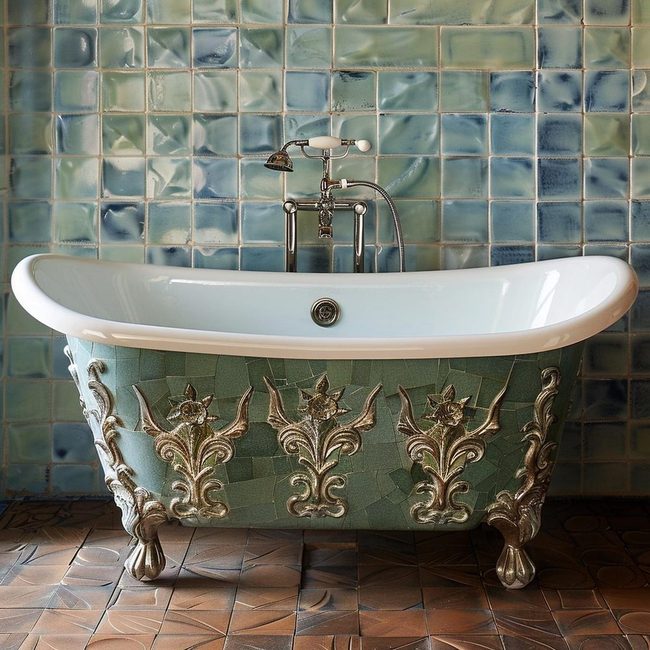
Vintage and antique tiles bring remarkable aged beauty and authentic character into bathrooms inspired by wabi-sabi design, where imperfection is celebrated rather than hidden.
Subway tiles, penny rounds, hexagons, and other mosaic shapes offer timeless options that work well in this style, and you can source true vintage pieces from old buildings or purchase reproduction classics that capture that historic feel.
Mixing different eras and types of old tile together creates an eclectic look, with mismatched grout lines and irregular spacing that add genuine personality to your space.
Many companies sell boxes of old tile remnants and misfit pieces, letting you build unique combinations that feel entirely your own.
Look for tiles with color variation and minor chips or cracks that show their age honestly, and worn surfaces with opaque, pitted, or streaked finishes bring real depth to the walls.
Cloudy clear glass tiles offer a frosted, weathered appearance that fits this aesthetic perfectly.
All these signs of wear and imperfection align with the Japanese wabi-sabi philosophy that finds beauty in the natural aging process, and your bathroom becomes a space filled with soulful history rather than sterile perfection.
Alex Morgan
Founder & Head Home Stylist
Expertise
Interior Design and Space Planning, Color Theory and Eco-Friendly Practices, Traditional Art Techniques and Digital Innovation, Conceptual Development and Interdisciplinary Collaboration
Education
Otis College of Art and Design (Los Angeles, CA)
UCLA Extension (Los Angeles, CA)
Alex Morgan is the creative mind behind Nesthance, where he blends art and design to make home styling simple and inspiring. With a background in fine arts from Otis College and an interior design certificate from UCLA Extension, he brings a unique mix of creativity and practicality to every space.
From smart layouts to eco-friendly touches, Alex believes great design should be easy and accessible. Through Nesthance, he shares simple decorating ideas, DIY projects, and creative tips to help people turn their houses into homes.
When he’s not designing, Alex loves exploring LA’s flea markets, sipping coffee at local cafés, and finding fresh inspiration for his next project.