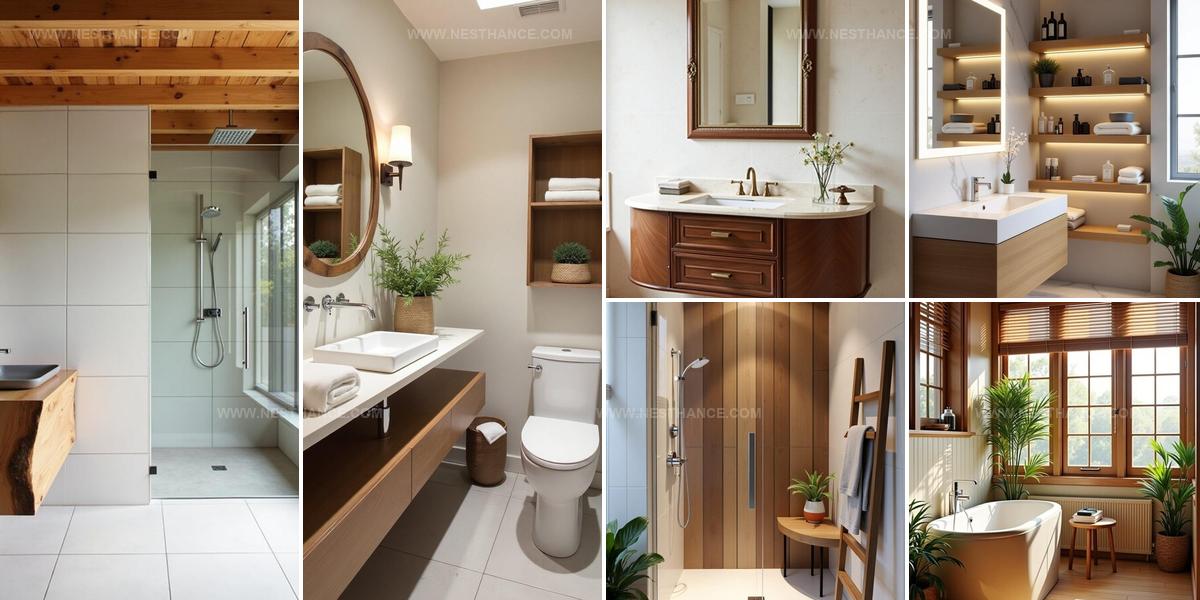
13 Warm Wood Bathroom Decor Ideas That Refresh Your Space

Wood bathroom decor ideas can completely refresh the atmosphere of one of the most important spaces in any home, bringing warmth and natural beauty where you need it most.
Bathrooms often feel cold and sterile, but introducing wooden elements changes everything by adding texture, character, and a sense of organic calm that makes the room feel like a personal retreat.
The versatility of wood means it works beautifully in modern, farmhouse, minimalist, or traditional settings, adapting to whatever aesthetic speaks to you.
Different wood tones and finishes offer countless ways to customize the look, from light birch that opens up smaller spaces to rich walnut that adds drama and sophistication.
Combining wood with stone, metal, or glass creates balanced contrast while maintaining that grounded, earthy feeling bathrooms sometimes lack.
Smart choices about moisture-resistant materials and proper sealing ensure longevity without sacrificing style or warmth.
Finding the right balance between function and beauty makes all the difference in designing a bathroom that feels both practical and inviting every single day.
Reclaimed Oak Bathroom Sustainability Focus
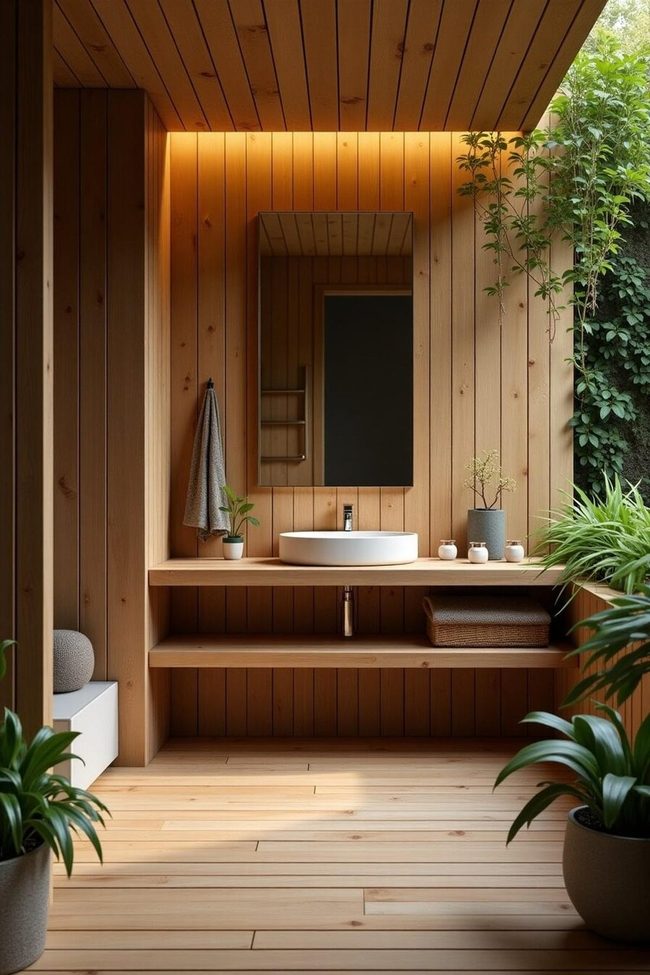
Reclaimed wooden elements stand out instantly in bathroom design while reducing environmental impact and giving new life to materials with fascinating histories, such as barn wood rescued from agricultural structures that brings authentic weathering and character impossible to replicate in newly manufactured products.
You can incorporate salvaged wooden factory floors with their distinctive patina and wear patterns into distinctive bathroom countertops or wall features that become entertaining pieces.
FSC-certified new wood ensures your bathroom renovation supports responsible forestry practices rather than contributing to deforestation, and the longevity of quality wooden bathroom elements means fewer replacements over time and reduced consumption of trendy materials.
Rapidly renewable woods like bamboo reach harvest maturity in just 3-5 years compared to decades for traditional hardwoods, and locally sourced wood reduces transportation carbon footprint while supporting regional economies and craftsmanship traditions.
Unlike plastic bathroom elements that persist in landfills for centuries, natural wood biodegrades and returns to the earth, and you can finish wooden surfaces with water-based sealants and natural oils that reduce harmful emissions and give rise to healthier indoor air quality.
Wooden bathroom elements reconnect modern spaces with natural materials and support biophilic design principles that enhance wellbeing, while repurposing architectural salvage like wooden doors preserves craftsmanship techniques that might otherwise be lost.
Natural Maple Shelves, Bathroom Options
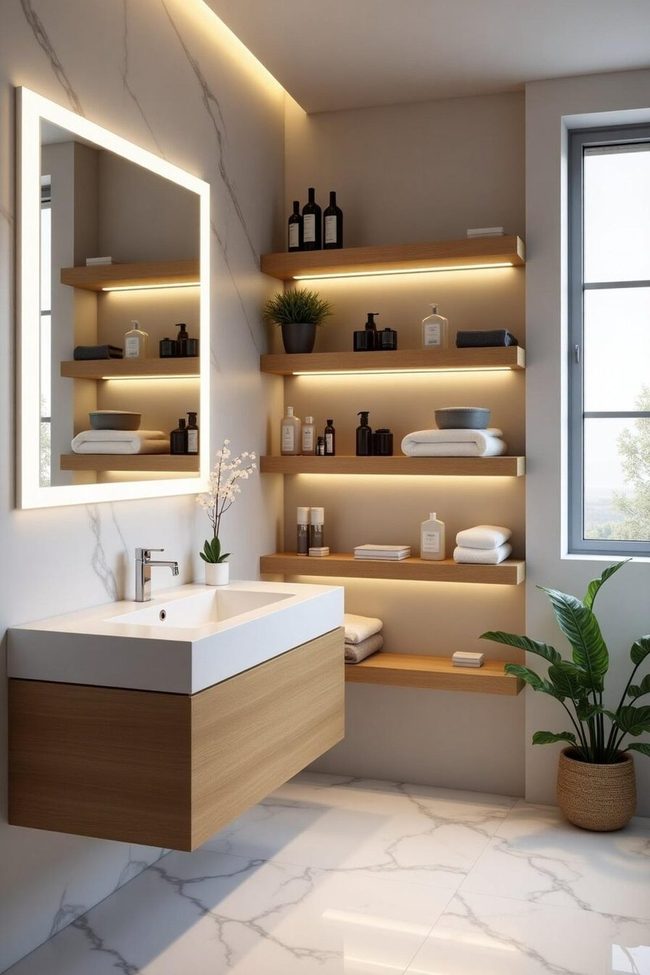
Floating wooden shelves with natural live-edge features instantly transform bathroom walls into organic key highlights that stand out against the typical straight lines of standard fixtures.
You can arrange these shelves at different heights and depths to build a three-dimensional look on otherwise plain surfaces, and reclaimed beam sections bring genuine history and character to any space.
Wood tones warm up bathrooms that often feel cold and clinical, softening the clinical quality of white tile and fixtures with natural material.
Open shelving means you display your everyday items as design pieces rather than hiding them away, which shifts how you think about storage in this room.
Layering shelves asymmetrically adds visual interest while hidden brackets make everything appear to float effortlessly, and the wood-against-tile combination brings textural contrast that makes walls more engaging.
Space feels larger in smaller bathrooms because floating shelves don't introduce the visual weight that bulky cabinets would bring, so you get storage without the heavy feeling.
You can match wood tones between shelves and your vanity for a unified look, or intentionally mix different woods for an eclectic approach that feels more personal.
Over time, wooden shelves develop a natural patina that actually improves their appearance rather than showing age, and we appreciate how this material ages gracefully in the humid bathroom environment.
Natural Wooden Solutions Unites Function And Beauty
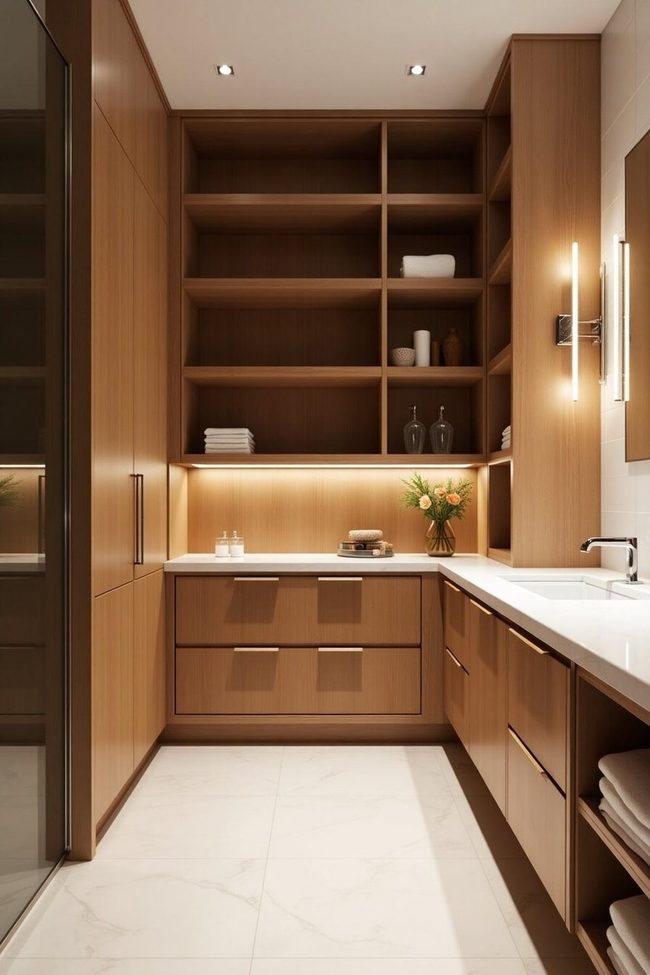
Bathroom storage in wood introduces warmth and turns everyday organization into a visible design element.
Built-in niches set between wall studs highlight natural grain while using zero additional floor space, making them ideal for compact layouts.
Mirrored medicine cabinets framed in timber combine practicality with crafted detailing, concealing necessities behind a refined surface while adding depth to the wall.
Leaning ladder shelving offers a relaxed vertical solution, while mixing open and enclosed units introduces rhythm, displaying select items while keeping others out of sight.
Variations in grain patterns bring character even to simple shelving systems, and warm tones soften the utilitarian feel typical of bathroom storage.
Woven baskets placed on shelving help group smaller items and add tactile contrast to harder surfaces.
Toe-kick drawers beneath vanities take advantage of unused gaps, while custom internal dividers keep drawers orderly and improve daily usability.
Storage benches provide seating alongside hidden compartments for towels or toiletries.
Wall-mounted units keep essentials accessible without occupying floor area, and repeating the same material language across different storage elements helps the room feel unified rather than fragmented.
This strategy shifts storage from purely functional necessity into a more integrated part of the overall bathroom composition.
Wooden Ceiling Beams Add Architectural Interest
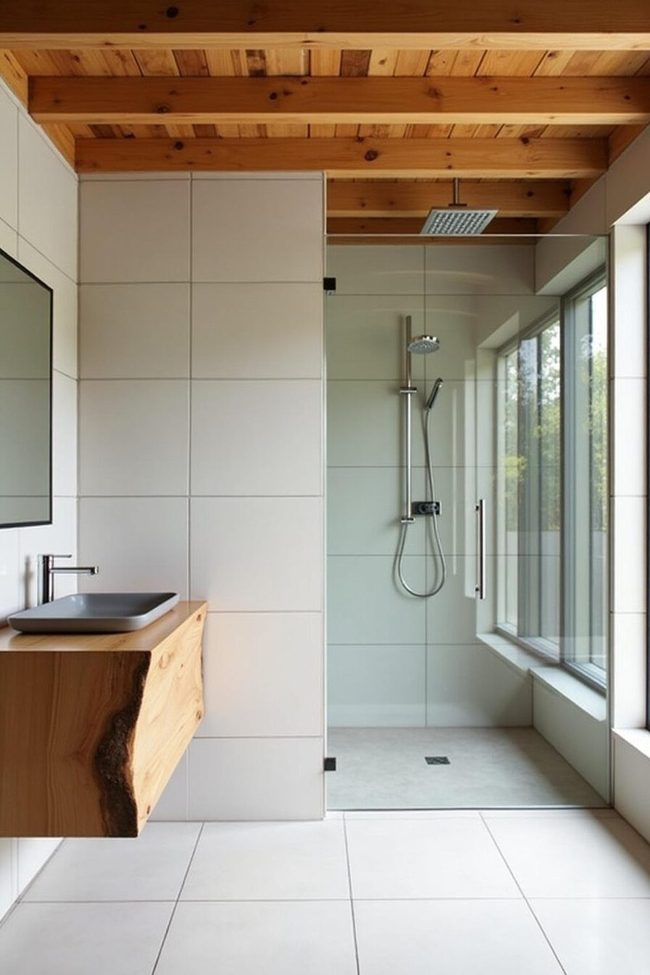
Exposed wooden beams stretching across your bathroom ceiling command attention the moment you walk in, transforming an ordinary overhead space into something unexpected and memorable.
Your eye naturally travels upward, and rooms instantly feel taller and more thoughtfully put together, even when square footage is modest.
Reclaimed timber options bring genuine history into the space, with weathered marks and natural variations that speak to where the wood came from.
You have flexibility in choosing authentic structural beams for older homes or lightweight hollow versions that look just as striking without the engineering demands.
Lighter woods like pine or oak keep things open and airy, while darker choices such as walnut or mahogany bring about bold contrast against pale ceilings and add serious drama.
Box beams deliver that authentic rustic look with easier installation and less weight, making them space-saving for bathrooms where structural limitations matter.
Pairing wooden beams with strategic lighting, whether uplighting to highlight the grain or fixtures mounted directly to the wood, brings out texture and depth you wouldn't see otherwise.
When you extend these beams into adjoining spaces like bedrooms or hallways, they bring about visual rhythm that connects your rooms together and keeps the design language flowing throughout your home.
Teak Floors Transform Shower Spaces
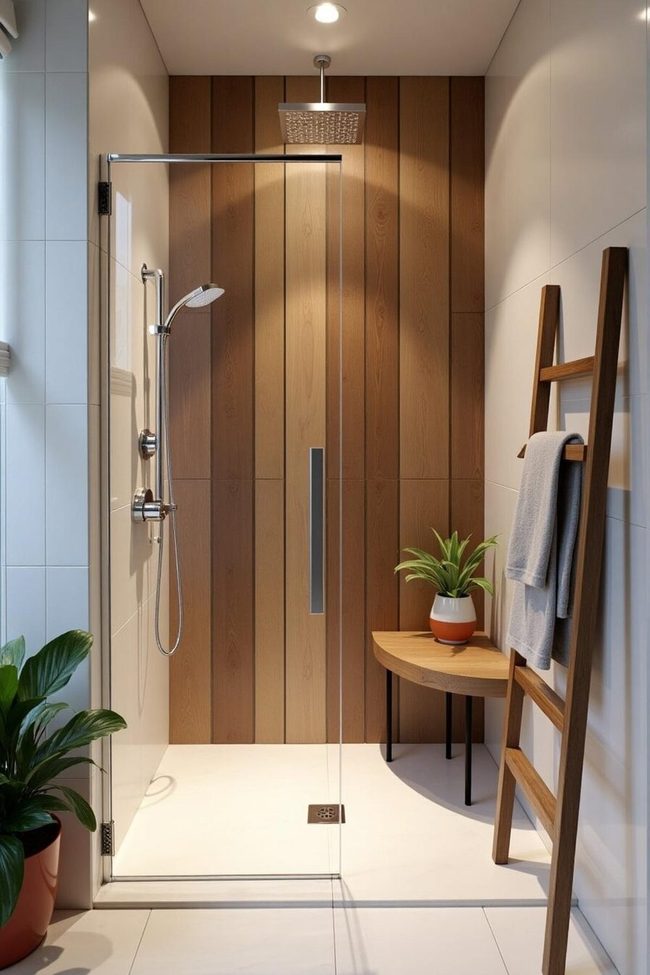
Wooden shower floors in teak or similar materials bring about an unexpected luxury that feels amazing underfoot and completely breaks the rules of standard bathroom design.
Floor-to-ceiling wooden shower walls, when sealed with marine-grade finishes, make a bold statement that reshapes the entire space into something remarkable.
Wooden benches built into shower enclosures serve double duty as both a comfortable place to sit and a striking design choice that elevates your bathroom.
Wooden shower doors and accents allow light to filter through in beautiful patterns while maintaining privacy and adding natural warmth to what are usually cold, sterile spaces.
You can mount wooden caddies on walls or hang them from showerheads to bring organic texture to otherwise clinical shower areas.
Wooden ceiling elements draw your eye upward and bring about an unexpected moment of interest overhead that most people never think to add.
Wooden niches carved into shower walls provide storage while also adding architectural character to plain surfaces.
Accent strips of wood between tile sections break up large expanses of porcelain and keep your eye moving around the space.
When steam rises from hot water in a wooden shower, natural scents from cedar or cypress fill the air in ways that synthetic materials simply cannot match.
Installing these wooden elements does require attention to proper sealing, but modern waterproof finishes mean your wood features will hold up to years of direct water exposure without trouble.
Wooden Shutters Cast Filtered Fixture Patterns
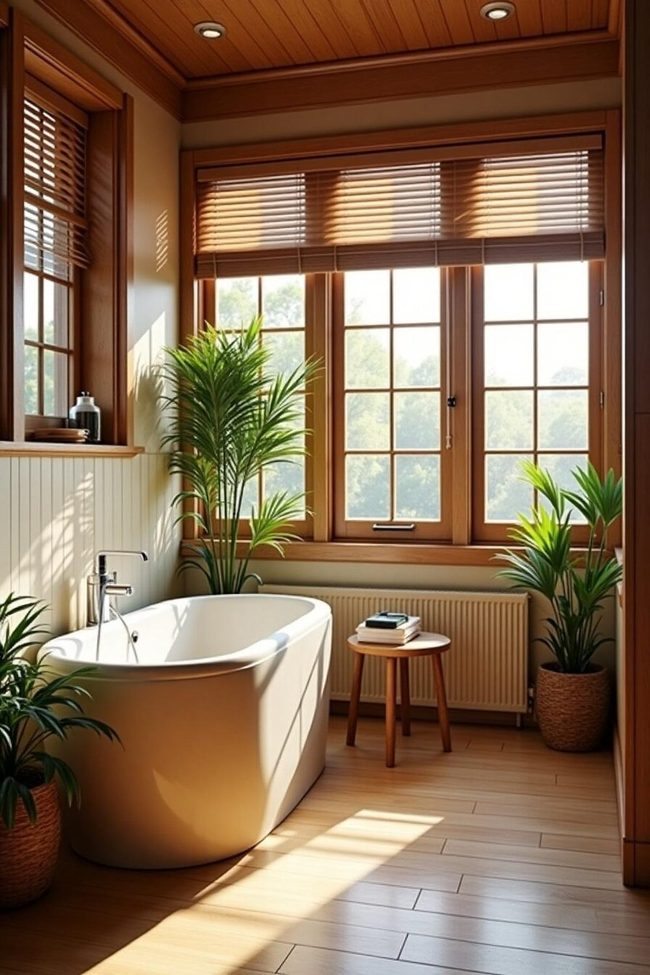
Wooden shutters and plantation-style blinds with wide slats bring about dramatic shadow patterns when morning light pours through your bathroom windows, adding movement and visual depth that shifts ordinary glass into an architectural feature.
Reclaimed wooden shutters with weathered finishes bring instant character and history, contrasting beautifully against crisp walls and making a bold statement.
You can choose between painted wooden shutters for a classic appearance or natural finishes that showcase the wood grain's inherent beauty.
Wooden roman shades blend the softness of fabric with structured wooden battens, offering window treatments that feel substantial and refined all at once.
Light filtering through these wooden elements bring abouts a warm glow that's far more flattering than harsh direct sunlight, and you might add decorative wooden valances above simple treatments to enhance architectural interest.
Wood's thermal properties help insulate your bathroom windows and reduce temperature swings, making the space more comfortable while custom-built frames can coordinate with other wooden bathroom elements.
Shutters with cutout designs cast patterned shadows while filtering light in unexpected ways and cord-free operating systems keep aesthetics clean and safe.
Wooden treatments paired with tile or stone surrounds bring about pleasing material contrast that adds design sophistication, and these elements wear beautifully over time when properly sealed and maintained even in humid bathrooms.
Teak And Engineered Oak Bathroom Floors
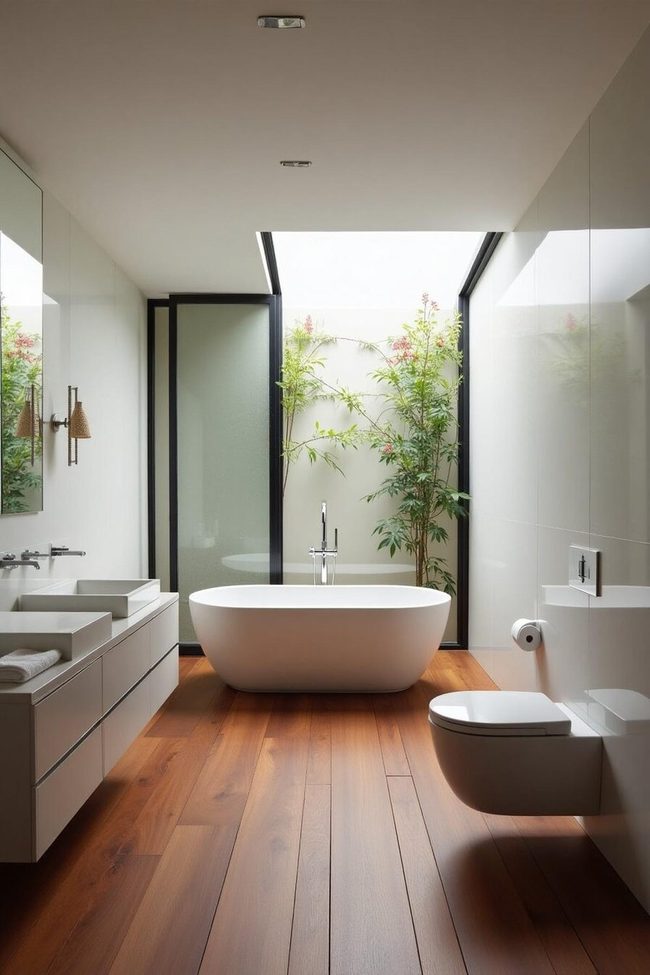
Wooden bathroom flooring breaks all the supposed rules about bathroom materials and creates an atmosphere of warmth that tile and stone simply cannot match, with the unexpected comfort of wood underfoot eliminating that shocking cold feeling on winter mornings.
Teak, the same wood used in luxury yacht decking, naturally resists water damage and provides excellent slip resistance when finished properly, while engineered hardwood specifically designed for high-moisture environments gives you the authentic look of solid wood with enhanced stability against humidity fluctuations.
You can also choose waterproof luxury vinyl planks that convincingly mimic wood grain and provide superior water resistance with easy maintenance, or consider wood-look porcelain tiles in shower areas paired with real wood in the dry zones to address adaptable to different needs concerns while maintaining visual flow.
Reclaimed wood flooring brings incredible character through its natural patina, with in all board telling a story and the color variation in natural wood planks adding visual interest that single-tone flooring simply cannot achieve.
For the environmentally conscious, bamboo flooring provides a sustainable alternative with natural water resistance and a distinctive grain pattern.
Proper installation with marine-grade sealants and good ventilation helps wooden bathroom floors last for decades, and you might enhance underfoot comfort by installing radiant heating beneath the wood for an added layer of luxury.
Horizontal Shiplap Wooden Bathroom Walls
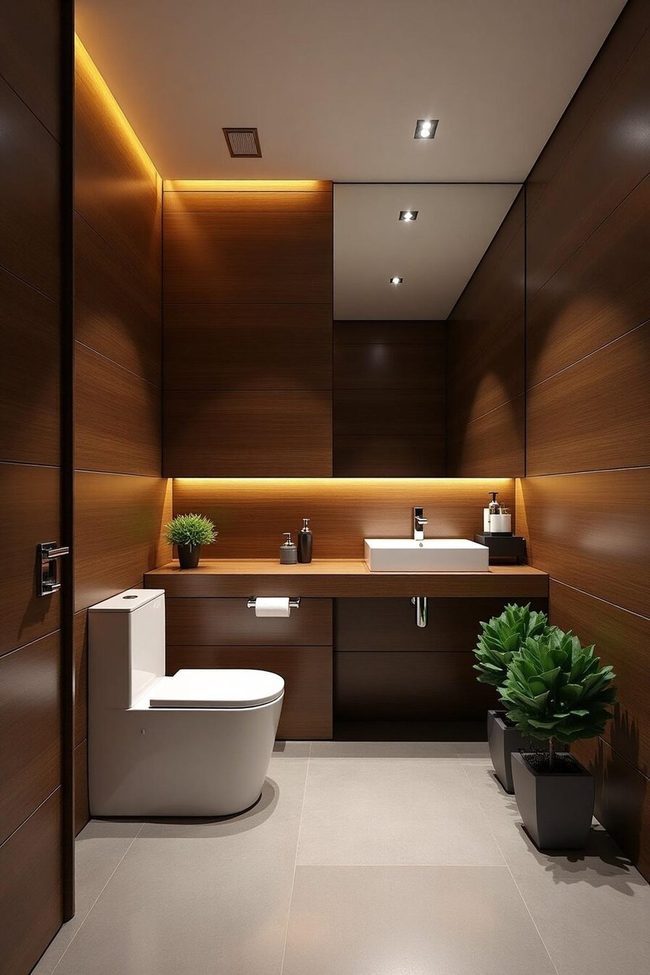
Wooden wall cladding has the power to transform a standard bathroom into something that feels like a luxurious spa retreat, leaving behind that typical clinical white space we're all familiar with.
Dark woods like walnut and mahogany make bold statements in larger bathrooms and shape real drama on your walls, while lighter woods such as pine and maple work wonderfully in smaller spaces by opening things up and brightening the room.
Reclaimed barn wood brings authentic texture and character to your bathroom through weathered finishes, knots, and nail holes that eachplank carries as its own story.
Charred wood, known as Shou Sugi Ban, stands out with its striking deep black finish and naturally resists water and insects without any extra fuss.
Vertical paneling draws your eye upward and makes ceilings look higher, which helps compact bathrooms feel more spacious.
Horizontal shiplap offers a cottage-style look that feels both timeless and modern, with clean lines that stretch the visual width of your room.
You can choose to cover just one accent wall behind your vanity or tub if you want impact without overwhelming the space, or you can go all in for maximum transformation.
Marine-grade sealants protect your wood from moisture while keeping that natural grain visible and beautiful.
Wood Paired With Marble And Metal
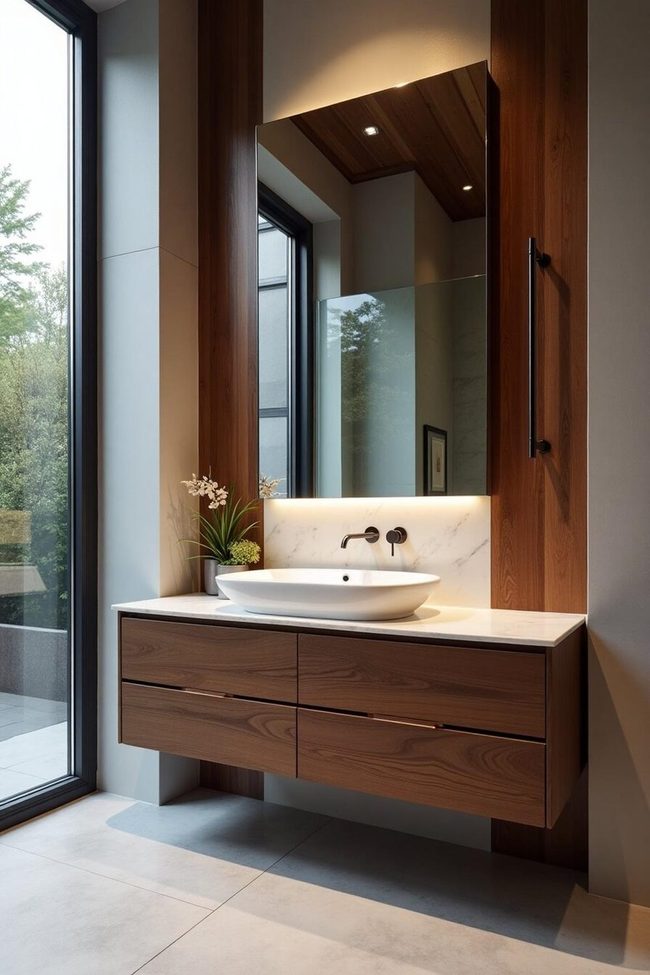
Mixed materials work beautifully when you let wood take center stage and pair it with contrasting elements that make your bathroom stand out.
Dark wood against open white fixtures creates dramatic contrast and defines the space with real architectural strength.
Rough-hewn wooden beams next to refined glass shower enclosures tell a compelling story about texture and transparency that catches attention immediately.
Warm wood paired with cool marble delivers a timeless and contemporary feel that never goes out of style.
Wooden vanities topped with concrete counters bring together organic and industrial elements and feel surprisingly balanced.
You can add copper or brass fixtures over wooden surfaces for a rich, warm palette that feels luxurious without overdoing it.
Wooden medicine cabinets inset with antiqued mirror panels combine reflectivity with warm framing in a simple but effective way.
Metal accents like matte black hardware or brushed gold fixtures stand out beautifully against wooden backgrounds and ground the design.
Wooden shelving holding concrete or ceramic vessels creates a nice back-and-forth between organic and formed elements.
Smooth wooden surfaces work well alongside textural pieces like woven baskets and add visual complexity through what you can actually touch.
Wood softens harder materials like tile and metal, and this balance keeps spaces from feeling too clinical or sterile.
Natural Rustic Timber Bathroom Accessories Transform Spaces
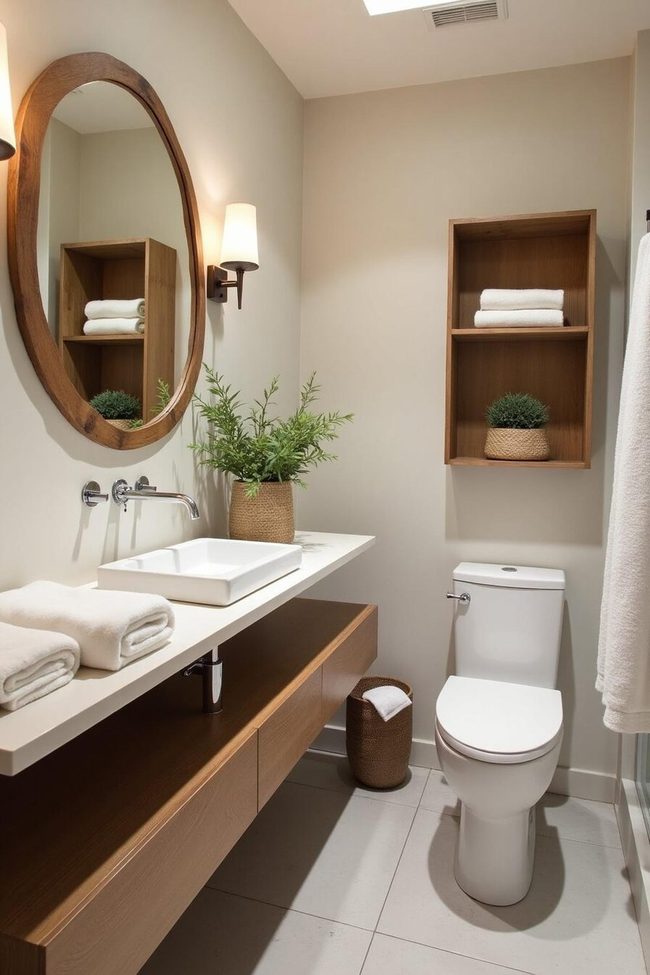
Wooden bath caddies spanning across your tub transform ordinary soaking into luxury experiences by providing space for candles, books, and beverages, making them perhaps the most dramatic upgrade you can make to bathroom functionality.
Hand-carved wooden soap dishes with proper drainage prevent soggy soap while introducing artisanal craftsmanship directly to your countertops and catching light beautifully.
You can swap out plastic bathroom accessories, toothbrush holders, tissue box covers, and wastebaskets, for wooden alternatives to achieve an immediate style upgrade throughout the space.
Natural wood grain variation means that even identical items display unique patterns, bringing individuality to standardized designs and preventing your bathroom from feeling mass-produced.
Wooden drawer organizers bring the same thoughtful organization to bathroom storage that you'd find in high-end kitchens, and they work alongside stone, clay, or linen to introduce a multi-textural experience.
You might add wooden trays on countertops to corral frequently used items like hand soap and lotion, turning necessary products into arranged displays rather than clutter.
Wooden plant stands positioned near bathtubs or in unused corners bring height variation and living greenery into the bathroom environment and help break up flat surfaces.
Wooden step stools for children or shorter adults add both functionality and charm while eliminating the plastic eyesores typically found in family bathrooms.
Reclaimed Wooden Mirrors Add Character
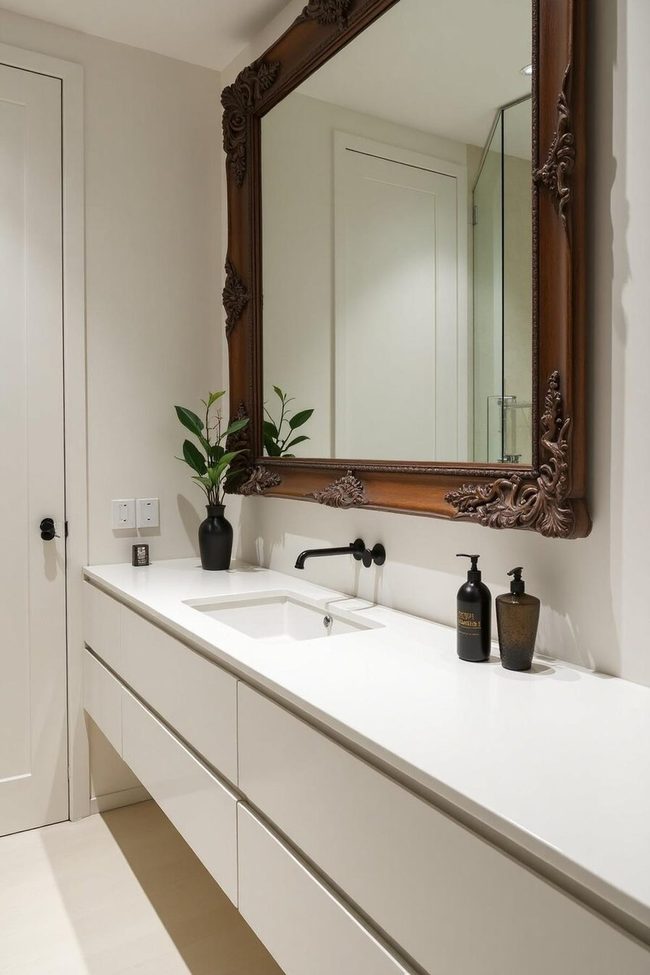
Oversized wooden framed mirrors make a bold statement above your vanity or bathtub, commanding the wall space with their substantial presence and immediately defining your bathroom's entire style.
Reclaimed wood frames bring instant character with weathered textures that contrast beautifully against the reflective glass surface, while round mirrors soften the angular shapes typical in most bathrooms and introduce visual balance through their curved form.
You can select ornately carved frames for traditional spaces or clean-lined options for contemporary bathrooms, and arched frames add architectural interest to boxy layouts by introducing graceful curves that shift how your eye moves around the room.
Wood grain against reflective glass introduces textural depth on your walls, and full-length mirrors in smaller bathrooms expand the perceived space through reflection while fitting custom sizes into unusual wall areas.
Warm wooden tones soften how you see your face reflected compared to cold metal frames, and the junction between wood and mirror introduces a natural frame for viewing yourself during daily routines.
You can coordinate the wood species of your mirror frame with vanities or shelving to build a consistent material story throughout the space.
Wooden framed mirrors develop character over time in the humid bathroom environment, with refined shifts that add to their charm and appeal as years pass.
Live-Edge Wood Bathroom Statement
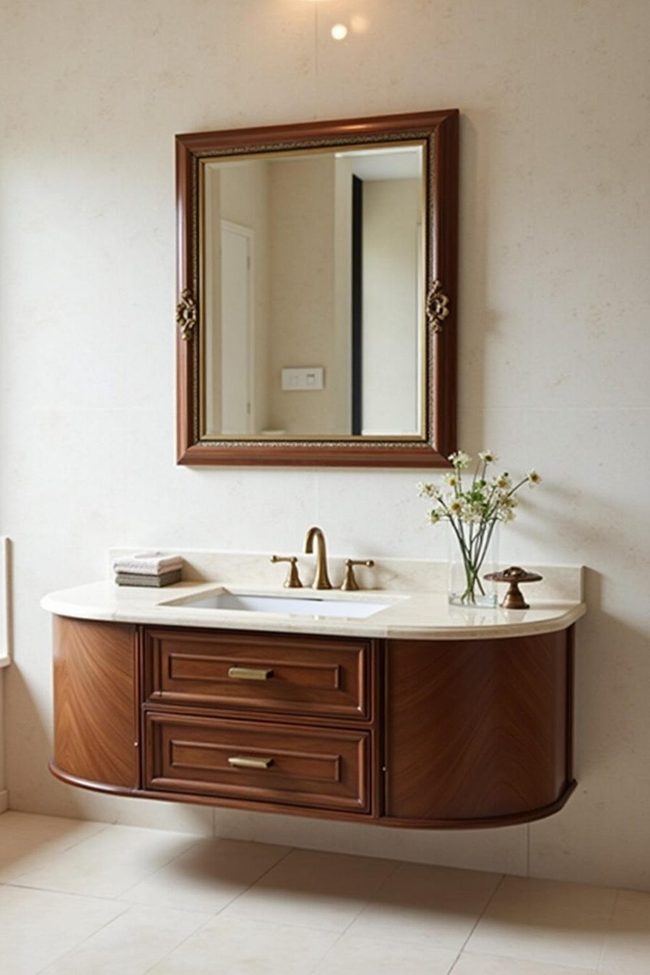
Each striking wooden vanity with a live-edge slab and natural grain patterns instantly becomes the star of any bathroom, drawing everyone's eye the moment they walk in.
Cedar, teak, and walnut resist moisture beautifully and handle bathroom humidity without warping or damage, making them smart choices for this wet environment.
Pairing your wooden vanity with undermount sinks and understated hardware lets the wood shine without competing for attention.
Floating vanities work especially well in smaller bathrooms because they open up floor space while keeping that warm, natural look you want.
Reclaimed barn wood or salvaged lumber adds authentic character and tells a story through every scratch and weathered mark on its surface.
For shared bathrooms, a double-sink wooden vanity gives both people their own space and keeps the design feeling unified.
Marine-grade varnish seals the wood properly so it holds up to years of moisture and stays beautiful.
Wooden vanities develop a richer patina as time passes, getting better and more interesting instead of just looking old.
You can even upcycle a vintage dresser into a unique vanity that blends antique charm with modern plumbing, and the wood's tactile warmth brings a sensory quality that factory-made materials never quite match.
Teak Grain Bathtub Surround Heat Retention
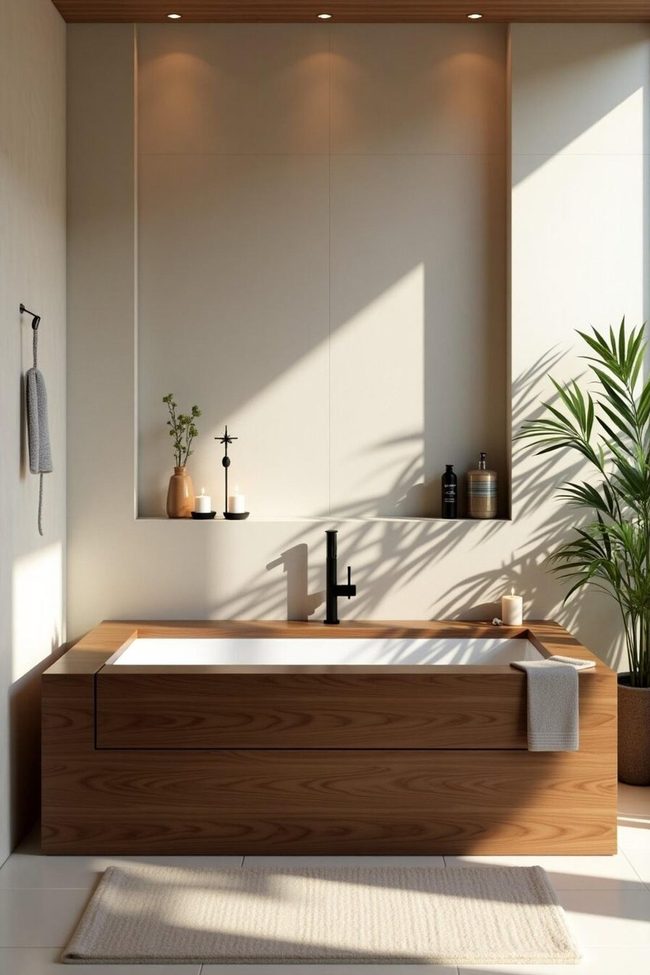
Wooden bathtub surrounds instantly elevate an ordinary bath into a spa-like sanctuary without the luxury price tag, and the rich grain patterns of natural wood shape striking visual contrast against smooth porcelain or acrylic tubs.
Japanese ofuro-style wooden tubs represent centuries of bathing tradition with ergonomic designs built from materials that naturally resist water damage and mold growth.
Teak and cedar work exceptionally well for this purpose because their natural oils protect against moisture, and wood feels warmer to the touch than tile or stone, making your morning bath more comfortable.
Building a custom step-up platform with wood surrounding your tub adds both adaptable to different needs function and dramatic presence to the space, while wooden bath caddies stretched across freestanding tubs offer convenient spots for candles and a glass of wine.
Wood's thermal properties keep your bath warmer longer compared to standard materials that quickly pull heat from water, and matching wooden stools or benches nearby extend the bathing zone with natural appeal.
Custom-built wooden shelving around your tub keeps bath essentials within reach while supporting the peaceful aesthetic you're after.
Steaming water combined with aromatic woods shapes a multisensory experience that synthetic materials simply cannot match, and marine-grade finishes protect the wood while preserving its natural beauty for years to come.
Jasmine Lee
Content Creator & Style Advisor
Expertise
Content Creation & Engaging Writing, Home Project Ideas & Decorating Tips, DIY Projects & Creative Solutions, Trend Spotlights & Practical Styling Advice, Easy-to-Follow Guides for Home Decor
Education
University of California, Los Angeles (UCLA)
Jasmine Lee is a content creator and style advisor at Nesthance, making home décor feel fun and effortless. With a degree in communications from UCLA, she has a knack for turning decorating ideas into easy, step-by-step guides that anyone can follow.
She loves sharing practical styling tips, creative DIY projects, and trend insights to help readers refresh their spaces without stress. Her work focuses on making design approachable and inspiring for all.
Outside of writing, Jasmine enjoys discovering new design trends, attending workshops, and curating inspiration boards to keep ideas fresh and exciting.