
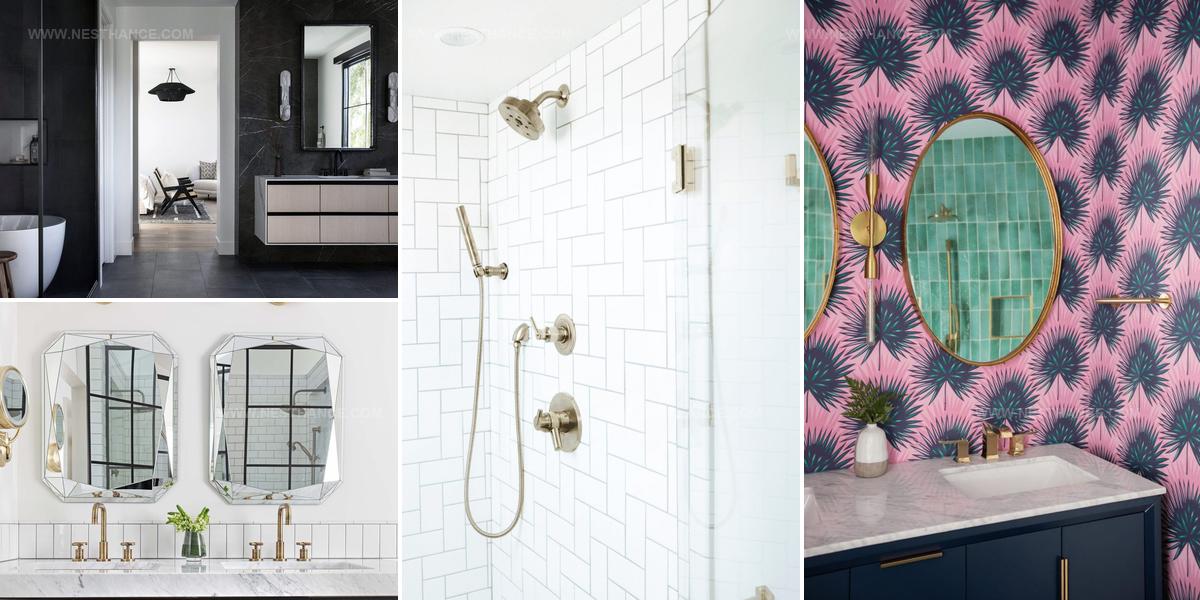
31 Art Deco Bathroom Designs That Dazzle and Inspire

An art deco bathroom brings the glamorous sophistication of the 1920s and 1930s right into one of the most personal spaces in a home.
The iconic style blends geometric patterns, luxurious materials, and bold contrasts that defined an era of optimism and modern elegance.
Chrome fixtures, black-and-white tiles, and streamlined mirrors capture the essence of a design movement that celebrated both opulence and functionality.
When you step into a space designed with these elements, the atmosphere feels both timeless and refreshingly confident.
The aesthetic appeals to anyone who appreciates clean lines paired with decorative flourishes that never feel overdone.
Achieving the look means understanding how different components work together to balance visual drama with practical needs.
What follows will help you consider all the essential elements that make the style come alive in any bathroom setting.
Geometric Chandelier Bathroom Statement
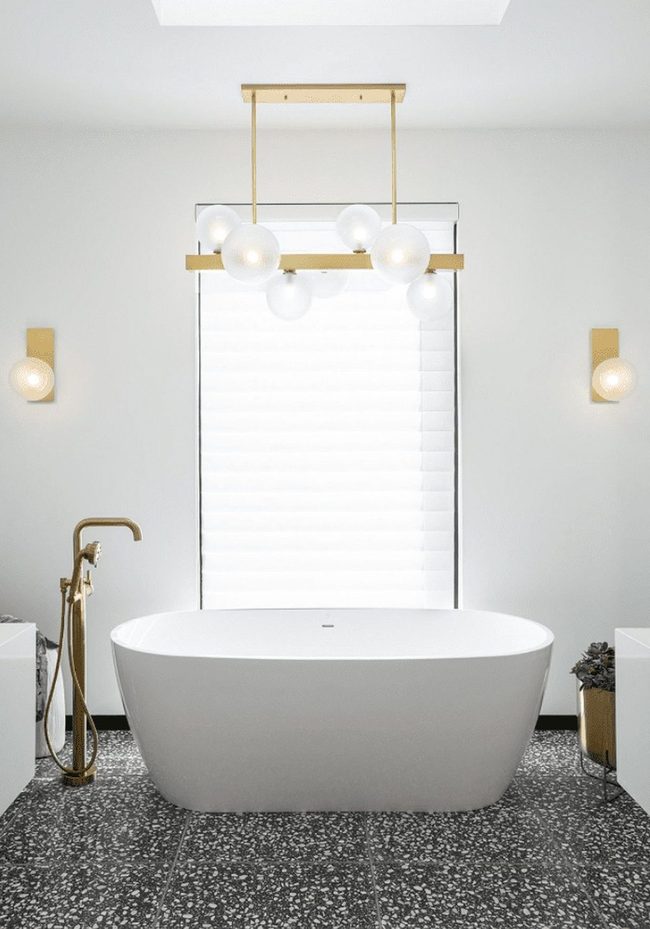
Lighting choices make a huge difference in bathrooms, and bold fixtures are worth the investment since they set the tone for your whole design.
Consider going for a chandelier with crisp geometric lines inspired by Art Deco styles, and pair it with matching sconces on either side of your mirror to unify the look.
You don't need to hold back when picking statement pieces because lighting serves both a practical purpose and a decorative one.
Modern chandeliers with clean angles and interesting shapes catch light beautifully and become a standout feature in the room.
Sconces flanking your vanity provide excellent task lighting while adding symmetry and polish to the space.
Mixing different heights and styles of light sources adds dimension and keeps the room from feeling flat.
We recommend shopping around to find fixtures that match your design preferences, whether that's minimalist, ornate, or somewhere in between.
Quality lighting makes your bathroom feel more luxurious and helps you actually see what you're doing at the sink.
Velvet Drapes Redefine Bathroom Luxury
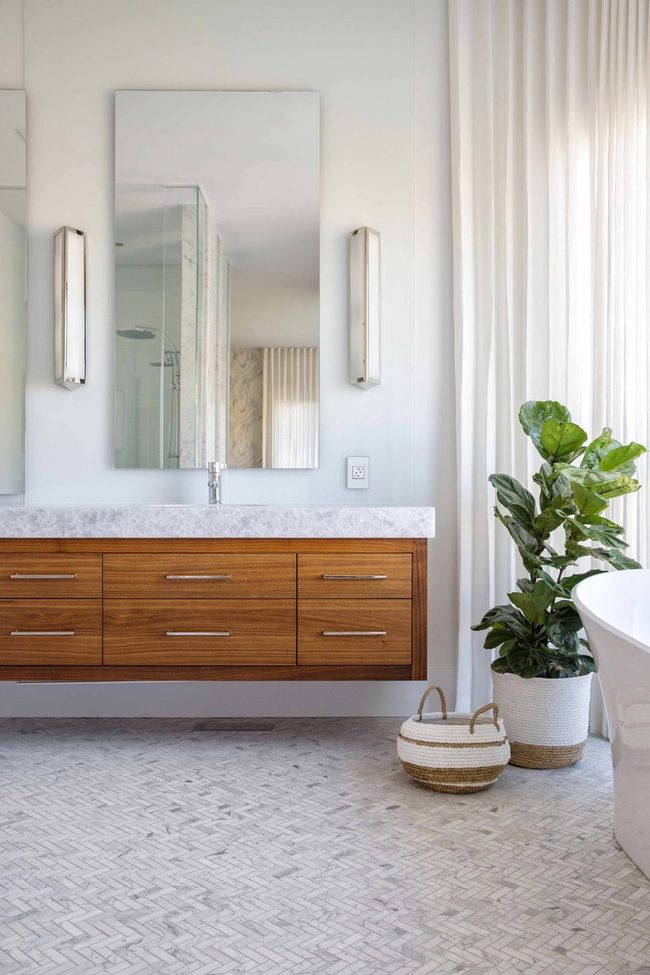
Drapes bring unexpected glamour to spaces where you might not typically consider them, and a bathroom is the perfect example of how this works.
Art Deco style balances sharp lines with genuine fun and luxury, so adding drapes to your bathroom taps into that playful sense of refinement.
Hanging floor-to-ceiling drapes in rich fabrics like velvet or silk instantly elevates the room and gives it a more upscale feel.
You don't need to worry about moisture damage if you choose the right materials and keep them away from direct water spray.
This unconventional choice signals that you understand design beyond the obvious and aren't afraid to break standard decorating rules.
Geometric Prism Mirror Statement
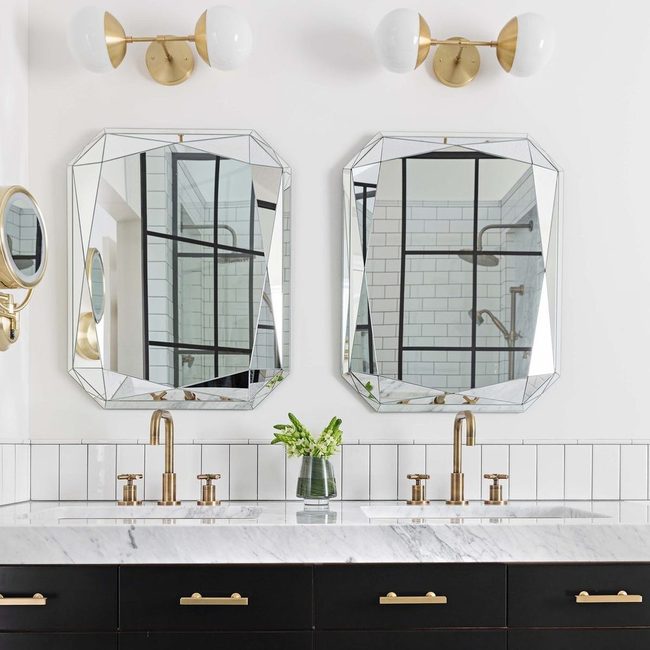
Art Deco mirrors come in plenty of standard shapes like circles, squares, and rectangles, so finding one isn't challenging.
If you'd like to stand out from the typical options, hunt for a prism-shaped mirror that doubles as a statement piece instead.
Mirrors with triangular edges fit perfectly with the era's love of sharp, clean lines and geometry You'll notice the way the triangles catch light differently than a flat surface would.
Beyond just looking interesting, these prism mirrors honor the design movement's core values.
Going this route gives you something that works both as functional decor and as a conversation starter on your wall.
Art Deco Bathroom Symmetry
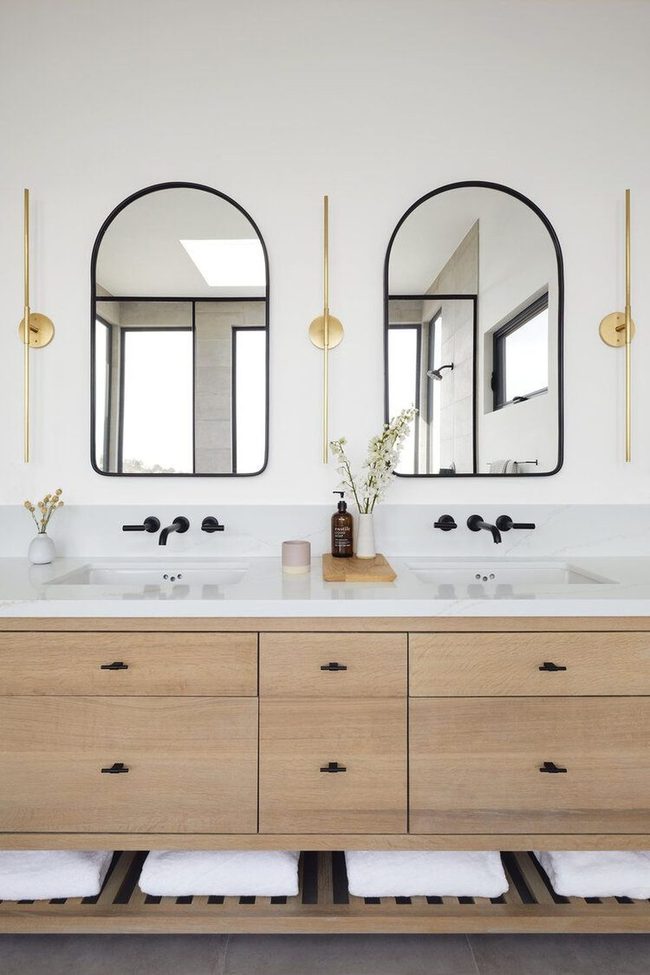
Bathroom sconces that match your mirror's height make a bold statement and strengthen Art Deco style in your space.
You can choose sconces in various sizes, but aligning them with your mirror creates a satisfying visual rhythm across your wall.
Two identical heights on either side of the sink establish a balanced pattern without needing much effort.
This approach gives your bathroom a more put-together look and makes the room feel organized.
When sconces and mirrors share the same vertical line, they function as matching bookends above your sink area.
I've noticed this simple trick helps smaller bathrooms feel more polished and intentional.
Your decor doesn't need to be complicated to look striking-sometimes matching heights is all it takes to elevate the whole space.
Jewel Tones Sharp Angles
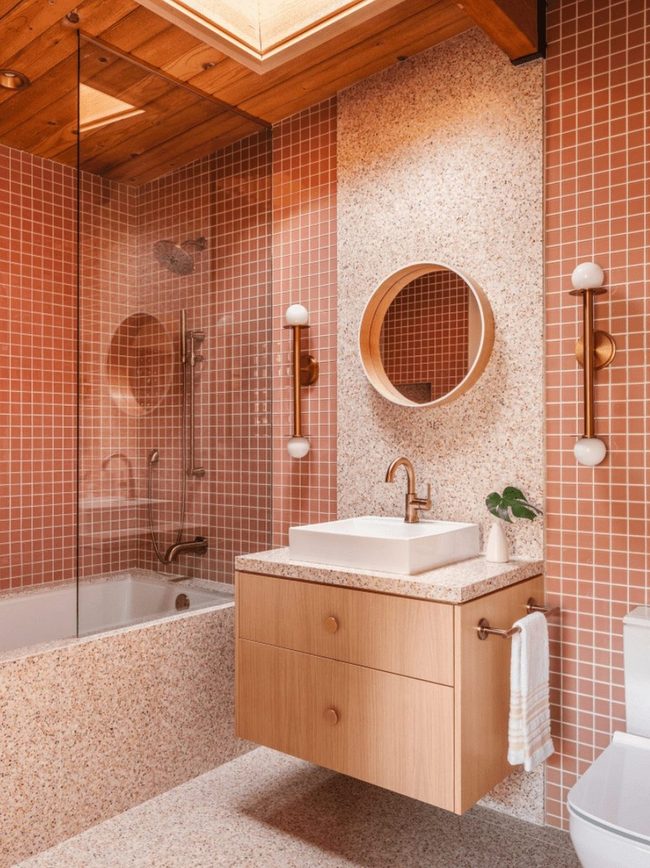
Bold colors and sharp geometric shapes form the backbone of Art Deco design, so don't hold back when you're planning your space.
You can layer rich jewel tones like emerald and sapphire alongside metallic accents, and these hues work best when paired with crisp lines and angular forms that echo the era's signature style.
Brass cabinet handles, angular mirrors, and triangular shelving all reinforce this geometric language throughout your room.
Even small elements matter here-your light fixtures, doorknobs, and trim can strengthen the overall look when they echo the same bold shapes and colors.
We recommend thinking of your space as one cohesive canvas where nothing gets overlooked or left to chance.
Paint walls in deep, saturated colors and add furniture with clean angles and defined edges.
When you layer these visual decisions consistently, from the largest pieces down to the tiniest hardware, your Art Deco room gains the dramatic presence it deserves.
Marble And Geometry Art Deco
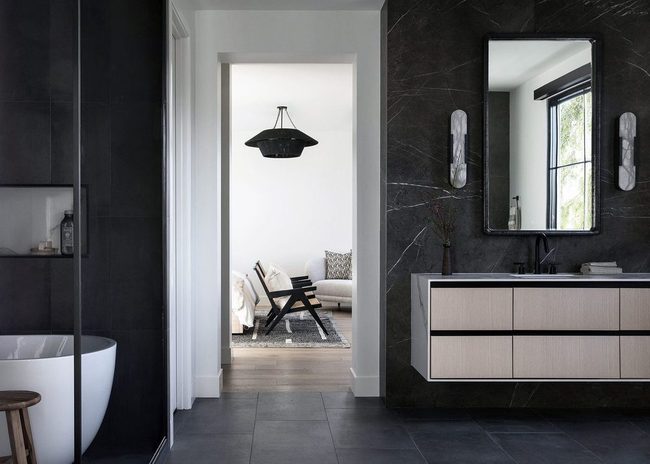
Marble countertops, floors, and walls turn a bathroom into something truly special when you embrace the Art Deco style fully.
We recommend going big with this stone because it matches the glamorous nature of the design movement so well.
If you want to make the most impact, start with marble flooring since it's the most noticeable element in the room.
Marble countertops come next and give you both beauty and functionality for daily use.
Wall paneling in marble pushes the luxury even further if your budget allows it.
You don't have to do all three at once-even one marble feature lifts your space significantly.
The natural veining and polished surface of marble bring that opulent feel Art Deco demands.
Pairing marble with brass fixtures and geometric patterns completes the whole aesthetic you're going for.
Carved Wood Cabinet Depths
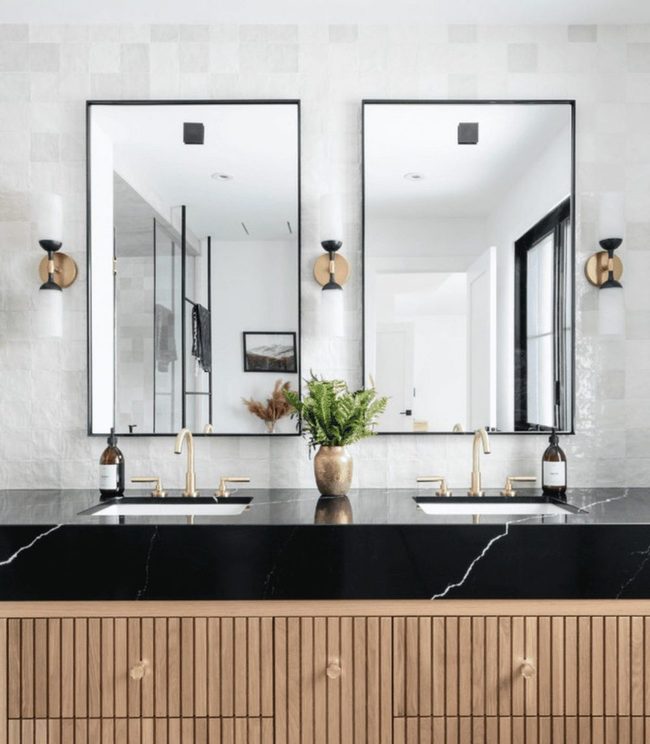
Bas-relief cabinets offer a stunning visual statement in your space, with their carved lines and dimensional surfaces catching light and shadow in ways that command attention.
This design style harks back to the Art Deco era when sculptural bas-relief accents dominated interior spaces, and you can still find modern pieces that honor this timeless aesthetic today.
If you're looking to refresh your bathroom or bedroom vanity, swapping in a wooden cabinet with subtle carved detailing gives you that sophisticated Art Deco vibe without overwhelming the room.
Understanding the difference helps you choose the right piece for your needs-bas-relief (or low-relief) features carving that stays fairly flush with the surface, much like the texture on a coin, while high-relief involves more pronounced carving where some elements stick out significantly from the background.
Freestanding sculptures represent the extreme end of high-relief work, but cabinets and consoles typically lean toward that gentler bas-relief approach.
Your space benefits from this restrained carving style because it adds interest and dimension without demanding too much visual weight.
Geometric Marble Shower Inlay
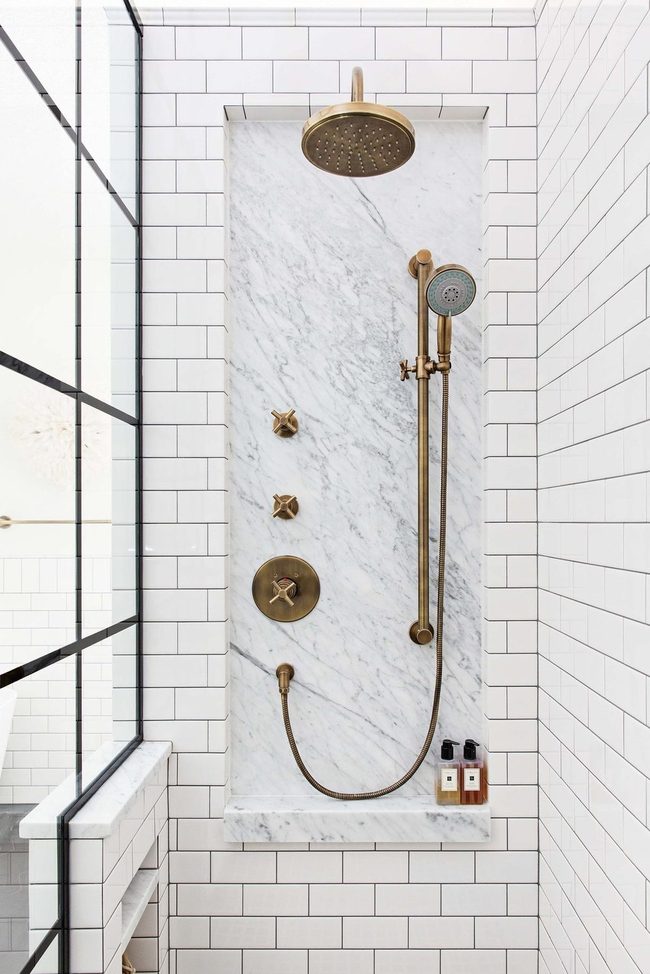
Marble inlays in showers bring instant Art Deco style to your bathroom, and for good reason-this luxurious material embodies the glamour that defined the era.
You can arrange your marble inlay to echo the signature geometric forms of Art Deco design, particularly those dramatic stepped patterns seen in iconic buildings like the Empire State Building and the Chrysler Building.
Setting the inlay back slightly or letting it protrude outward gives you flexibility in how you capture that Ziggurat-inspired stepped silhouette.
Beyond the visual appeal, marble works as both a practical shower element and a statement piece that shows your design taste.
Even simple geometric arrangements in marble will catch attention when you step into your shower each morning.
If you want something bolder, you can play with different depths and angles to really emphasize those sleek lines that make Art Deco so recognizable Your shower becomes a personal gallery of style where you can enjoy a touch of vintage glamour every single day.
Marble Pendant Lights In Art Deco
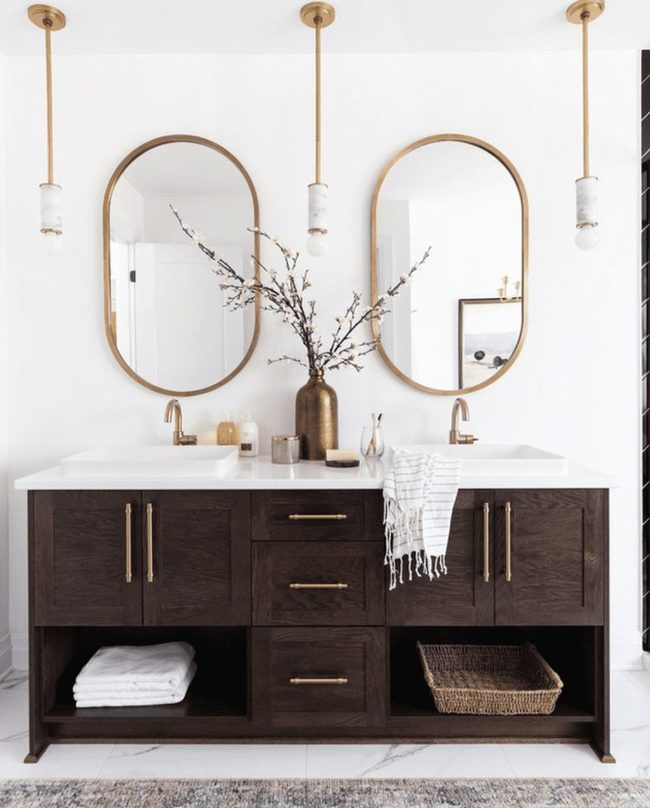
When you're designing an Art Deco space, don't hold back on luxury touches-pops of color work well, but adding decadent details like marble-lined pendant lights takes things further and brings genuine glamour into your rooms.
These ornate elements lift your space beyond basic décor and push it toward that distinctive Art Deco style you're after.
Marble fixtures catch light beautifully and add richness to any corner.
We've seen how these kinds of refined touches shift the whole feel of a room.
You can scatter these luxurious pieces throughout different areas, and they'll enhance your design without overwhelming the space.
Small moments of opulence matter just as much as the bigger design choices.
When you weave these glamorous accents into your plan, your home starts to feel more polished and intentional in the best way.
White Subway Tiles Geometric Pattern
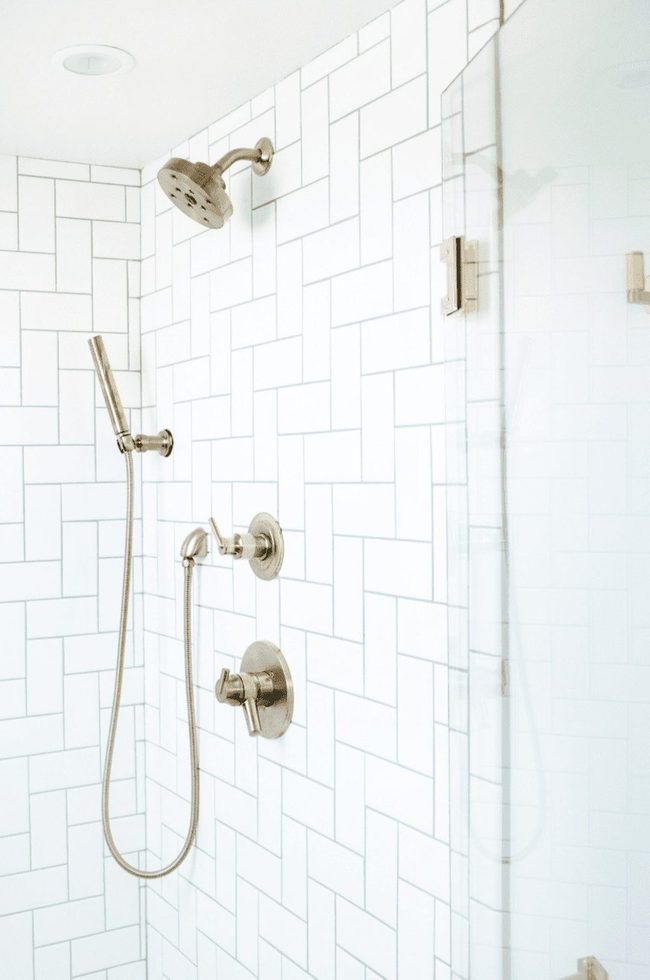
Mixing up your tile layout with simple geometric shapes can turn ordinary white subway tiles into something far more striking than you'd expect.
Instead of following the standard straight arrangement, try flipping some tiles vertically while keeping others horizontal and fitting them together to form a bold pattern.
This approach works especially well for Art Deco styles since the movement embraced sharp angles and geometric designs.
You don't need fancy or expensive tiles to pull off this look-even basic white ones become eye-catching when arranged differently.
Playing around with direction and rotation on your bathroom wall or backsplash gives you an instant upgrade that feels both modern and classic at the same time.
The beauty of this method is that it requires no special tools or complicated installation skills, just a willingness to break away from what everyone else does.
Once you step back and see the finished pattern, you'll realize how much personality a simple rearrangement can bring to an ordinary space.
Geometric Tile Zigzag Patterns
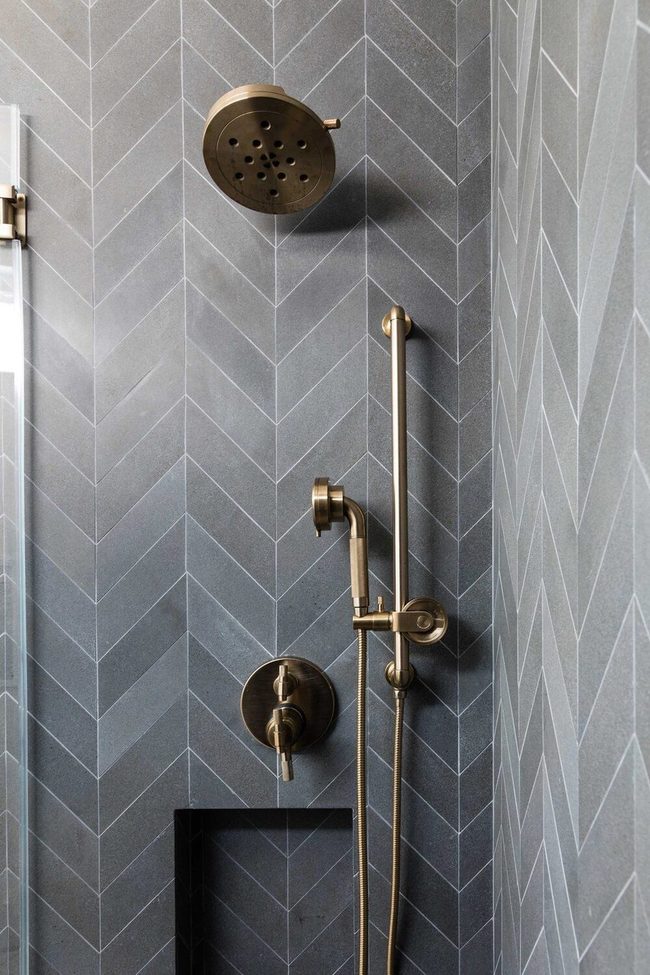
Chevron's bold zigzag pattern made quite a splash in the mid-2010s, and it actually had its roots in the Art Deco era too, so don't dismiss it as just a fleeting trend.
If you're hesitant about the pattern, here's a way to bring it in without overdoing it: instead of buying printed fabrics or wallpapers, you can work chevron into your space through tile arrangements on floors or walls.
This approach lets the geometric design shine without feeling overwhelming, and it gives your room a polished look that feels both modern and grounded in design history.
You might be surprised how a simple shift in how tiles are laid can completely change the feel of a room.
The beauty of using chevron this way is that it works in nearly any color scheme and doesn't require you to commit to bold prints everywhere.
Consider giving this pattern another look, because it's versatile enough to fit your style whether you prefer understated elegance or something with more personality.
Geometric Optical Illusion Tiles
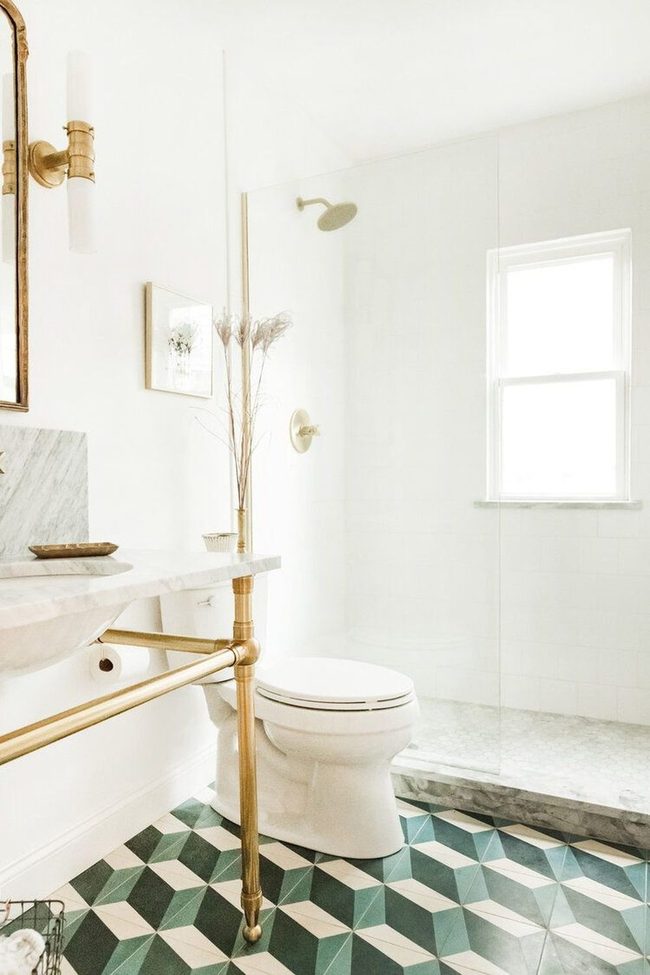
Bathroom floors with tiles that form striking optical illusions can grab attention immediately and bring an Art Deco sensibility to your space.
Crisp geometric shapes arranged in patterns that seem to shift and move have that unmistakable retro aesthetic, and the way these patterns often step and layer adds even more visual interest.
If you want something bold and different for your floor, this approach offers real creativity without requiring you to commit to a full Art Deco renovation.
You can choose patterns with contrasting colors and shapes that seem to pop right up at you or recede into the distance.
Many people don't realize how much personality a floor can add to a bathroom until they install these kinds of tiles.
Most optical illusion patterns work well in smaller bathrooms since they draw the eye and make the space feel dynamic.
Starting with one wall or the entire floor gives you options depending on how daring you want to be.
This style works especially well when paired with simple fixtures and neutral wall colors, letting your floor be the main story in the room.
Jewel Tone Tile Statement
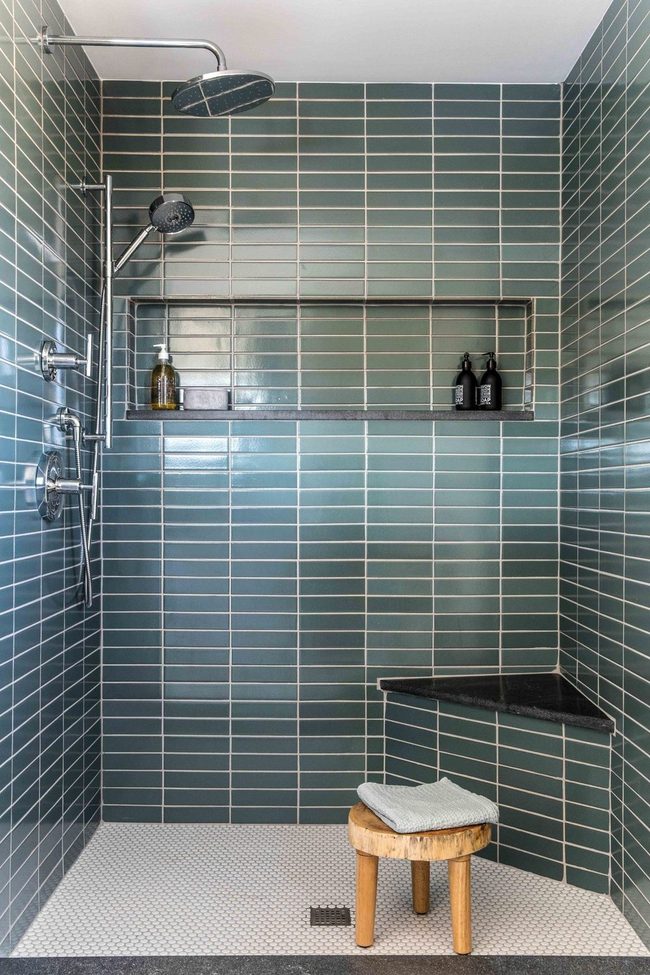
Bold tile colors form the foundation of any Art Deco bathroom, so you should feel confident choosing a shade that makes a statement in your space.
Going all in with your shower tiles means wrapping yourself in a hue you genuinely enjoy seeing every single day, and this approach transforms the room into something with real presence.
Since Art Deco embraces crisp geometric shapes and strong color choices, picking a saturated shade across your entire shower wall feels natural and right.
Your color doesn't need to scream loudness to land impact either-deep jewel tones, rich neutrals, or sophisticated pastels all work beautifully in this style.
What matters most is selecting something that speaks to you and then committing to it fully across all your shower surfaces.
We find that when you skip the timid approach and instead fill the space with one confident color, the whole room gains personality and character.
Even if you prefer understated tones, going bold with your tile choice proves you can still embrace Art Deco's graphic sensibility without needing neon or brightness.
Gold Metal Bathroom Elegance
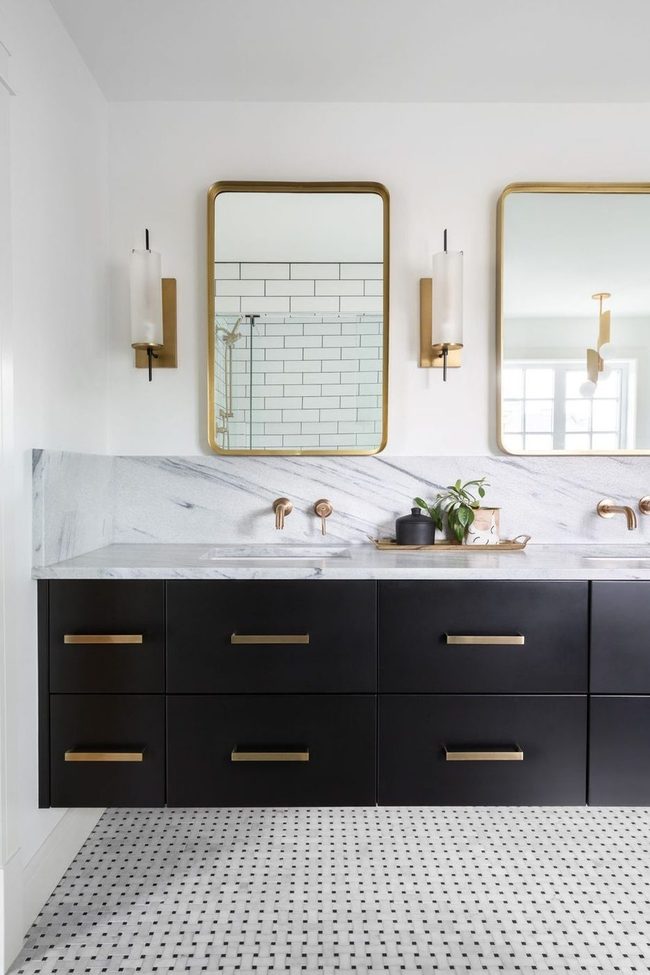
Gold accents are one of the most striking ways to bring Art Deco style into your bathroom, and they've remained a design favorite since that glamorous era.
You can achieve this look without going overboard by choosing just a few gold pieces and letting them shine against your existing décor.
When you match these elements together by color, your space gains that signature sleek Art Deco feel while also becoming noticeably warmer and more welcoming.
The beauty of this approach is that metal accents don't require much effort to implement, yet they instantly elevate the whole room.
Think about swapping out your light fixtures, mirror frame, or towel racks for gold versions.
We find that mixing matte and polished gold finishes adds even more dimension to the space.
You don't need to fill every corner with gold pieces-sometimes just one or two well-placed items make all the difference.
This simple method gives you that polished, sophisticated look you're after without feeling overdone.
Shiny Surfaces Meet Bold Geometry
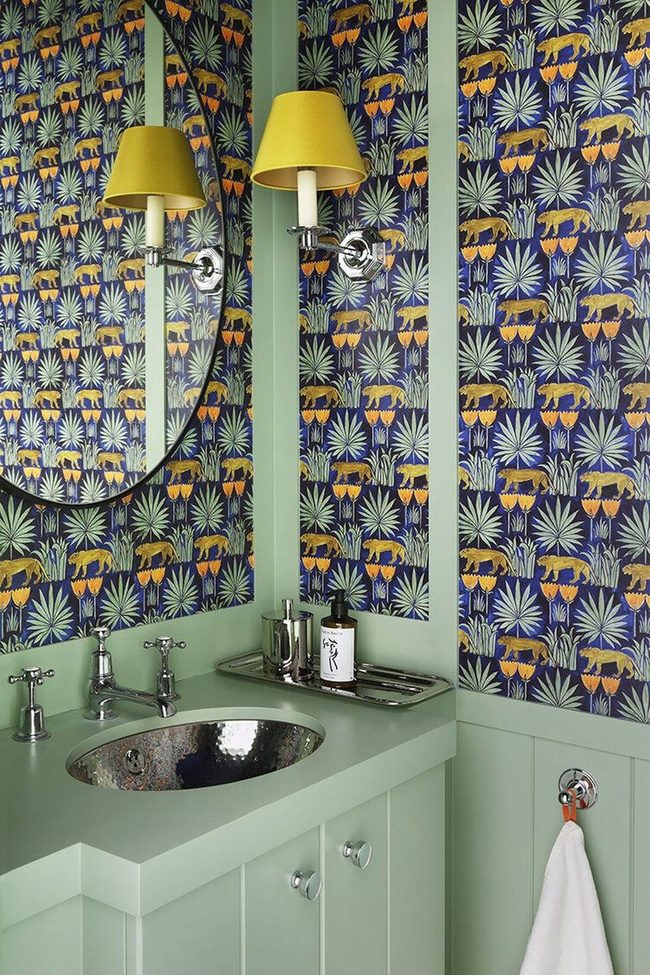
Art Deco welcomes plenty of playfulness even though it celebrates smooth lines and luxury accents, so you can absolutely lean into kitschy touches without hesitation.
Wallpaper in bold, energetic colors can wrap around your walls and make an instant statement, and hunting down the most reflective sink available gives you another chance to add personality to the space.
These kinds of elements might seem odd or disconnected in other design styles, but within Art Deco's blend of polished sophistication and spirited flair, they sit comfortably alongside everything else and feel completely natural.
Geometric Gold Statement Wallpaper
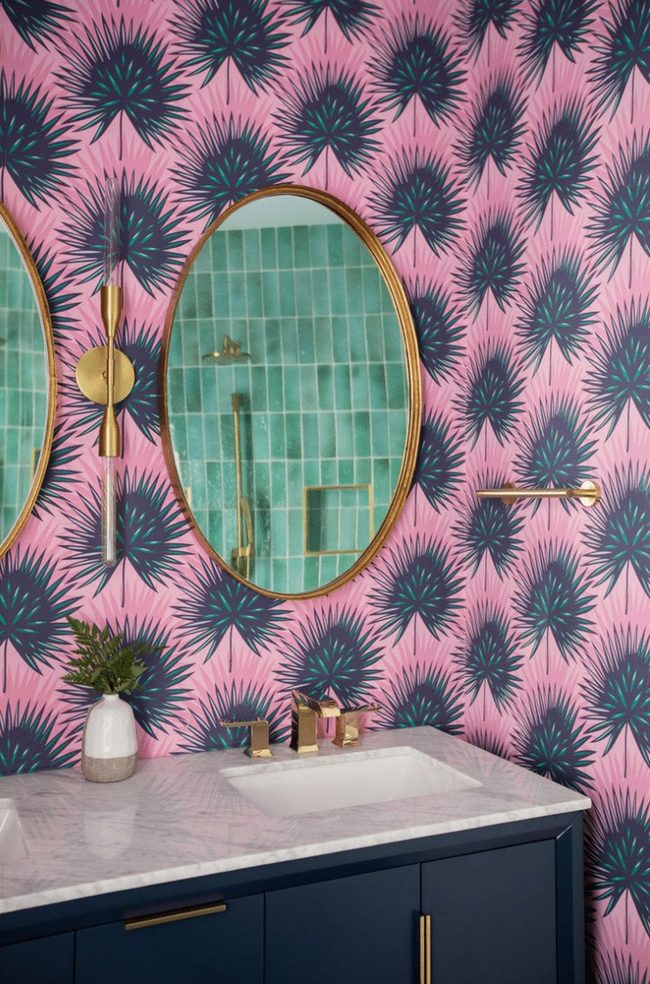
Wallpaper stands as one of the most powerful ways to establish an Art Deco look, and choosing a bold print in a striking color scheme instantly transforms how your space feels.
You don't need to stress about commitment either since peel-and-stick options let you try different eye-catching designs and swap them out whenever you want.
This approach means you can play around with various statement-making patterns without worrying about permanent installation or damage to your walls.
Bold geometric prints, rich jewel tones, and metallic accents are all characteristic of the style and work beautifully on wallpaper.
Starting with a dramatic wall covering gives you a strong foundation that influences everything else you add to the room.
Many people find that once they select their wallpaper, the rest of the decorating falls into place naturally.
You might use the colors from your wall covering to guide your furniture and accessory choices going forward.
Since wallpaper makes such a strong visual statement, it's honestly one of the smartest first steps you can take when designing an Art Deco space.
Reflective Geometric Tiles Shine
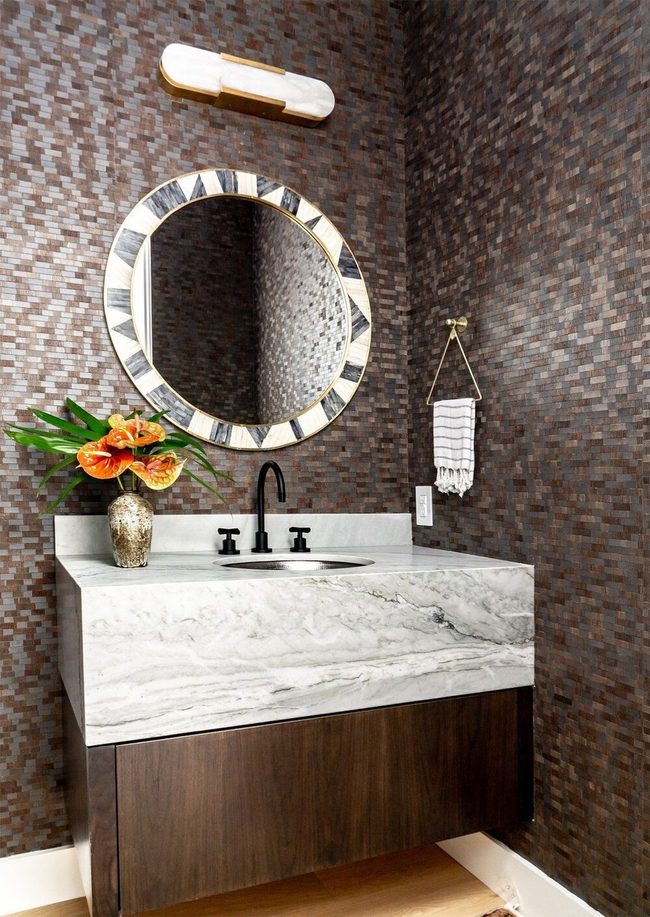
Shiny tiles covering your walls make one of the boldest statements you can make in a bathroom, and they harken back to the glamorous Art Deco era when metal accents dominated design.
You don't need to go overboard with actual metal pieces to capture that same sophisticated aesthetic.
Geometric tiles in sleek patterns stay faithful to the Art Deco spirit and keep things looking sharp.
If you want to build some depth into the space, mixing shiny tiles in different shades works beautifully and adds dimension without overwhelming the room.
The reflective surfaces bounce light around, making even smaller bathrooms feel more spacious and luxurious.
This approach gives you that polished, period-inspired look while remaining practical for everyday bathroom use.
Adding these tiles transforms a basic wall into a real showstopper that reflects your style.
Trapezoids And Diagonal Stripes Pop
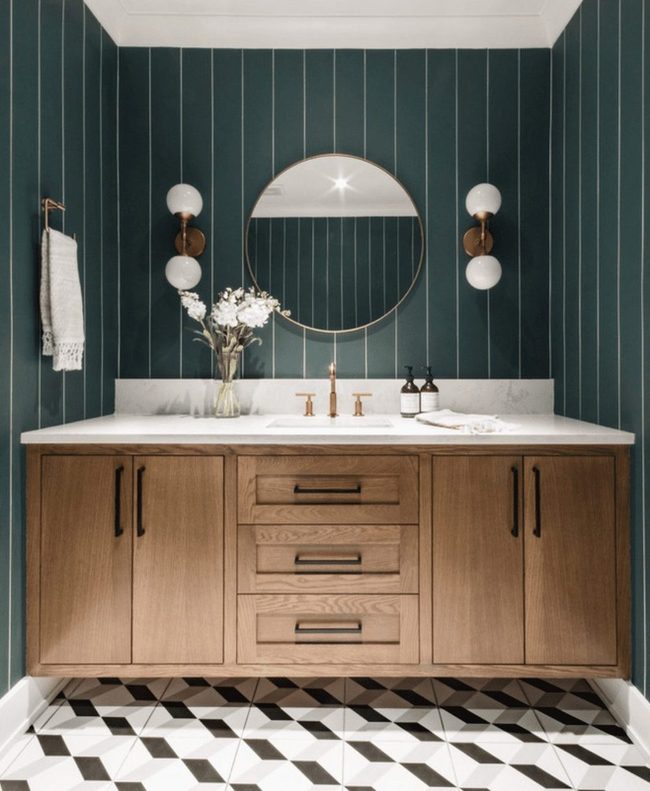
Geometric shapes beyond the usual suspects make Art Deco decoration really pop, so don't stick only to circles, squares, and ovals when you're designing a space.
Trapezoids and parallelograms offer more visual interest than common shapes and can become the foundation of your room's look.
Stripes and polka dots work wonderfully as bold prints that reinforce these angular forms throughout your home.
You can layer these patterns and shapes together without worrying about staying traditional.
Maybe one wall features diagonal stripes while another includes trapezoid-shaped artwork or furniture pieces.
Mixing these elements feels fresh and keeps the space from becoming too predictable or stale.
Art Deco Bathroom Personal Expression
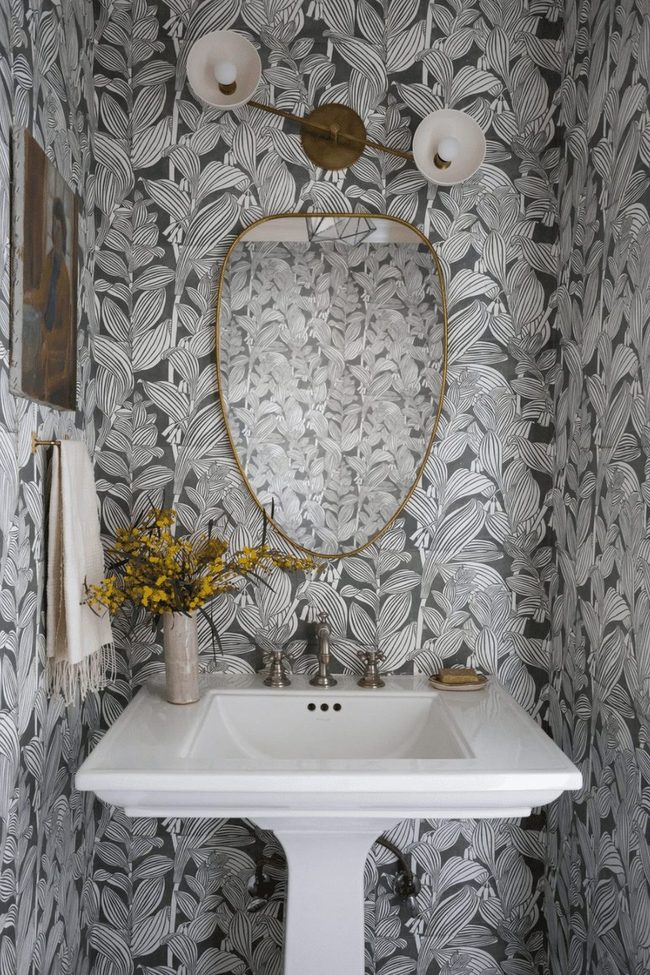
Decorating in any style works best when you let yourself have fun with it instead of sticking rigidly to every rule you find, since you're investing all this effort to build a space you actually want to spend time in-and that includes even those often-overlooked rooms like bathrooms.
Art Deco itself grew from a desire to embrace playfulness and boldness, so staying loyal to the spirit of the style means you should feel free to get a little unconventional and make choices that feel right to you.
We don't all need to follow a rulebook exactly, and honestly, the most satisfying spaces come from people who let their personality shine through.
Your bathroom deserves just as much attention and joy as any other room in your home.
Mix in unexpected elements and combinations that speak to you.
Let your quirky side out and don't apologize for it.
The goal is a place you love, not a museum exhibit that looks like everyone else's.
Patterned Tiles Transform Bathroom Walls
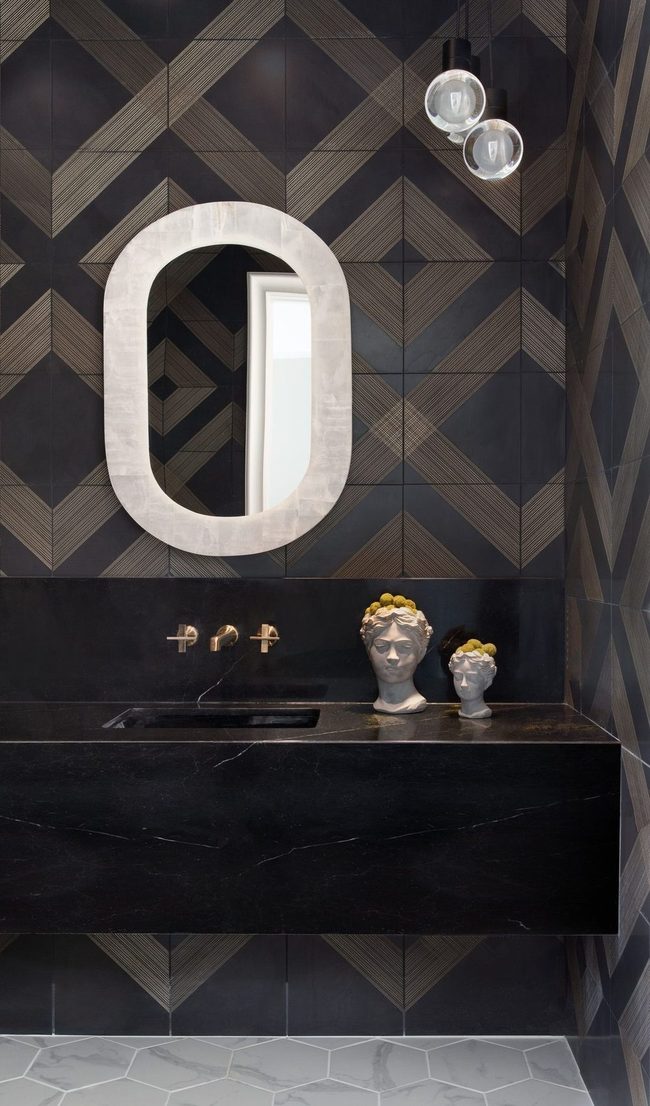
Covering your bathroom walls with patterned tiles opens up design possibilities that paint and wallpaper simply can't match, and you get to play with designs that stretch across every surface when tiles link together seamlessly.
Most people default to solid paint or standard wallpaper, but tiles give your space a completely different character and durability.
You can select individual patterns that stand out on their own, or you can choose tiles designed to form one large design across the entire wall.
Mixing geometric shapes, color combinations, or textures across your bathroom walls makes the space feel intentional and personal.
Since bathroom tiles handle moisture and humidity better than other wall treatments, they're both beautiful and practical.
The pattern approach works especially well in smaller bathrooms where you want maximum visual interest without overwhelming the room.
I think many people overlook how dramatically patterned tiles can shift a bathroom's whole feel.
Consider experimenting with bold designs or softer repeating patterns depending on what matches your style and existing decor.
Geometric Art Deco Chandelier Statement
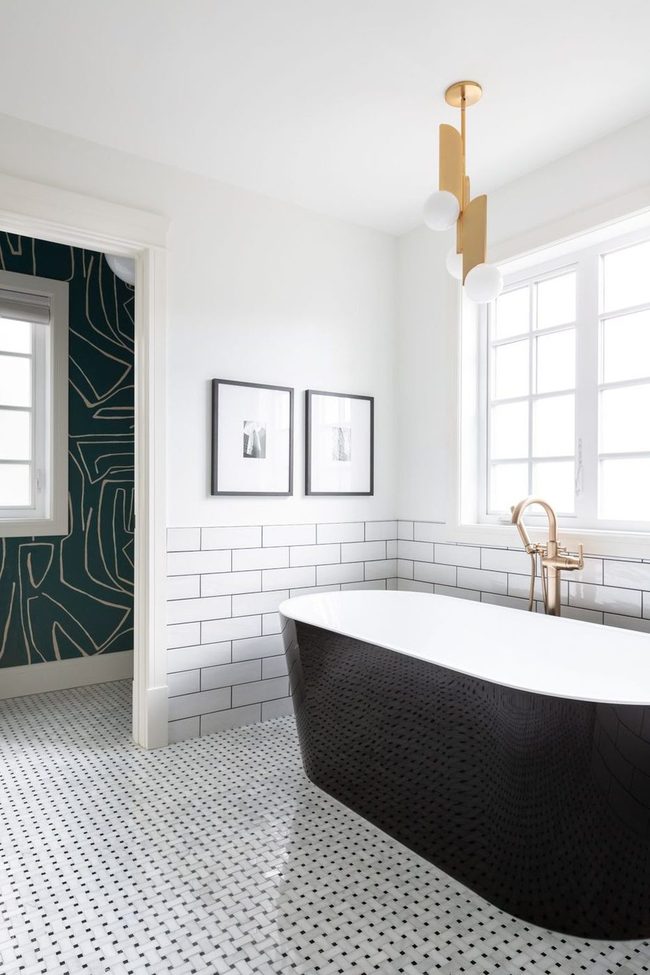
Geometric chandelier in Art Deco style makes one of the most eye-catching additions you can make to a bathroom, and hanging one gives you an instant style boost without much effort.
You have two solid options here: keep everything else simple and let this bold light fixture stand alone as your room's main attraction, or pair it with complementary Art Deco elements like patterned wallpaper and tiles with strong contrasts.
Either way, you'll have a bathroom that feels thoughtfully put together and far more interesting than the standard setup.
When light bounces off the geometric shapes, it creates visual interest all on its own, so even a minimalist approach works beautifully.
If you decide to go the matching route, these coordinating pieces reinforce each other and strengthen your overall design direction.
We think this style works especially well because it's both dramatic and achievable for most budgets.
You don't need to overhaul your entire space or hire a designer to pull off this look, which means you can refresh your bathroom and enjoy that boost of personality right away.
Geometric Triangle Floor Statement
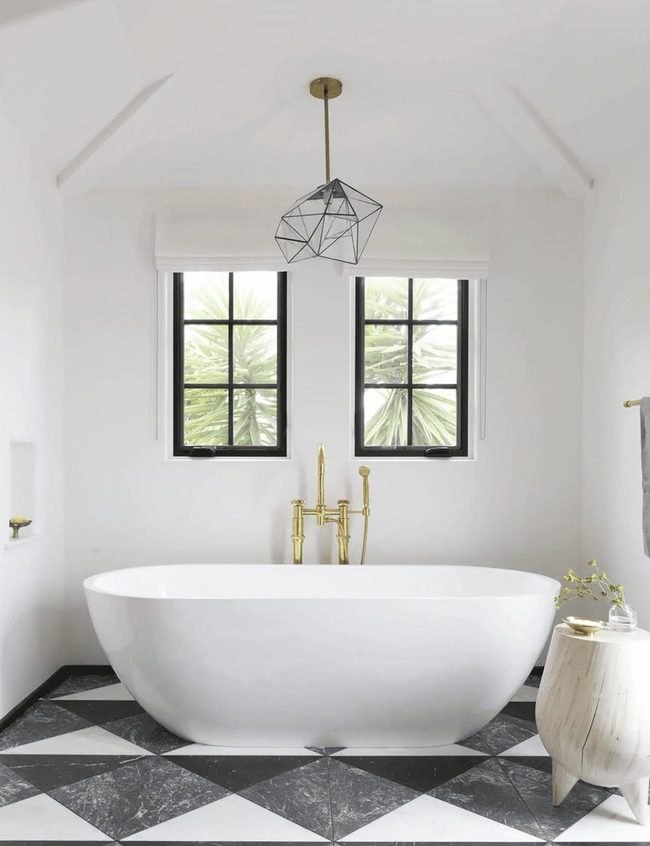
Triangular tiles create a striking statement when you line your floors with large pieces in contrasting colors, and this bold choice works especially well if you're drawn to Art Deco style.
While triangles rarely show up in most interior design schemes, they're fundamental to the Art Deco movement and appear throughout those spaces.
You don't have to go all-in with the trend if it feels too daring for your taste.
Swapping out square backsplash tiles for triangular ones lets you experiment with the geometric shape in a more low-key way.
Going the full route with oversized triangular floor tiles in multiple high-contrast shades stays true to authentic Art Deco design.
Whether you choose a subtle approach or embrace the bolder direction, this geometric element adds real personality to your space.
The angular lines and color combinations pull your eye around the room and make the design feel intentional.
Taking a chance on this unconventional tile shape sets your home apart from the typical decorating choices you see everywhere.
Paired Mirrors Art Deco Balance
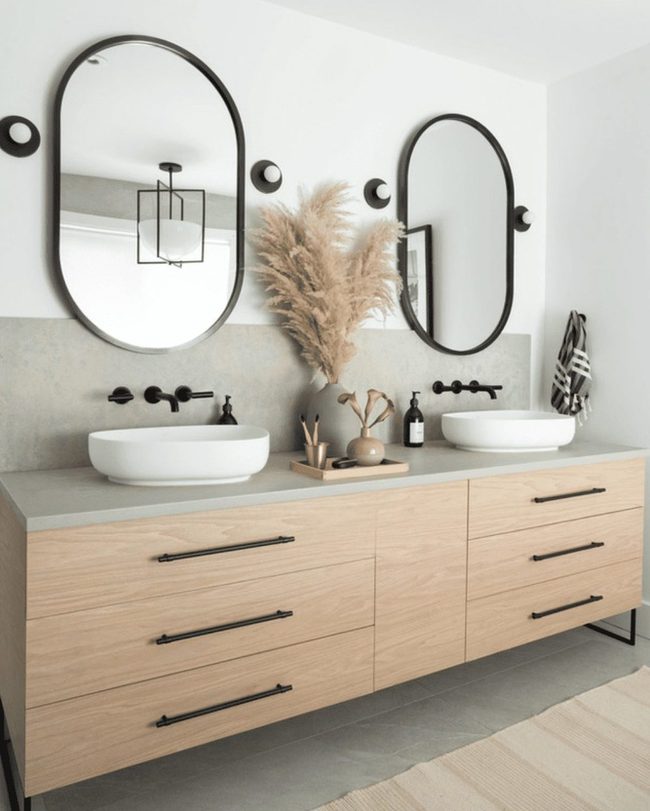
Symmetry works as a reliable design principle when you're unsure what direction to take your space, and applying it with confidence can evoke Art Deco style even when you've blended in other aesthetics.
One easy way to lean into this approach is to think in pairs and multiples.
Instead of one large mirror dominating a wall, split it into two smaller matching mirrors and position matching sinks and vanity cabinets beneath them.
You can push the symmetry further by hanging matching pendant lights on both sides of each mirror, or by flanking the mirrors with pairs of matching sconces.
Each additional symmetrical element reinforces the overall balance and gives your room a more polished feel.
Building symmetry into your design doesn't require complex planning, and the payoff is a space that feels intentional and well-organized.
We find that this method works especially well in bathrooms and entryways where balance naturally enhances the sense of order.
Geometric Sunburst Tile Backdrop
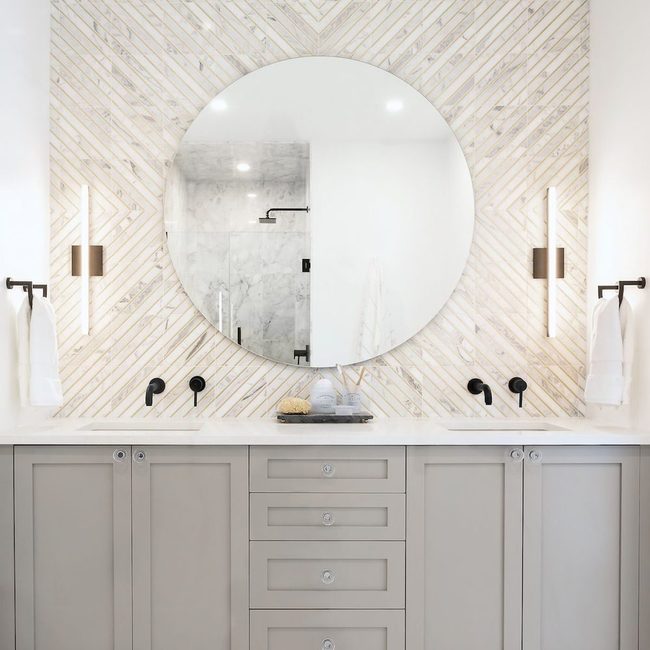
Sunburst design made from backsplash tiles radiating out from your mirror creates one of the most striking visual statements you can make in a bathroom, and this Art Deco-inspired motif deserves way more attention than it typically gets.
You'll find sunburst mirrors, headboards, and light fixtures all over the place, each one featuring that characteristic geometric precision the Art Deco period is known for.
Beyond just hanging a sunburst mirror on the wall, you can take your bathroom to a whole new level by arranging tiles in a sunburst pattern that extends outward from your mirror as its center point.
We love this approach because it transforms a simple reflection into an actual design focal point that demands attention.
Getting sunburst-shaped tiles or cutting regular tiles into triangular pieces gives you endless options for customization.
You don't need to fill your entire wall with this pattern either; even a modest sunburst behind or around your mirror packs serious punch.
The geometric nature of the design means it works in nearly any bathroom style, from modern spaces to ones with more traditional bones.
Deep Jewel Tones Meet Geometric Tiles
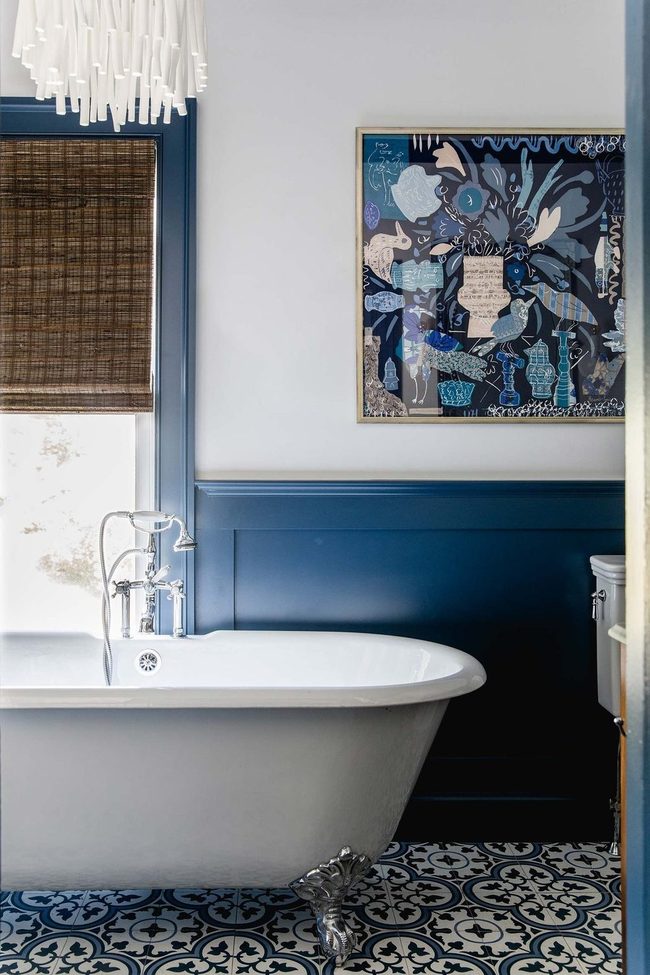
If you want to honor the Art Deco movement's love of bold hues, don't just sprinkle in small color accents-go ahead and commit to one powerful shade that dominates your room.
Pairing this main color with a striking light fixture turns up the drama and makes the whole space feel more authentic to the era.
Adding eye-catching printed tiles reinforces that same bold energy and ties your color choice together visually.
This approach works well because Art Deco design celebrated richness and saturation, so holding back on color actually works against what the style stands for.
You can choose jewel tones like emerald or sapphire, deep golds, or even moody blacks if that suits your taste.
When you pair these bold walls or accents with statement lighting and patterned surfaces, the room genuinely feels like it belongs to that glamorous period.
It takes some confidence to go this route, but the payoff is a space that feels intentional and distinct rather than half-hearted about its style direction.
Geometric Mirror Bathroom Linear Layers
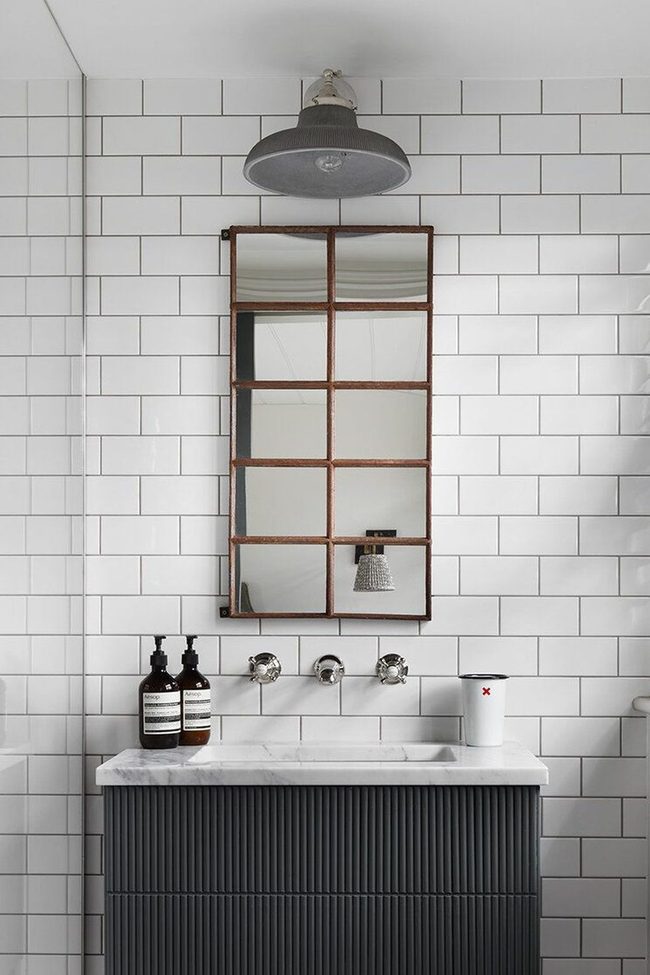
Art Deco design loves layering, so you can stack multiple patterns and textures without worrying about too much.
Straight lines work best when you run them across different surfaces like your tiles, sink, and vanity to catch attention in multiple directions.
Once you've built this foundation, a bold mirror as your statement piece will push the linear theme right into the spotlight and tie the whole concept together.
Chandelier Showerhead Statement Piece
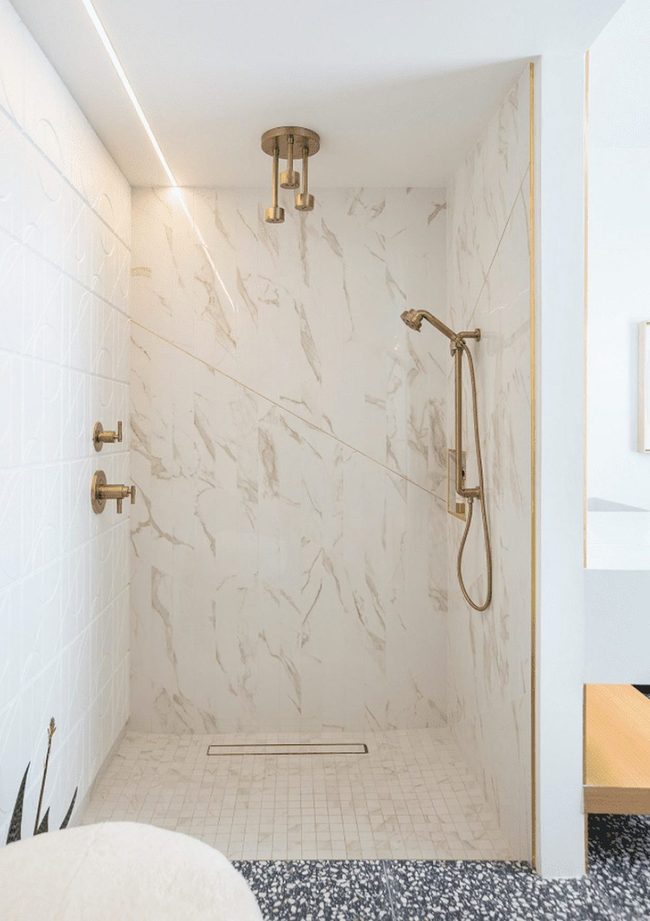
Most people overlook their showerhead as nothing more than a functional fixture, but you can actually turn it into a standout design element in your bathroom.
If you're willing to put in a little effort and swap out your current model, there are sleek overhead options designed to resemble chandeliers that deliver both style and comfort during your showers.
These alternatives work well for anyone drawn to Art Deco design and looking to elevate their space with something unexpected.
You don't need to sacrifice performance for beauty either, since many of these chandelier-style showerheads perform just as well as standard versions.
Making this simple switch gives your bathroom an instant dose of personality and sophistication without requiring a full renovation.
It's one of those easy updates that shows how much a single element can shift the entire feel of a room This approach proves that even utility items deserve a place in your design thinking.
Abstract Florals Meet Sharp Lines
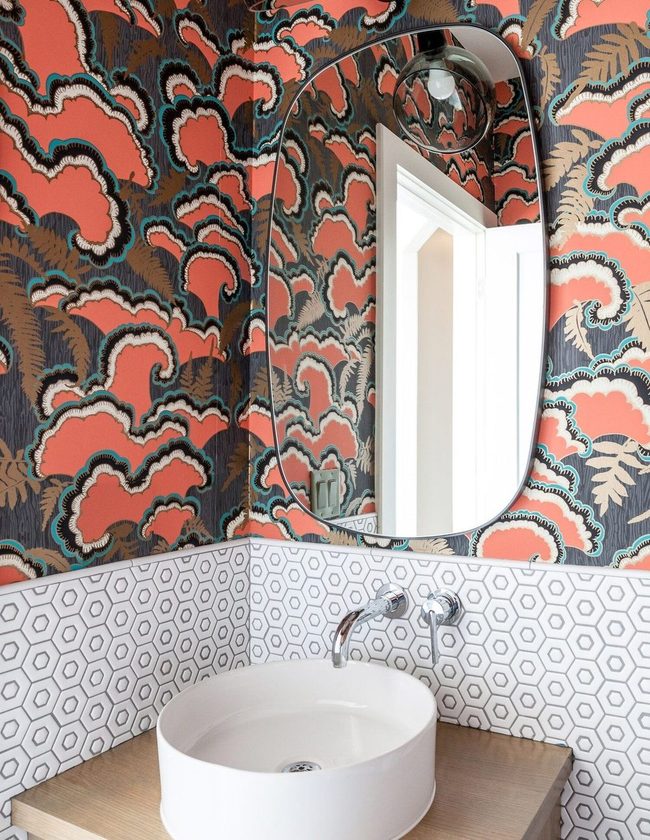
Stylized floral prints might seem like an odd fit for an Art Deco room, but they actually work beautifully when you choose the right ones.
We often assume that geometric patterns and florals can't coexist, yet certain botanical designs pair wonderfully with sharp lines and bold shapes.
You'll find that simplified, abstract flowers-rather than realistic, delicate blooms-complement the angular aesthetic perfectly.
Consider incorporating floral wallpaper, upholstered pieces, or artwork that features plants rendered in a graphic way.
These patterns add softness without sacrificing the structured look you're building.
Since Art Deco loves bold color and pattern, a strategized floral choice enhances rather than contradicts that style.
The key is selecting flowers that feel modern and architectural rather than traditional and romantic.
Mix these printed elements alongside your geometric accents, and the combination brings depth and visual interest to your space.
Art Deco Accent Tiles Strategy
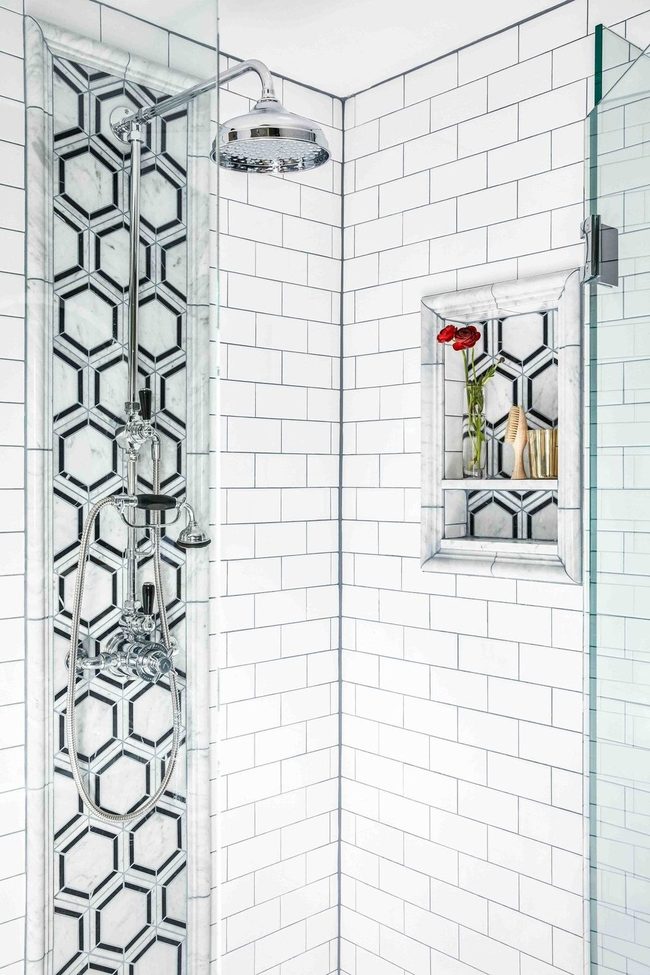
When you're designing your shower, don't feel locked into using just one tile style throughout the space.
If you're going for an Art Deco bathroom, mixing in multiple prints, colors, and textures can really elevate the look and add character to the room.
To avoid making the shower feel chaotic, keep most of it simple and reserve your accent tiles for specific spots that stand out.
Behind the showerhead is an ideal spot for a bold pattern since you'll see it every time you step in.
Your soap shelf is another perfect place to introduce those eye-catching tiles without overwhelming the overall design.
By limiting the patterned tiles to just a couple of key areas, the space stays visually balanced and doesn't compete with itself.
This approach lets you enjoy the artistic flair of Art Deco style while maintaining a clean, organized feeling in your shower.
Black Grout White Tiles Drama
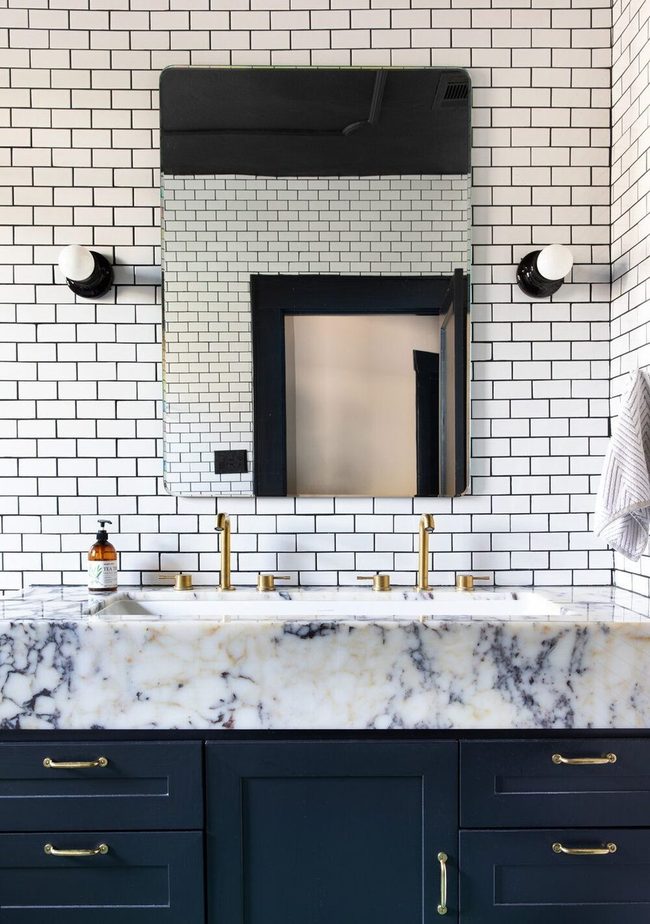
To make your Art Deco decor scheme pop, try increasing the contrast in your space, which is one of the most effective ways to catch attention and showcase those bold design elements.
Swap out classic off-white grout for black grout between your white subway tiles, and you'll immediately notice how much more dramatic the wall becomes.
Similarly, paint your cabinets to echo some of the stripes or veining in your marble countertops, and this simple choice amplifies those natural patterns in your stone.
Both of these moves work because strong contrast naturally guides your eye toward your Art Deco accents and makes them stand out even more than they would on their own.
You don't need to overdo it with too many competing colors or patterns.
Just one or two strategic choices like these can shift the whole mood of your kitchen or bathroom.
I've seen how well this technique works in spaces where people want their design to feel bold without feeling overwhelming.
Mirrored Sconces Symmetry Statement
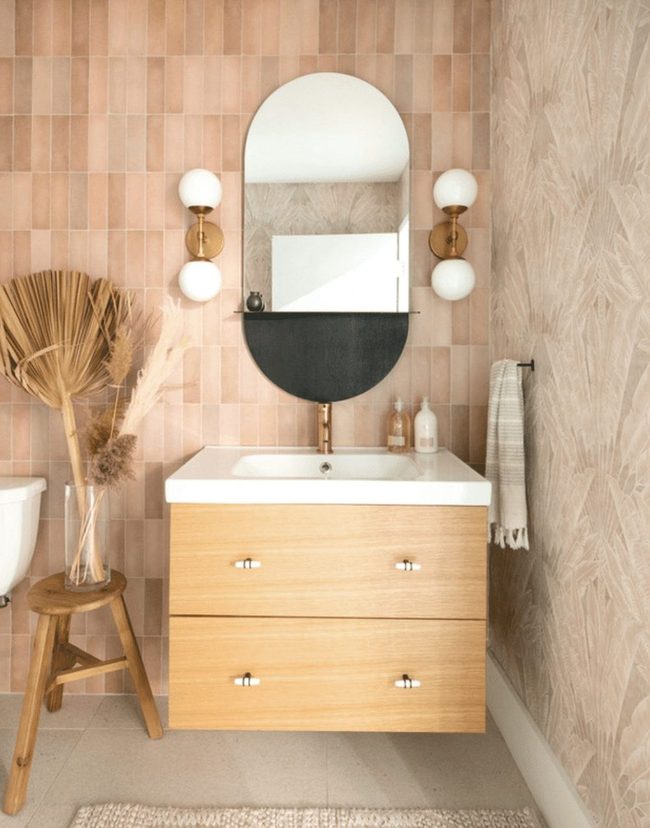
Placing two matching sconces on either side of your mirror is one of the most striking ways to bring symmetry into an Art Deco design scheme, and this setup pulls all eyes straight to your wall.
Symmetry matters enormously in Art Deco style, and there are many ways to achieve it throughout your space.
However, flanking your mirror with sconces stands out because the two matching pieces sitting so close together make your symmetrical arrangement impossible to miss.
You want people to notice what you've done, and this approach does exactly that by making your design choice bold rather than understated.
The paired sconces frame your mirror beautifully and add a sense of balance that feels intentional.
This arrangement works especially well in bathrooms or bedrooms where mirrors are already focal points anyway.
Going with this idea means your symmetry becomes a real design feature rather than something quiet that blends into the background.
It's a simple choice that delivers a lot of visual punch in your decorating scheme.
Jasmine Lee
Content Creator & Style Advisor
Expertise
Content Creation & Engaging Writing, Home Project Ideas & Decorating Tips, DIY Projects & Creative Solutions, Trend Spotlights & Practical Styling Advice, Easy-to-Follow Guides for Home Decor
Education
University of California, Los Angeles (UCLA)
Jasmine Lee is a content creator and style advisor at Nesthance, making home décor feel fun and effortless. With a degree in communications from UCLA, she has a knack for turning decorating ideas into easy, step-by-step guides that anyone can follow.
She loves sharing practical styling tips, creative DIY projects, and trend insights to help readers refresh their spaces without stress. Her work focuses on making design approachable and inspiring for all.
Outside of writing, Jasmine enjoys discovering new design trends, attending workshops, and curating inspiration boards to keep ideas fresh and exciting.