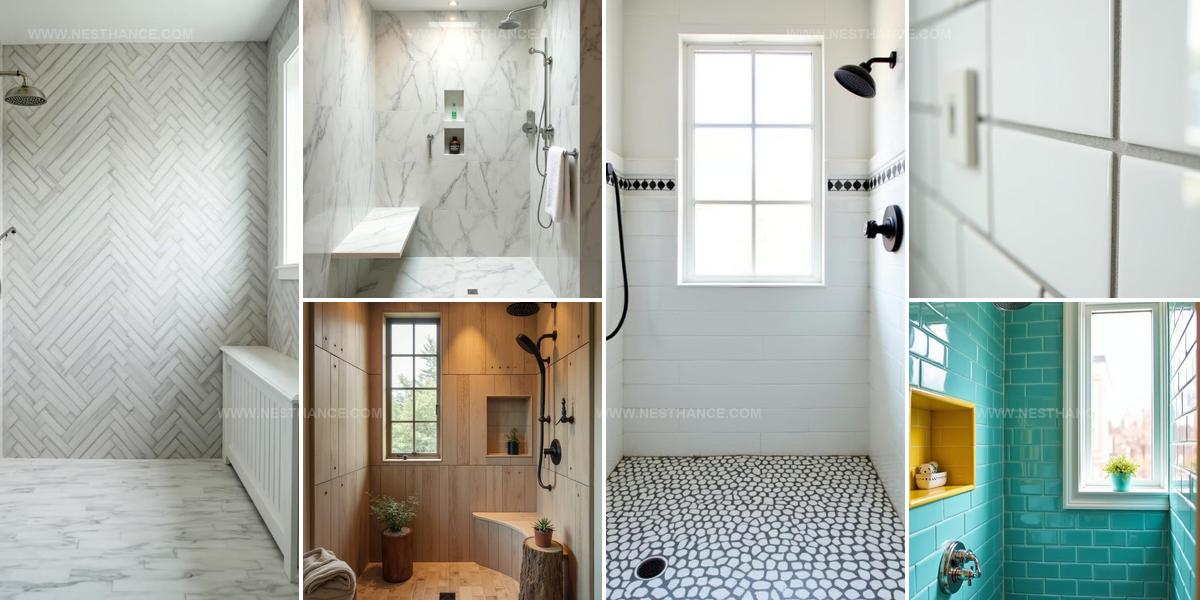
18 Fresh Patterns for Your Bathroom Shower Tile Space

Bathroom shower tile sets the foundation for a space where you can truly unwind after a long day, combining practical durability with aesthetic appeal that reflects personal style.
The right selection can completely change how a shower area looks and feels, whether aiming for sleek modern lines or classic elegance that stands the test of time.
Moisture resistance and ease of maintenance rank among the most important considerations, since showers endure constant water exposure and humidity that can challenge lesser materials.
Color schemes, patterns, and textures all play significant roles in establishing the mood and visual flow of the entire bathroom.
Porcelain, ceramic, natural stone, and glass each offer distinct advantages depending on budget, design vision, and long-term maintenance preferences.
Installation methods and grout choices also influence both appearance and longevity, making informed decisions essential for achieving results that remain beautiful for years.
With so many options available, finding the perfect combination becomes an exciting journey worth taking.
Oversized Tiles For Spacious Bathrooms
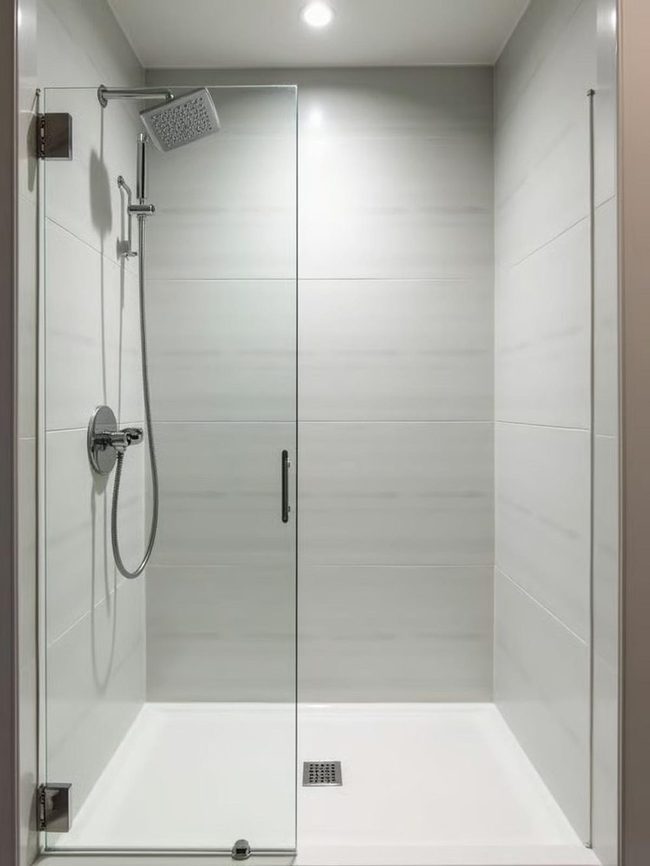
Large format tiles measuring twelve by twenty-four inches or bigger make bathrooms feel more open and refined because they need fewer grout lines running between them.
Fewer grout lines mean you spend less time scrubbing away soap scum and mold, which is a real bonus in wet shower areas where moisture builds up constantly.
This streamlined look also aligns with what many people want in modern bathrooms, clean lines and minimal visual clutter.
Installing these bigger tiles does come with some real challenges though, as their weight and size demand careful handling and a perfectly level surface underneath to avoid uneven edges or weak spots in the installation.
Getting a pro to handle the job usually pays off since they know how to spread the mortar evenly across the larger surface and ensure everything stays secure for years.
You can also pair oversized porcelain panels with small mosaic pieces to break up the space and add visual interest without losing that smooth appearance.
Selecting the right grout, epoxy works well since it resists stains and lasts longer, keeps maintenance easier down the road.
Vertical Stacked Tiles Extending Upward
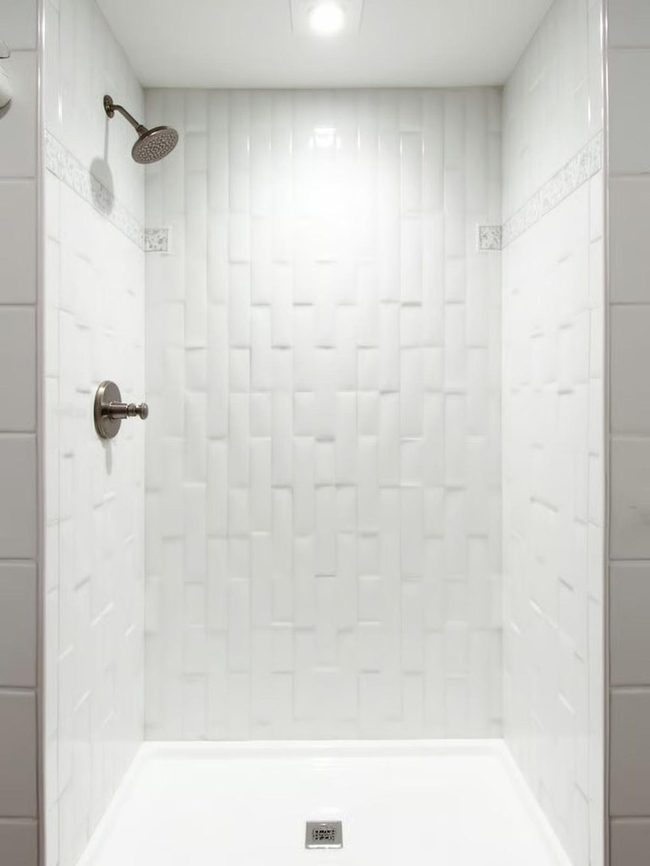
Stacking rectangular tiles vertically, one directly above the other, creates striking upward lines that draw your eye toward the ceiling and make your bathroom feel taller and more open.
This layout works especially well in smaller spaces where you want to maximize how spacious the room feels.
Long, narrow tiles amplify this effect even more and give your shower that clean, uncluttered look that defines modern design.
Using contrasting grout between the tiles highlights these linear patterns and makes the vertical arrangement even more noticeable.
Getting the alignment right matters during installation, so checking with a level frequently keeps everything perfectly straight and true.
When you pair this minimalist style with tiles designed to prevent slips in wet environments, you get both visual appeal and user-friendly safety in one solution.
We can all agree that a shower design should look good and keep you secure.
Classic White Subway Tile Perfection
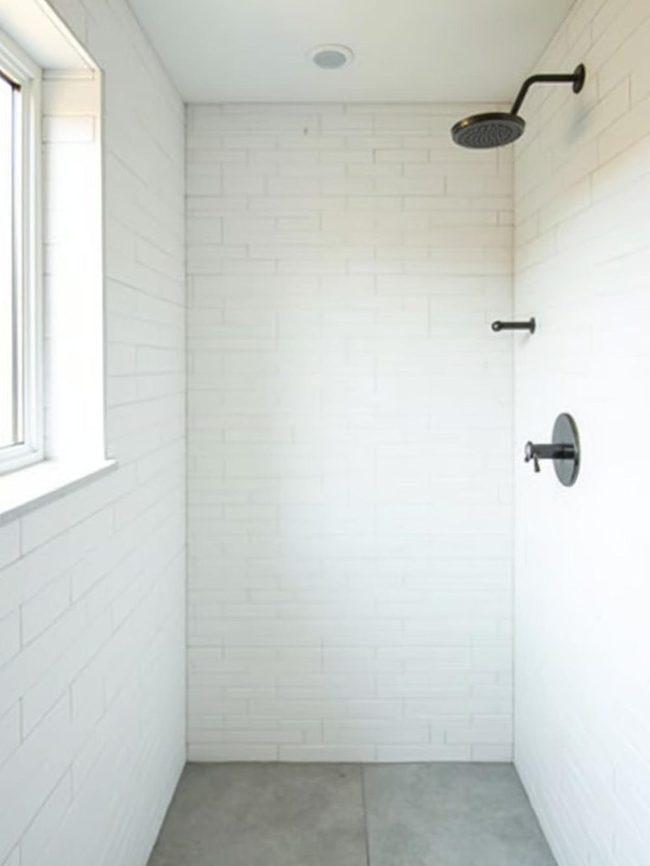
White subway tile has remained a bathroom staple since gracing New York City subway stations in the early twentieth century, and its simple rectangular shape combined with impressive durability makes it both user-friendly and visually striking.
You could find that this classic tile works as a blank canvas, fitting seamlessly into everything from traditional to modern bathroom styles, and its light-reflecting properties are particularly helpful in smaller shower spaces where you want to feel like the area breathes and opens up.
One clever way to refresh the traditional look is installing the tiles in herringbone or other non-standard patterns, which gives you that contemporary edge while keeping the timeless appeal intact.
Pairing white subway tile with dark grout like charcoal or black instantly balances the clean aesthetic with stronger visual contrast, and you can maintain that polished appearance with just mild all-purpose cleaner or a vinegar and water solution.
During installation, spacers help you achieve those professional-looking grout lines that make all the difference in the final result.
What makes this material so special is how it reshapes completely based on simple choices like grout color and layout pattern, proving that sometimes the most classic materials offer you the most flexibility and staying power.
Geometric Tiles Add Visual Movement
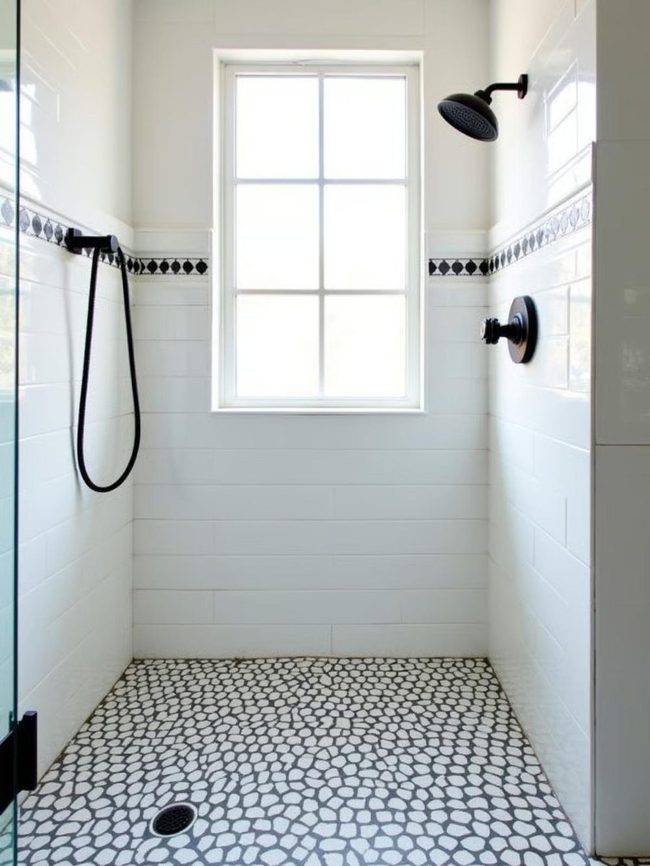
Geometric patterned tiles bring striking visual interest to your shower through bold designs like chevron, herringbone, hexagons, and Moroccan-inspired arrangements that range from understated sophistication to dramatic flair.
You can make a geometric floor really stand out by using contrasting colors that draw attention downward, or keep walls refined with tone-on-tone patterns that feel more subdued and polished.
Most bathrooms benefit when you use these patterns strategically rather than covering every surface, since bold designs can feel overwhelming in smaller spaces.
A well-placed geometric accent wall, a patterned floor, or even a decorative border around a shower niche gives your space personality without crowding it.
Before you start installing anything, take time to plan your layout using levels and spacers to ensure across tile lines up properly and creates that clean, balanced look.
I've learned that restraint matters here, selecting one or two areas for geometric patterns while keeping the rest simple lets the design breathe and feel balanced.
Whether you go bold with your floor or keep things gentle on the walls, these patterns add movement and visual interest that simple tiles alone just can't match.
Small Round Tiles Vintage Appeal
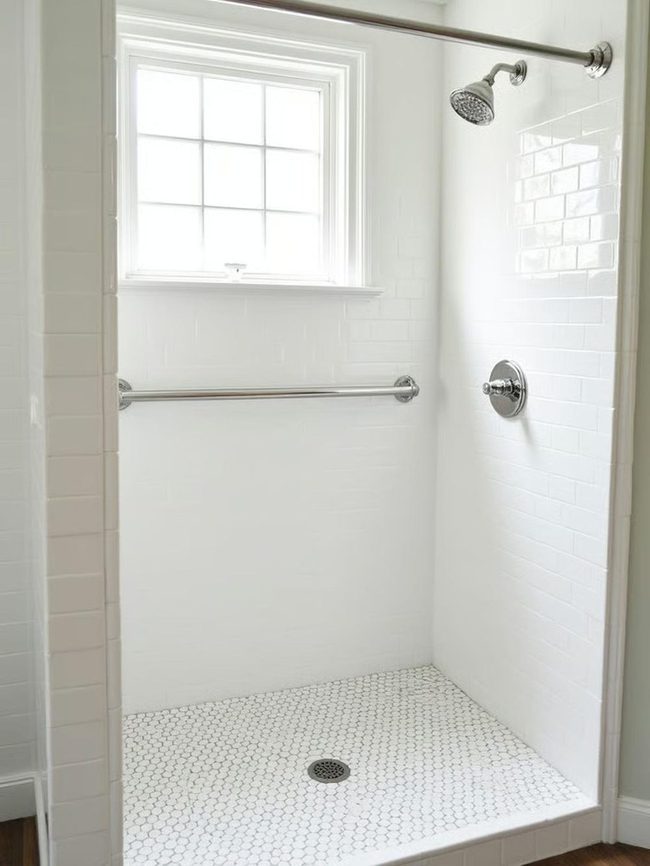
Penny tiles are small, round tiles measuring roughly three-quarters of an inch across, and their distinctive shape makes them instantly recognizable in any space.
These charming circular tiles dominated bathrooms and kitchens in the early twentieth century, bringing vintage warmth to homes that featured them.
Today, homeowners still gravitate toward penny tiles when they want to add character and historical depth to shower designs.
You can use them in countless ways, as accent bands that interrupt larger tiles, as intricate floor mosaics, as decorative inlays within shower niches, or even as the foundation for an entire shower floor with retro personality.
Pairing them with modern fixtures and contemporary materials creates a nice balance between old-world appeal and current style, letting your space feel both timeless and fresh.
White penny tiles work especially well for floors that feel vintage without dating your bathroom, while contrasting color accents can define borders or stripes throughout the space.
Keep in mind that these small tiles will highlight any bumps or dips in your subfloor, so leveling the surface beforehand matters quite a bit.
Porcelain Marble Tiles Gold Accents
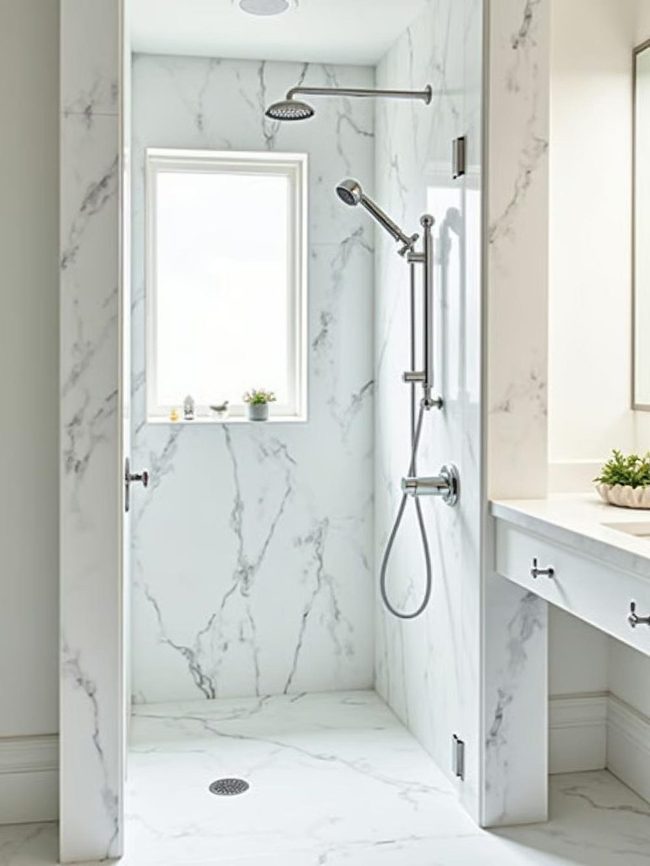
Marble-look tiles shape that luxurious appearance you see in high-end bathrooms without the hefty price tag, and they're made from porcelain or ceramic designed to copy natural marble's veining and polished surface with impressive accuracy.
Large format tiles give your shower walls a seamless, expensive-looking finish that really stands out.
Pairing these tiles with gold or brass fixtures adds another layer of polish and sophistication to the space.
When you're shopping, look for options with varied patterns printed on them so the design doesn't feel repetitive or flat across your walls.
One smart move is to stick with mild, non-abrasive cleaners that keep the surface looking fresh without wearing down the finish.
Unlike real marble, these tiles are less porous and hold up much better against stains and scratches, a big deal in a constantly wet shower environment.
You get the beauty of marble aesthetics at a fraction of the cost and way less maintenance stress.
Diagonal White Tiles Transform Showers
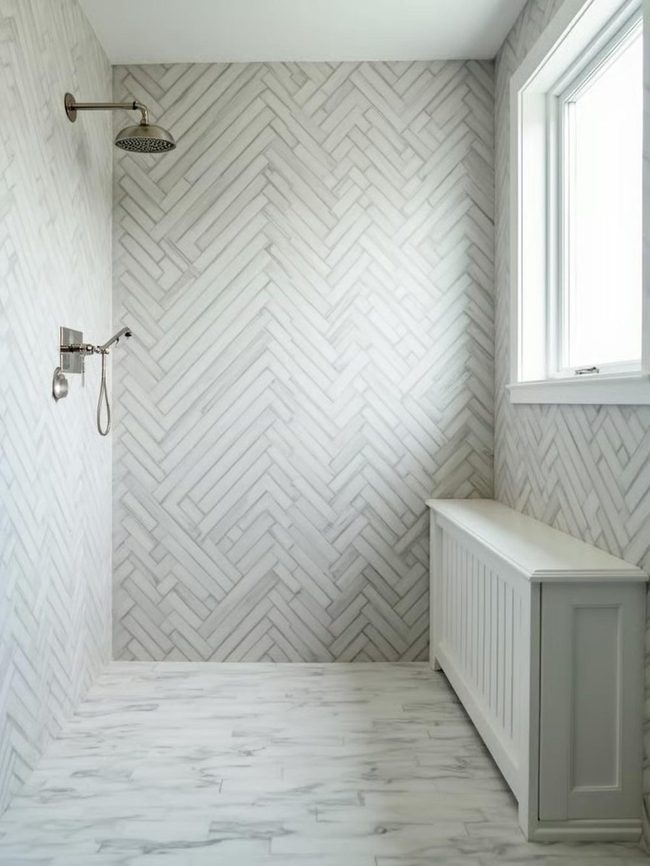
Herringbone tile patterns bring real energy to shower spaces by arranging rectangular tiles at 45-degree angles to form distinctive V-shaped rows that remind you of fish bones.
This geometric arrangement basic surfaces like subway tiles into something far more refined and visually interesting.
You can place white subway tiles in this pattern for a timeless look that still feels updated, or try contrasting wall and floor colors to make the design pop even more.
Starting from the center and working outward helps you achieve balanced symmetry throughout your shower.
Using tile spacers keeps your grout lines even and professional-looking across the entire surface.
What makes herringbone work so well is how it guides your eye along the diagonal lines, making your shower feel more spacious and sophisticated than a standard grid layout would.
Whether you go with subtle variations or bold color contrasts, through the design, adds movement and personality to a space that might otherwise feel flat and plain.
If you prefer something different, clean vertical lines offer another way to bring modern simplicity to your shower design.
Recycled Glass Mosaic Shower Tiles
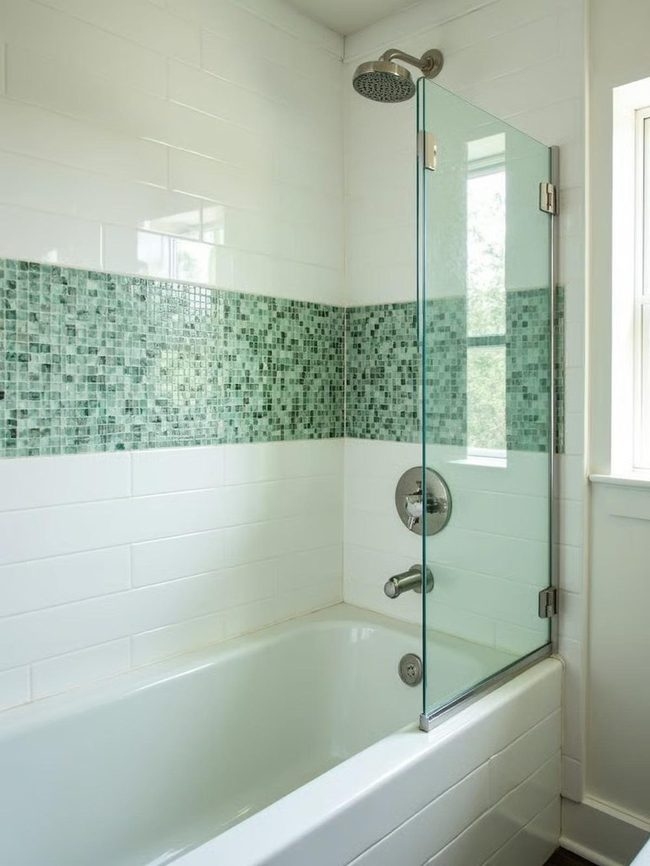
Recycled tiles deliver striking visual appeal while honoring your commitment to the planet, and what makes them truly special is that you get both sustainability and beauty without compromise.
These tiles originate from post-consumer glass bottles, reclaimed industrial waste, and recycled porcelain or ceramic, transforming discarded materials into bathroom shower options that look just as good as conventional choices.
You can go bold with recycled glass mosaics that bring colorful, textured accent walls to life, or opt for recycled porcelain designed to mimic natural stone for a more understated approach.
Since manufacturing recycled tiles requires less energy than producing tiles from virgin materials, choosing them means you're actively reducing landfill waste and lessening the environmental burden of discarded goods while also shrinking the production footprint of your home.
When you shop, look for certifications that verify recycled content and support companies that prioritize sustainable manufacturing practices throughout their process.
Beyond the eco-friendly benefits, these tiles perform just as well as standard options and won't sacrifice style or durability.
Gray Grout Defines Bathroom Tile Impact
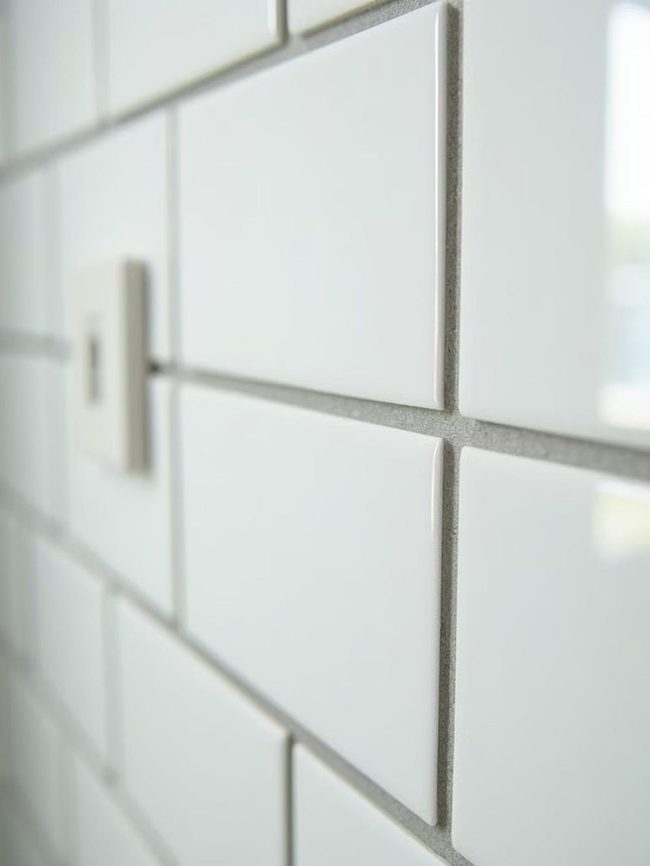
Grout color serves as a powerful tool that shifts how your bathroom shower tiles look and feel, yet many people overlook this choice when planning their space.
Light gray grout offers a middle ground between matching and contrasting, staying forgiving when dirt builds up while still adding a bit of definition to your tile layout.
Darker shades like charcoal and dark gray make tiles pop with strong contrast, hide stains better, and bring a modern edge to lighter tile selections.
White grout gives you that fresh, clean appearance if you want maximum brightness in your shower area.
Warm tones such as beige and earth-toned grouts help establish a more natural, lived-in mood in the bathroom.
When your grout matches your tile color closely, the lines fade into the background and you get a smooth, unified surface that emphasizes the overall look rather than individual tiles.
Picking a contrasting grout does the opposite and highlights eachtile's shape and pattern for a bolder, more graphic result.
Epoxy grout stands out as the best option for showers no matter which color you choose since it resists stains, lasts longer, and blocks water from seeping through.
Charcoal And Navy Shower Tiles
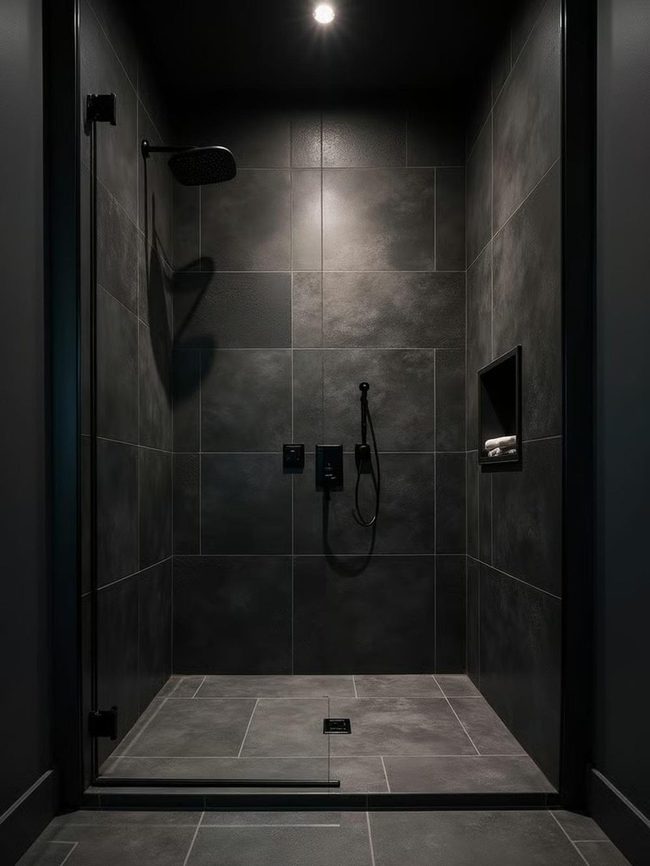
Dark tiles like charcoal gray, deep navy blue, forest green, warm brown, and black set up a striking visual feast in your shower space and transform it into a luxurious sanctuary of relaxation and depth.
You'll be aware of these moody colors work best when balanced with plenty of light, so consider adding recessed lights, skylights, or positioning mirrors strategically to bounce illumination around the room.
Lighter elements make all the difference here, white fixtures, contrasting grout lines, and glossy tiles all help prevent the space from feeling cramped, especially if you're working with a smaller bathroom.
Dark gray slate brings sophisticated ambiance to the walls, while dark blue glossy tiles reflect light beautifully and keep the area from feeling enclosed.
The key is ensuring adequate lighting throughout so the dark palette enhances your shower rather than making it feel closed-in.
Vintage tiles that blend nostalgia with modern style offer another way to add unique character to your shower and tell a story through your design choices.
Intricate Mosaic Patterns For Personalized Showers
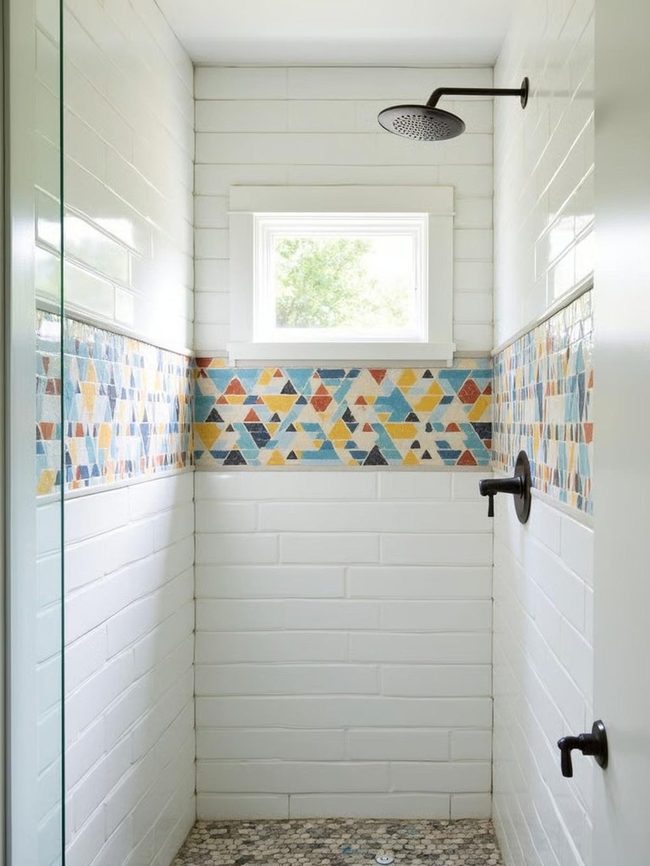
Mosaic tiles bring incredible visual punch to any shower with their intricate patterns and endless design possibilities, ranging from glass and ceramic to stone and metal options that let you personalize your space in ways larger tiles simply cannot match.
You can use them to line shower niches and give rise to striking accent walls that break up plain expanses of tile while adding personality and flair.
Curved surfaces become easier to work with since their small size adapts beautifully without making the area feel cramped or overdone.
Consider placing accent strips along your shower walls or across the floor for texture and visual interest that stands out.
When you install them, use thin-set mortar appropriate for your specific tile material and clean excess grout promptly with a damp sponge to keep lines neat and precise.
Beyond these detailed applications, you might explore tiles that minimize grout lines for a sleeker, more modern look that shifts your aesthetic in a completely different direction.
Mosaic tiles excel at adding that personalized decorative element, yet sometimes you want the opposite, a clean, seamless appearance without all the intricate detail work.
Waterproof Hardwood Grain Shower Tiles
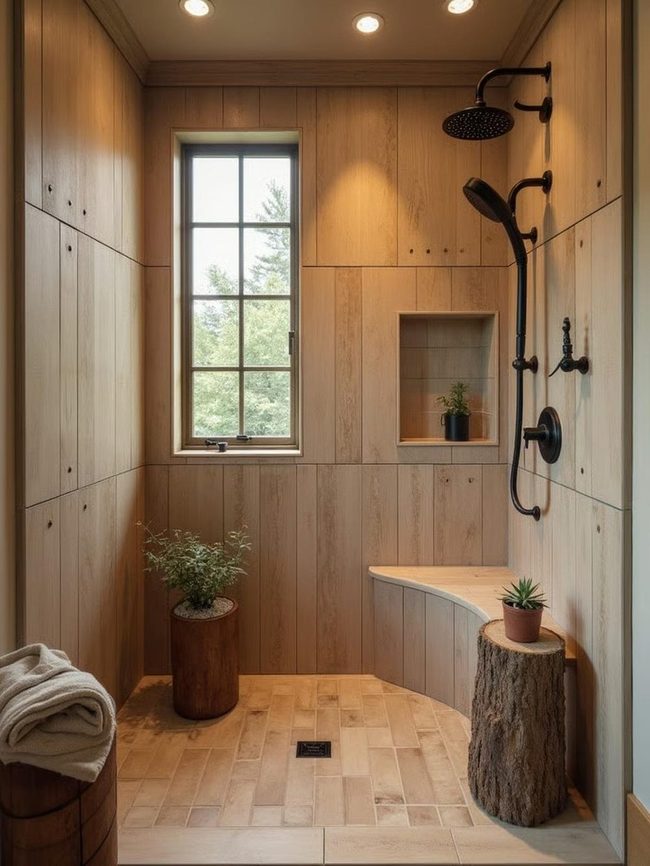
Wood-look tiles bring the warm, organic appeal of real wood planks into your shower space without any of the water damage or rotting that actual wood would face.
Made from porcelain or ceramic, these tiles use advanced printing and texturing to copy real wood down to the grain patterns, knots, and surface texture.
Installing them vertically along your walls mimics traditional wood paneling and draws the eye upward, making your bathroom feel taller and more open.
Mixing different wood tones throughout the space gives you that natural, lived-in look you get from genuine wood, and laying them in staggered patterns strengthens the authentic plank appearance even more.
Because they're completely waterproof and built to handle moisture, they deliver all the rustic character and coziness of wood without demanding the constant upkeep real wood requires in wet areas.
Choosing grout colors that match your wood tones helps everything blend seamlessly and strengthens the natural feel.
We connect deeply with natural materials, and that's why wood-look tiles feel so comforting and grounding in a bathroom, they give you genuine warmth and personality while being functional for shower environments.
Dense Porcelain Stone Shower Tiles
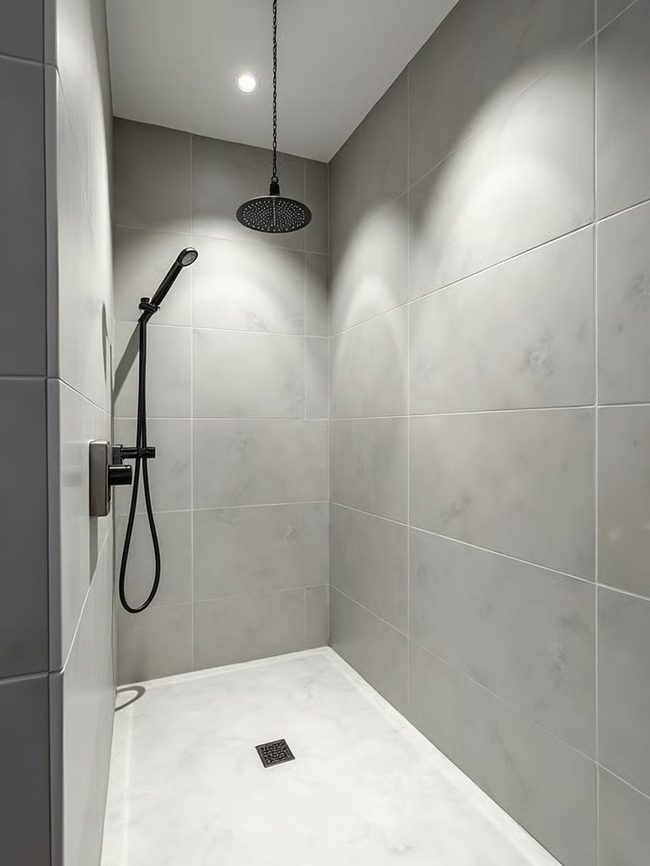
Porcelain tiles look like natural stone, wood, concrete, or even fabric thanks to advanced printing and texturing techniques, and this visual variety means you can design a shower that matches any style you want.
Beneath that gorgeous surface lies exceptional durability from a manufacturing process that fires porcelain at higher temperatures and for longer periods than ceramic tiles, making it incredibly dense and non-porous.
Because porcelain resists scratches, stains, and moisture absorption, it holds up beautifully in bathrooms where water exposure happens daily and heavy use is common.
You could find porcelain available in countless colors, sizes, shapes, and textures, so the design flexibility for shower walls and floors is almost unlimited.
Large format tiles on walls minimize grout lines and a sleeker look overall.
Mixing different sizes and shapes adds visual interest if you want something more dynamic.
For shower floors, choosing tiles with appropriate PEI ratings matters for safety and durability.
Sealing grout lines regularly, especially in shower areas, keeps moisture from causing problems down the road.
Dimensional Tiles Catch Light And Shadow
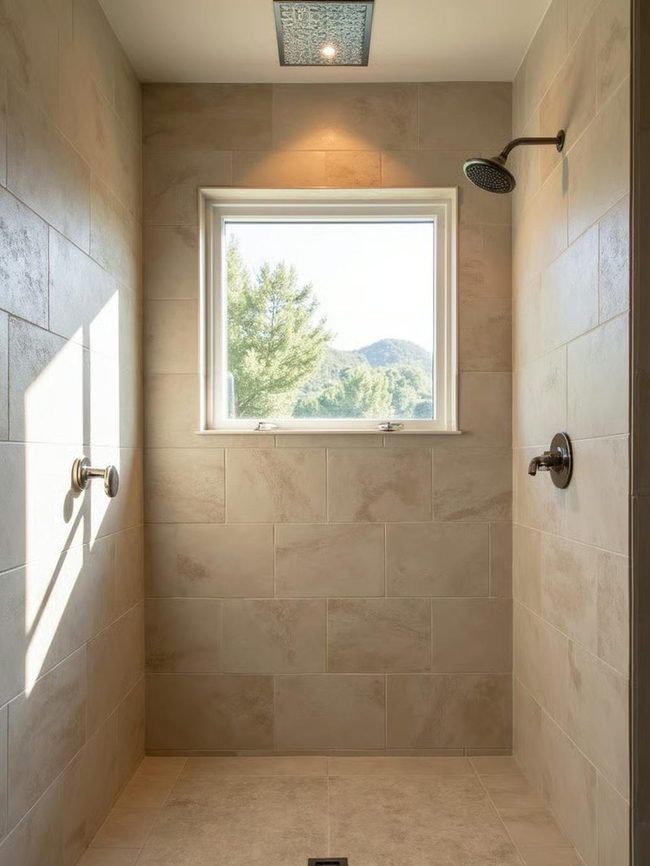
Textured tiles bring dimension to shower design by engaging both sight and touch, with options ranging from subtle raised patterns and gentle ribbing to pronounced wave-like designs and natural stone finishes across ceramic, porcelain, and stone materials.
Shadows and highlights dance across these surfaces as light shifts throughout the day, creating dynamic visual effects that make your shower space feel alive.
While textured tiles add depth and interest to your bathroom, you can want to balance beauty with practicality since deeply grooved surfaces can trap moisture and soap residue.
Stone-look porcelain works well if you want that natural feel without as much maintenance trouble, and vertically ribbed tiles make striking accent walls with a modern edge.
Consider slip resistance ratings if you're planning textured tiles for shower floors where safety matters most.
Grout brushes help you clean grooves effectively and keep your shower looking fresh.
Finding textures that add character without being overly porous keeps your high-moisture space easier to maintain long-term.
Bold colors can infuse personality and energy into your shower once you've settled on the right textured base.
Jewel-Toned Shower Tile Accents
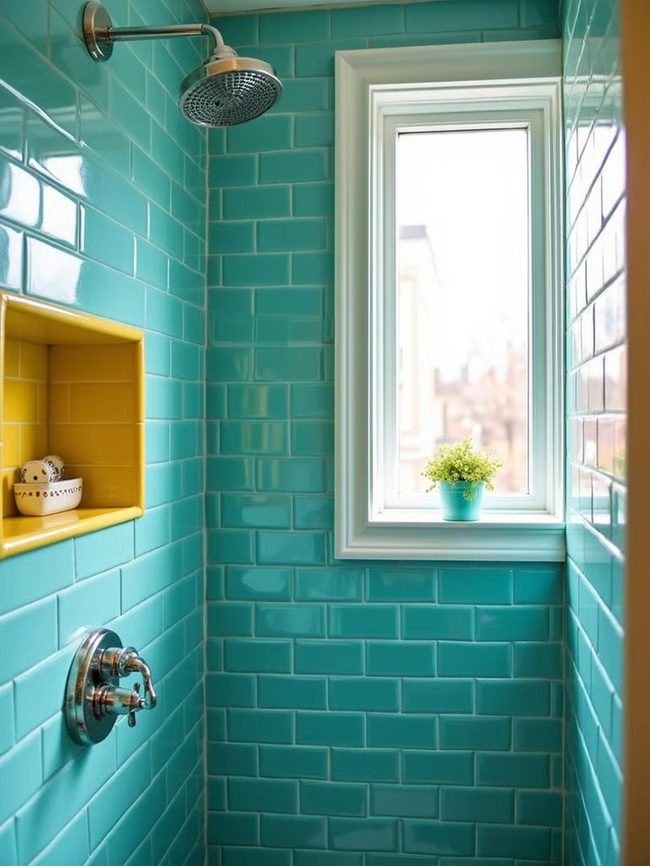
Shower tiles in bold, jewel-like colors, deep sapphires, rich emerald greens, warm terracotta oranges, luxurious amethysts, and energizing yellows, instantly transform a plain shower into a space that reflects who you are and what you love.
If you want to prevent the room from feeling cramped or chaotic, balance these striking hues by using them strategically as accents rather than covering every surface.
Narrow niches work wonderfully for small pops of color, and a single feature wall or geometric pattern can make a huge statement without overdoing it.
Neutral tiles across most walls help ground the space and let your bold choices shine without competing for attention.
Deep jewel-toned glass mosaics in shower niches add luxury and visual interest in just the right doses.
Lighting matters quite a bit when you're working with darker, more saturated colors since they can shift depending on how much light hits them.
Before committing to any color, order samples and see how they look in your bathroom under your own lighting conditions.
This simple step prevents costly mistakes and ensures your bold palette feels right in your specific space.
Gray Porcelain Safety Tiles
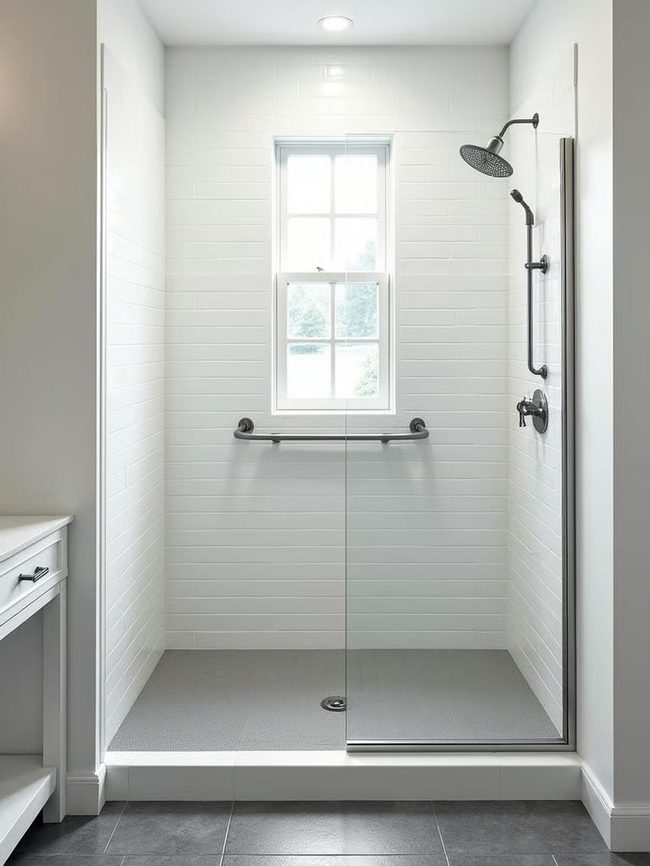
Safety matters most when you're designing your shower, and non-slip tiles make a real difference in preventing accidents.
What actually makes a tile non-slip comes down to its surface texture and how it's rated for friction.
Textured surfaces on these tiles grab your feet better and keep you steady, especially when water and soap are present.
Higher friction ratings mean better protection against slipping, so look for those numbers when you shop.
Beyond the shower floor itself, non-slip tiles work well on benches and the area right outside your shower entrance, since that's where wet feet are most likely to slip.
Porcelain and stone tiles with textured finishes give you good grip, and smaller mosaic tiles add extra safety through more grout lines.
You can also layer in non-slip mats or benches if you want added protection.
Many of us want beautiful bathrooms, but we also care about the planet, so let's explore how to choose tiles that look great and respect the environment.
Glass Tiles Amplify Bathroom Light Naturally
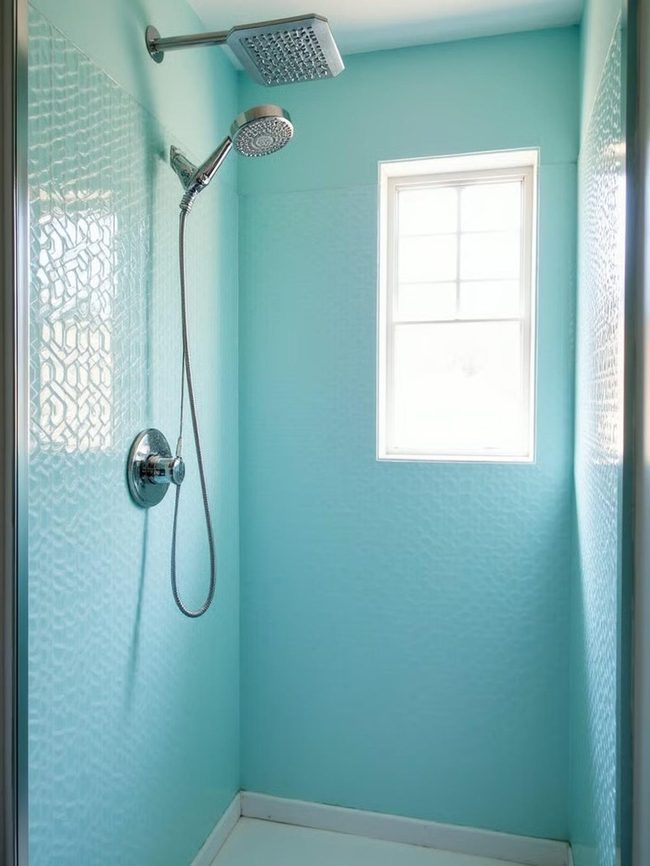
Glass tiles bring a striking brightness to your shower space thanks to their reflective surfaces that bounce light around and make even compact bathrooms feel more open and airy, which works especially well if you lack natural windows.
Their non-porous nature means water runs right off and cleaning takes just minutes, two user-friendly benefits that matter daily in a bathroom.
You should know that being translucent does come with a trade-off, since whatever sits behind them shows through and needs to be clean and uniform for that polished look you're after.
Cost can run higher than ceramic or porcelain options, and getting them installed properly requires a steady hand and precision work.
Grout color matters far more with glass than you might think, so picking the right shade deserves real consideration.
Frosted glass options work well if privacy matters to you while still letting light pass through, and iridescent tiles in shower niches add a shimmering quality as natural light changes throughout the day.
Marble And Slate Shower Elegance
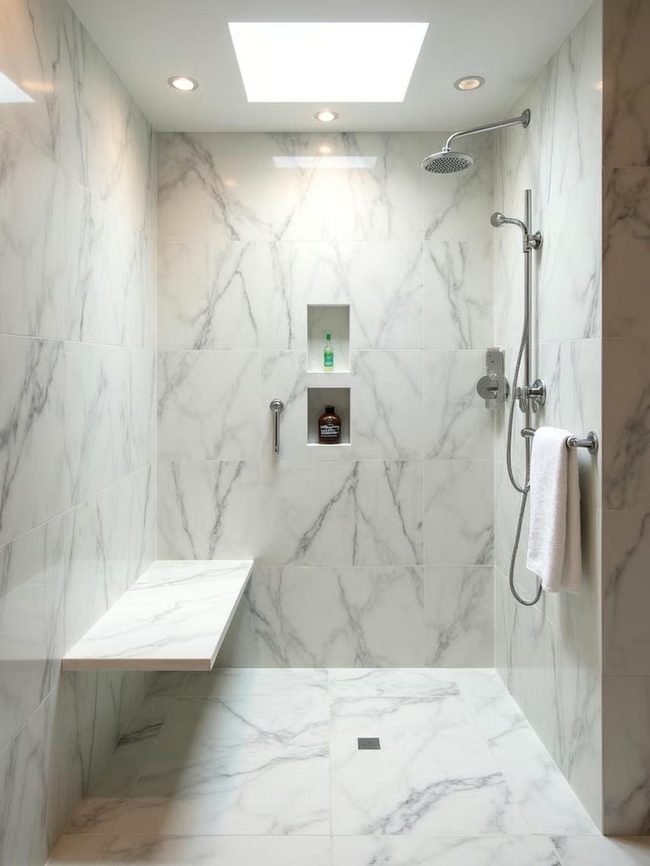
Natural stone tiles like marble, granite, travertine, slate, and limestone stand out as the most visually striking choice for a luxurious shower because throughout one brings its own unique color, texture, and veining that you simply cannot replicate with other materials, polished marble offers classic elegance with its distinctive veins, while textured slate delivers both natural beauty and slip resistance underfoot.
However, we need to be honest about the maintenance side of things, as these porous materials demand regular sealing to prevent water absorption and staining, and you may want to clean them only with gentle, pH-neutral cleaners designed specifically for stone rather than harsh chemicals or abrasive scrubs.
Re-sealing periodically keeps that protective barrier strong and preserves the luxurious appearance that made you choose natural stone in the first place.
Many people don't realize that applying a penetrating sealant before installation actually makes maintenance easier down the road.
You can pair these materials with complementary surfaces to highlight their organic beauty and introduce a spa-like atmosphere in your shower space.
Simple upkeep with mild soap and water between deeper cleanings keeps your investment looking fresh and beautiful for years to come.
Alex Morgan
Founder & Head Home Stylist
Expertise
Interior Design and Space Planning, Color Theory and Eco-Friendly Practices, Traditional Art Techniques and Digital Innovation, Conceptual Development and Interdisciplinary Collaboration
Education
Otis College of Art and Design (Los Angeles, CA)
UCLA Extension (Los Angeles, CA)
Alex Morgan is the creative mind behind Nesthance, where he blends art and design to make home styling simple and inspiring. With a background in fine arts from Otis College and an interior design certificate from UCLA Extension, he brings a unique mix of creativity and practicality to every space.
From smart layouts to eco-friendly touches, Alex believes great design should be easy and accessible. Through Nesthance, he shares simple decorating ideas, DIY projects, and creative tips to help people turn their houses into homes.
When he’s not designing, Alex loves exploring LA’s flea markets, sipping coffee at local cafés, and finding fresh inspiration for his next project.