
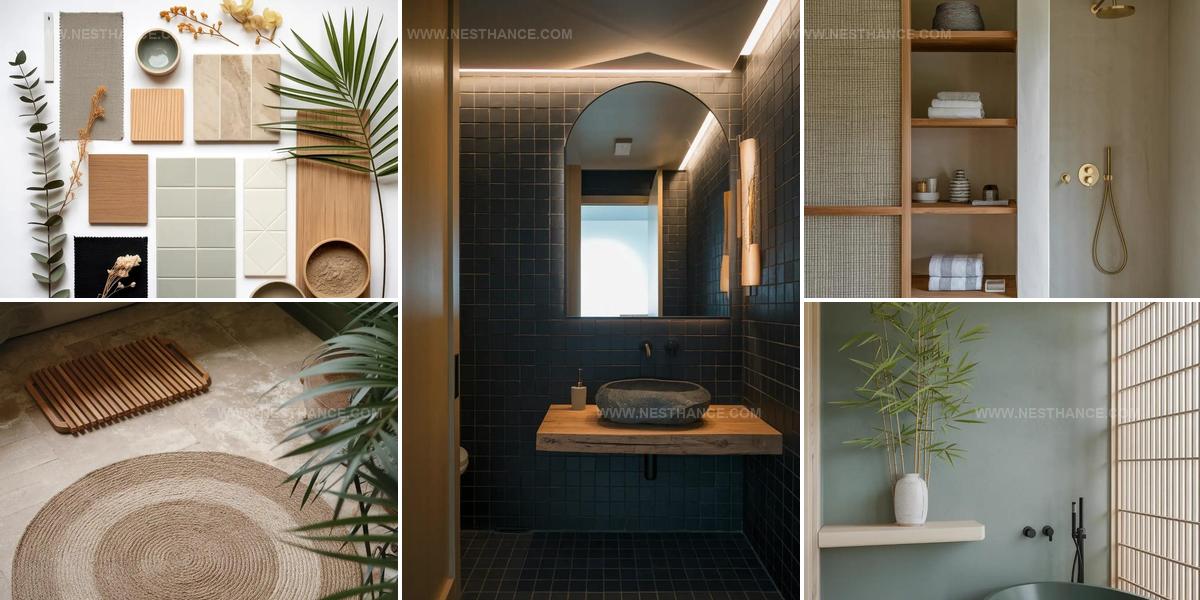
24 Japandi Bathroom Design That Feels Like a Spa

A japandi bathroom design combines the minimalist elegance of Japanese aesthetics with the warm, functional appeal of Scandinavian style to produce spaces that feel both serene and inviting.
The fusion of these two influential design philosophies has gained remarkable popularity among homeowners who appreciate clean lines, natural materials, and a sense of calm in their daily routines.
Soft neutral palettes meet organic textures like wood and stone, while carefully chosen elements maintain a balance between simplicity and comfort.
The approach emphasizes decluttering and intentionality, making every fixture and detail serve both practical and aesthetic purposes.
When you consider how much time we spend in bathrooms preparing for the day or unwinding before bed, creating a tranquil sanctuary becomes genuinely worthwhile.
The beauty of merging Japanese and Scandinavian principles lies in how they complement rather than compete, with shared values of quality, sustainability, and timeless appeal.
Learning how to apply these concepts can help you transform an ordinary bathroom into a peaceful retreat that supports well-being and relaxation.
Matte Textured Tiles in Neutral Tones
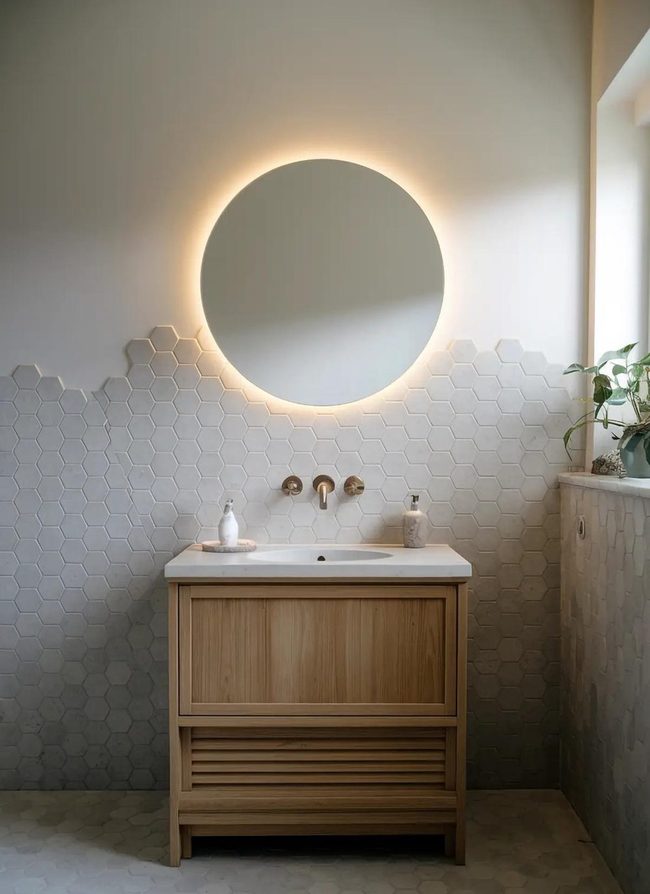
Japandi bathroom tiles bring real depth to your space through their textured surfaces and understated finishes.
Matte ceramic, stone, or lightly grooved tiles prevent the room from looking plain and one-dimensional.
When selecting tiles for this style, I recommend sticking with neutral shades like gray, beige, or soft black because they keep the bathroom feeling clean while still building visual layers.
These muted colors work well with the minimalist nature of Japandi design and let other elements in the room shine.
You can layer different tile sizes or finishes to add more complexity without overwhelming the space.
Even simple tiles become interesting when they have texture and a matte quality instead of high shine.
Neutral tones also make it easier to swap out accessories and other decor down the road without clashing with your tile choice.
Black and Wood Bathroom Drama
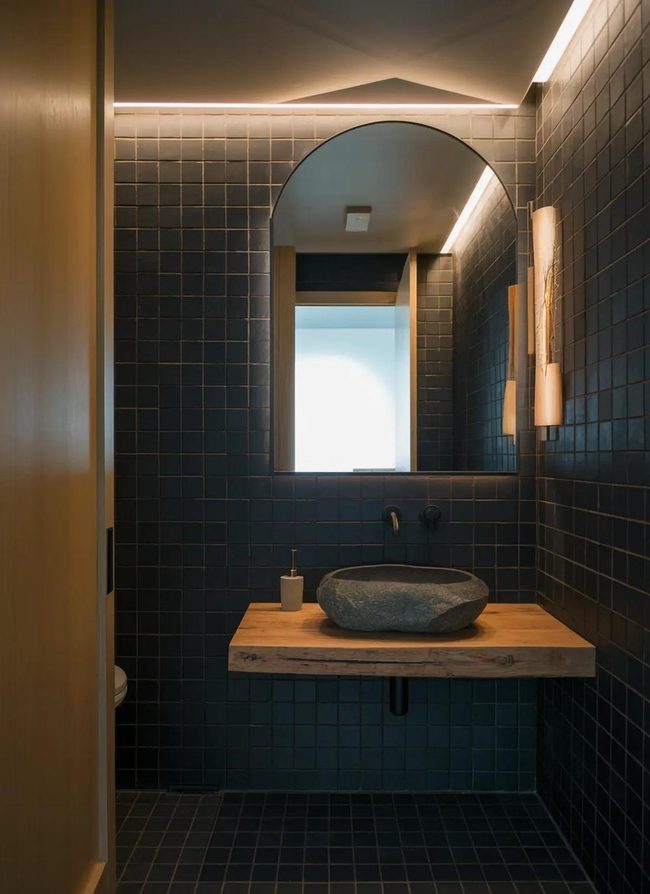
Black Japandi bathrooms make a bold statement with their dramatic, modern energy, and you can achieve this look by combining dark tiles with black fixtures and natural wood accents that create striking visual contrast throughout the space.
Large areas of deep color paired with lighter wood tones immediately catch attention and set a sophisticated mood.
We recommend incorporating soft lighting into your design since it prevents the dark palette from feeling cold or unwelcoming and instead keeps things warm and balanced.
Pendant lights or wall sconces work well above the vanity and mirror area.
Wood shelving and accessories break up the darkness and add organic warmth to the room.
Small plants or natural materials also help soften the boldness of black surfaces.
You don't need much to make this style work since the color scheme does most of the heavy lifting on its own.
Simple, uncluttered spaces actually highlight the power of black and wood together.
Japanese Shoji Sliding Doors
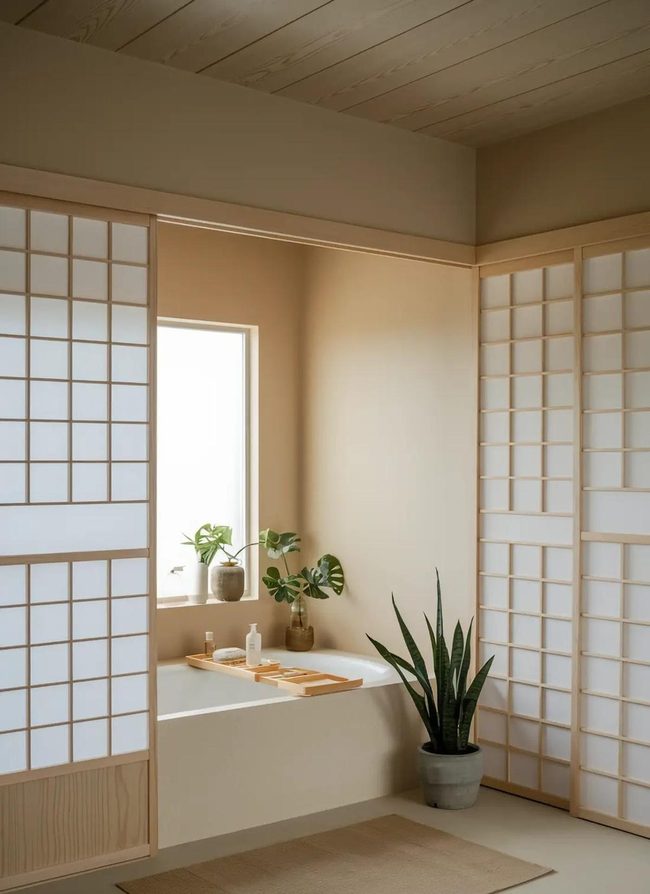
We love how these doors bring a distinctly light and airy feel to the room without demanding attention, which is exactly what you need when working with a Japandi approach.
Keep your door finishes in soft neutrals-think pale wood tones, white, or warm grays-so they blend seamlessly into the rest of your bathroom rather than standing out.
This kind of restraint in color choice aligns perfectly with the Japandi palette and lets other elements shine.
Since these doors slide rather than swing open, you gain back precious square footage that hinged doors would otherwise claim.
Beyond just looking good, sliding doors work well for any bathroom size and don't require much maintenance.
If you want to enhance the effect even more, consider matching the door frame material to your vanity or shelving for a unified look throughout the space.
Layered Bathroom Light Fixtures
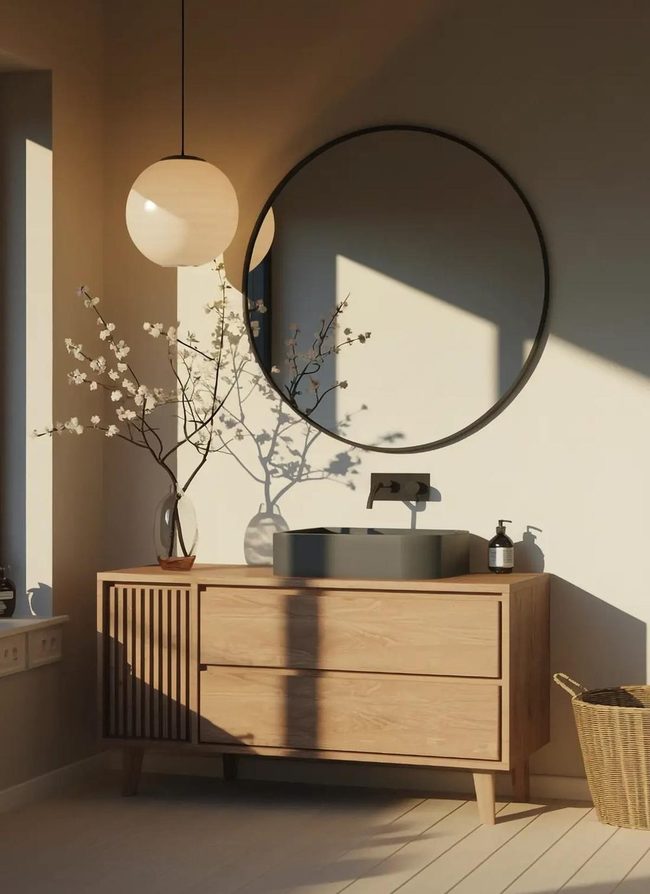
Pendant lights and lantern-style fixtures hung at the right height give your bathroom a warm, welcoming glow that makes the space feel instantly calm.
Wall sconces placed on either side of your mirror add gentle illumination without overwhelming the room.
We recommend skipping bright overhead lights because they clash with the peaceful mood you want in a bathroom.
Japandi lighting focuses on creating soft layers of light rather than one harsh source.
You can combine different fixture styles to achieve depth and warmth throughout the space.
Low-wattage bulbs work well with these fixtures and keep the atmosphere relaxed.
Installing dimmers lets you adjust the brightness based on your needs and mood.
Natural materials like wood and ceramic in your light fixtures tie directly into the Japandi design style and strengthen the overall feel.
Mirrors Expand Tiny Bathrooms
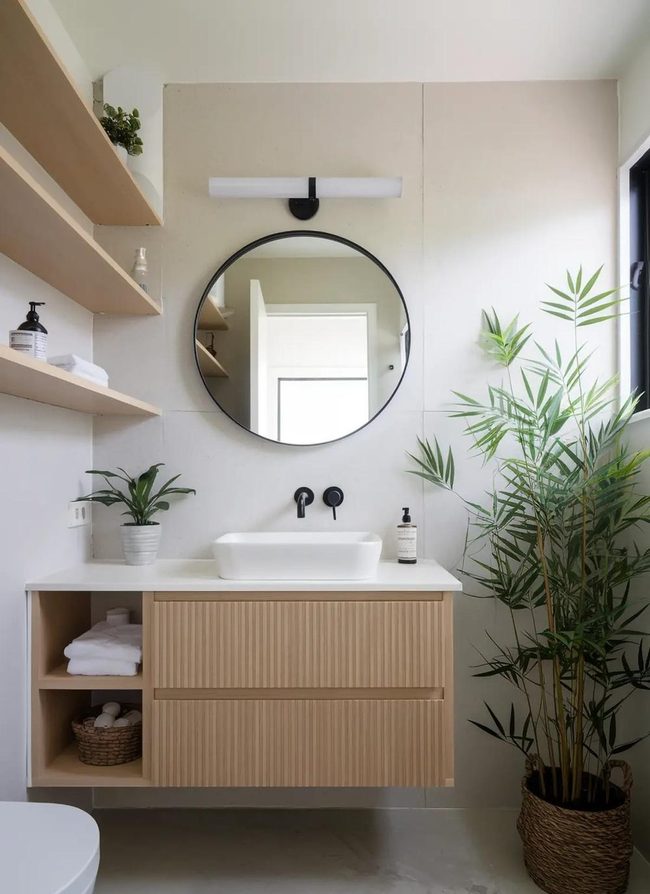
Mirrors are game-changers in a small bathroom because they bounce light around and make the space feel twice as deep, which really helps if you don't have much natural sunlight coming in.
Japandi style works wonderfully in tight bathrooms since it naturally embraces simplicity, smart storage solutions, and light colors that all help rooms feel bigger and more open.
Painting your walls in pale beige, soft taupe, or crisp white keeps things airy and prevents the space from feeling cramped Storage that doubles as design pieces, like woven baskets or low shelving, keeps essentials hidden while staying true to the style.
Light tones throughout the space keep things calm and make the bathroom feel less confined.
Simple lines and minimal ornamentation mean you're not overwhelming the eye in a compact area.
By sticking with these principles, your small bathroom becomes both functional and peaceful.
Green Bathroom Plants Natural Balance
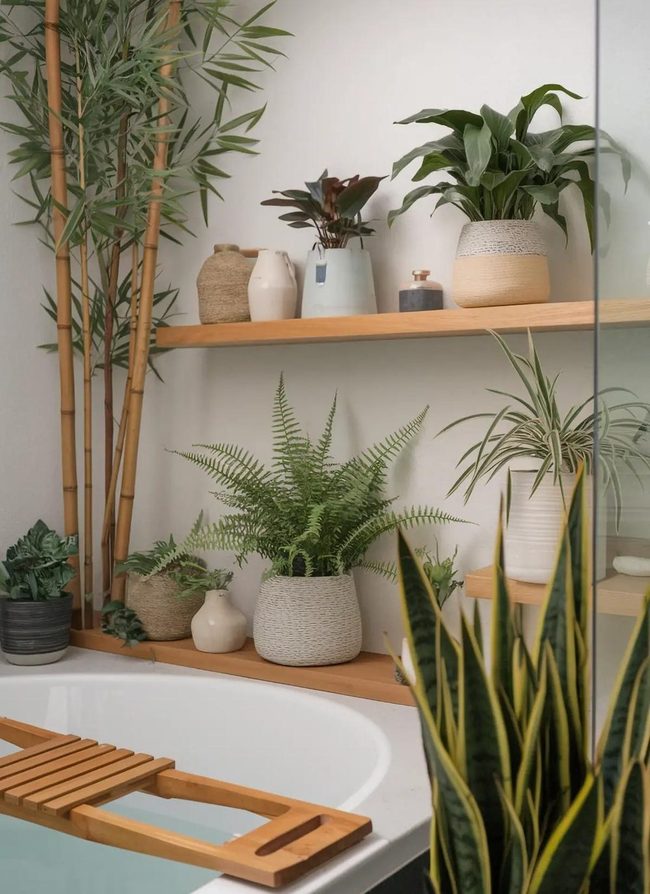
Lush greenery from bamboo or ferns serves as a striking visual element that brings life into your bathroom space, and placing them on windowsills, shelves, or beside your sink lets you enjoy their beauty daily.
These plants create a wonderful contrast against the calm, neutral colors that define Japandi design.
When you group plants of different heights together, you build an organic arrangement that feels naturally balanced and well-organized.
Their presence refreshes the air while also adding dimension to your bathroom layout.
We recommend positioning at least a few plants where they'll catch natural light, which helps them thrive and keeps your space feeling fresh and alive.
Ribbed Wood Depth Bathroom
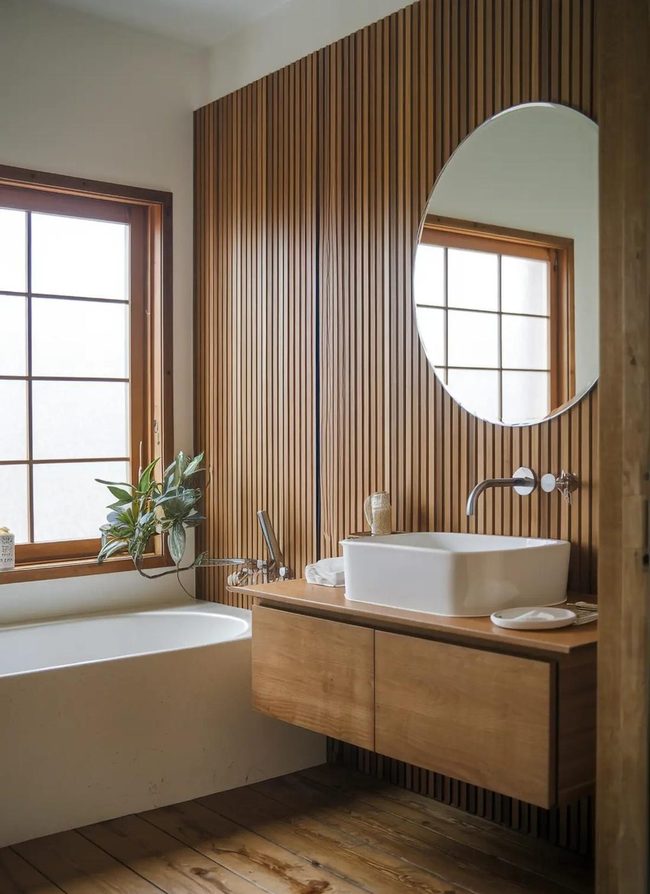
Textured wall panels offer one of the most striking ways to add dimension to your bathroom, and you'll notice how ribbed wood, slate, or soft stone finishes instantly elevate the space with their three-dimensional surfaces.
Behind your bathtub, along the vanity wall, or in a tight entryway, these panels help define different zones and anchor the room's aesthetic.
What makes them work so well is their natural quality and neutral colors, which warm up the space without overwhelming it.
We recommend sticking with authentic materials rather than artificial substitutes, as the genuine texture reads differently to the eye.
If you're drawn to minimal Japandi style, these panels blend perfectly with that quieter, more restrained approach.
They don't demand attention or bold patterns, yet their presence shapes how the entire room feels.
The best part is how straightforward they are to install in most bathrooms.
You can introduce this depth without clutter or fuss, and the results last for years.
Yellow Wood Bathroom Calm
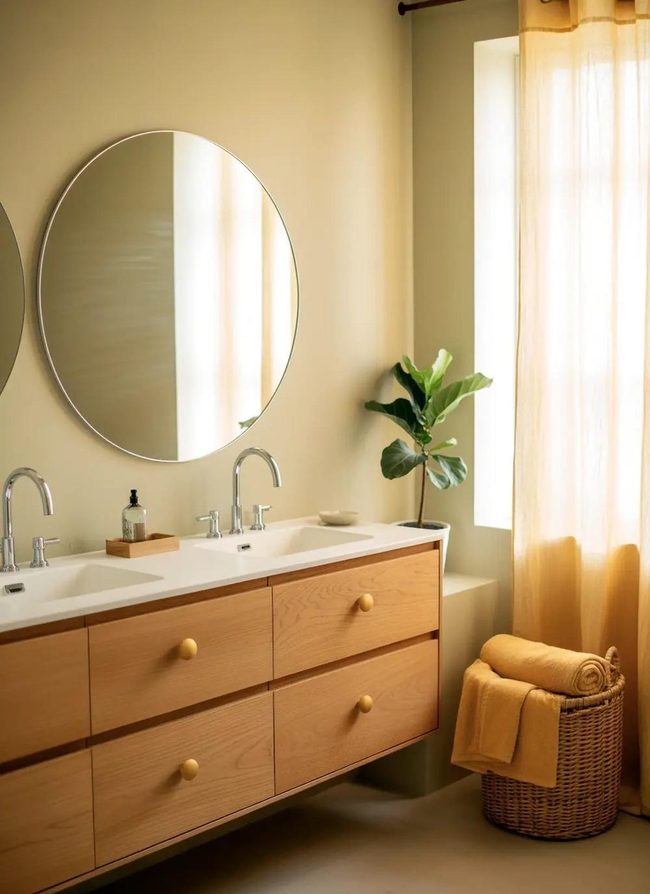
Yellow Japandi bathroom fills the room with warmth and energy while keeping things calm and balanced.
Muted mustard, clay yellow, or golden tones pair beautifully with natural wood finishes and clean lines that define this style.
You can introduce these shades through painted walls, which immediately shift the entire mood of the space, or go subtler with towels and vases if you prefer a gentler approach.
Small pops of color scattered throughout still brighten the room and add personality without clashing with the minimalist aesthetic.
Wood shelving and fixtures work alongside these warm yellows to ground the design in nature.
Even modest touches like a single hand towel or ceramic piece bring warmth and playfulness to the bathroom while respecting the simplicity that makes Japandi design so appealing.
We find this balance between color and restraint keeps the space feeling fresh and inviting rather than overdone.
The result is a bathroom that feels both energized and peaceful, a rare combination that makes everyday moments there more enjoyable.
Green Japandi Bathroom with Natural Materials
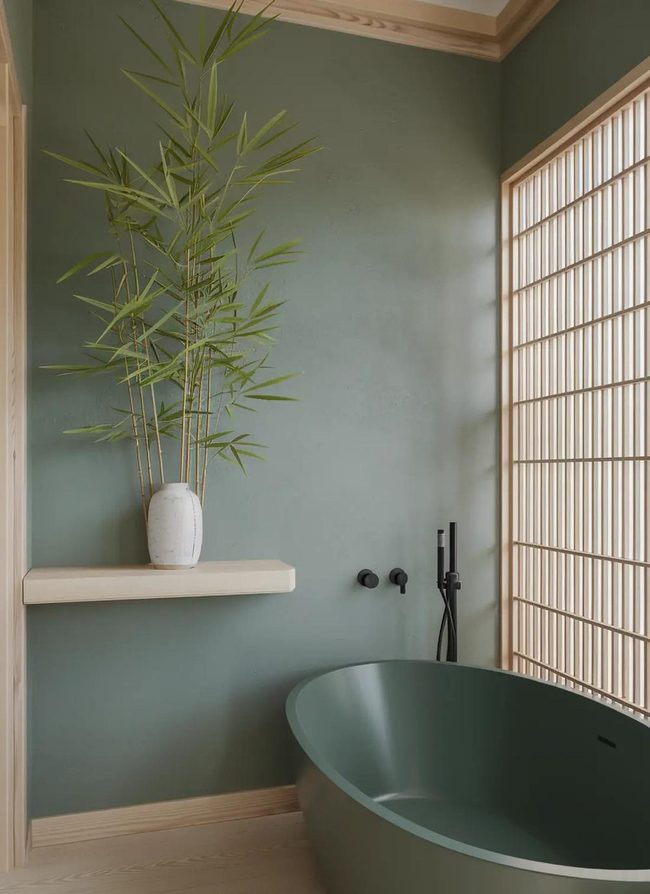
Green japandi bathroom brings nature into your daily routine and keeps things feeling calm and balanced.
Start by painting your walls in soft sage or olive tones, or use these colors through plants and accessories if you prefer to keep things neutral.
Wood furniture pairs wonderfully with these earthy shades and lets natural light bounce around the space in a warm way Wooden mirrors and storage pieces ground the room in natural materials and honest design.
Stone or wood tiles on the floor add another layer of earth-inspired texture that feels grounded beneath your feet.
Mixing in these natural elements together with muted green tones gives you a bathroom that feels like a peaceful retreat you actually want to spend time in.
By keeping the color palette understated and letting wood and plants do the talking, you end up with a space that feels both clean and alive at the same time.
Floating Vanity Clean Lines
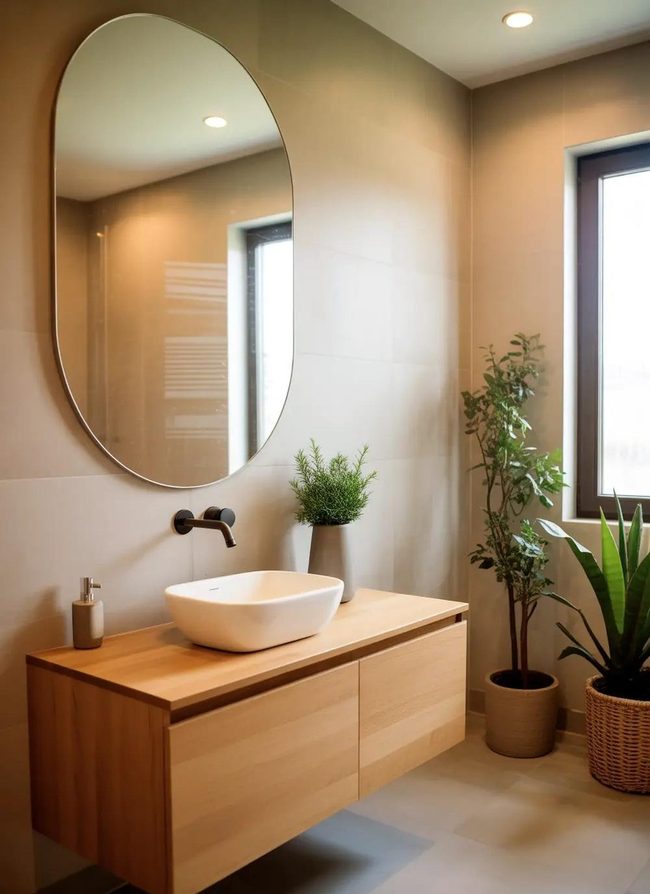
Floating vanities with their sleek, uncluttered design make any bathroom feel more spacious and open, which is why I recommend them when you're working with limited square footage.
You can find options with concealed drawers and narrow compartments that hide away all your daily essentials while keeping the room looking calm and organized.
Japandi style brings together simple, straight lines with smart storage solutions, so nothing sits out on the counter collecting clutter.
When you choose one of these vanities, the bathroom instantly feels more peaceful because everything has its place and the lines stay clean.
Many of these pieces also offer deep storage space inside, which means you get plenty of room without any visible mess Go for a floating model if you can, and your floor space will feel much bigger than before.
Built-In Shelves, Japanese Minimalism
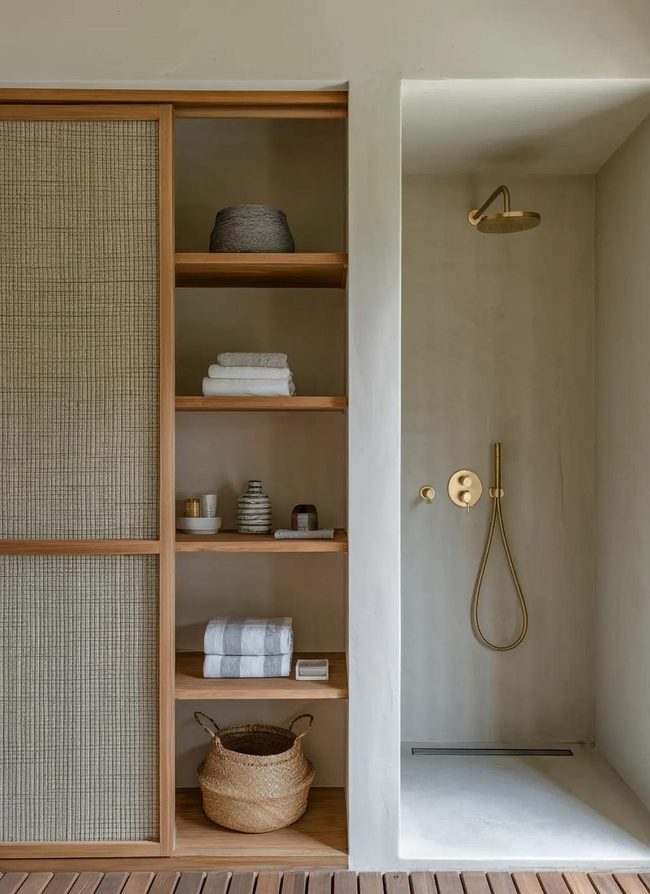
Built-in shelves positioned beside your bathtub or above the sink bring together style and function in a Japandi bathroom, and they keep your everyday items right where you need them.
Integrated shelving works well for modern spaces since it saves room and looks clean without taking up floor area.
You can arrange a few carefully selected bottles, folded towels, or small plants on these shelves, and they become an interesting element to look at without feeling busy or overdone.
We like how this approach avoids clutter while still giving your bathroom a polished look.
The simplicity of shelving styled with just a few objects lets your eyes rest, which fits perfectly with Japandi values.
Open shelving also makes it easier to grab what you need during your daily routine.
Mixing practical storage with a calm, minimal appearance means your bathroom serves you well and looks good at the same time.
Washi Paper Light Filtering
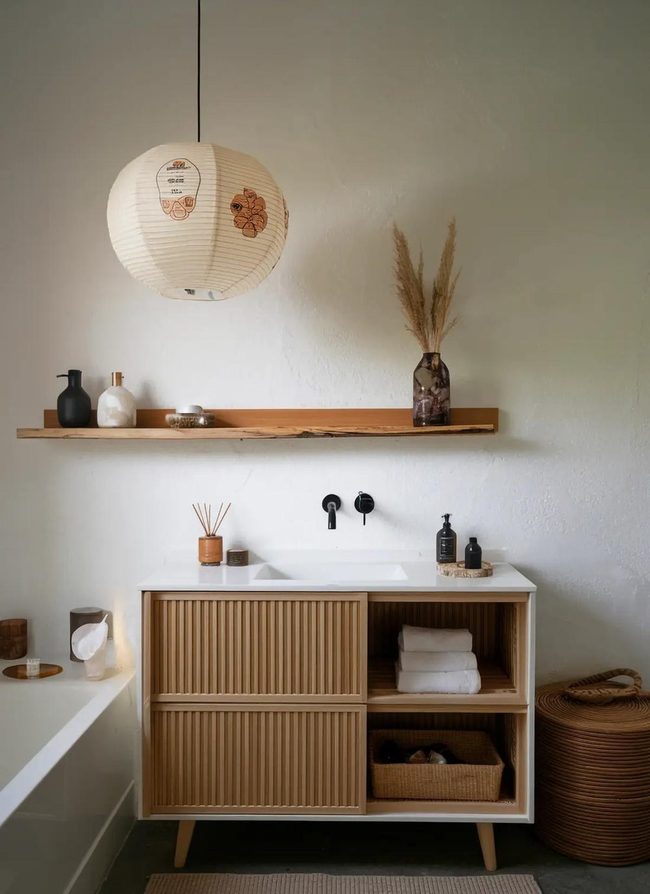
Washi paper elements stand out as one of the most striking additions you can make to a Japandi bathroom because they catch light in beautiful ways and instantly shift the entire mood of your space.
Screens, lanterns, and lampshades crafted from this traditional material introduce layers of texture that feel substantial yet remain weightless at the same time.
When natural light floods your bathroom, washi paper glows and creates gentle shadows across your walls and surfaces.
You'll notice how these pieces balance the minimalist aesthetic with warmth and character that harder materials simply cannot match.
Installing washi paper accents takes minimal effort but delivers noticeable results in how your bathroom feels when you step inside.
Light passes through the paper in soft patterns that change throughout the day, so your bathroom never looks quite the same twice.
If your bathroom gets decent natural light, washi paper becomes even more valuable because it lets you avoid harsh overhead lighting and rely on gentler illumination instead.
Even in smaller bathrooms, these elements add depth and sophistication without overwhelming the space or making it feel cramped.
Gray Wood Warmth Balance
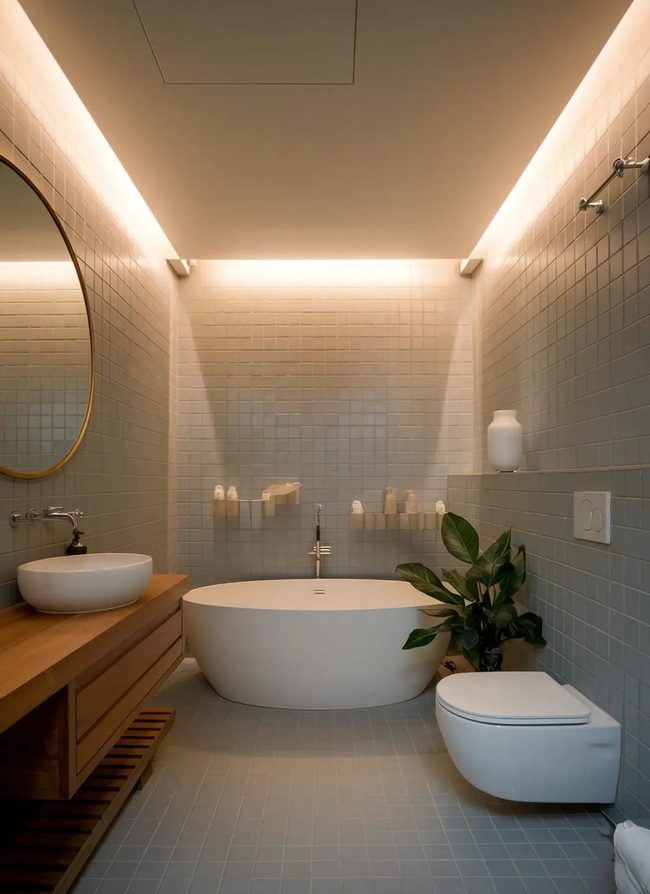
Gray Japandi bathrooms stay relevant through the years while working across many design styles, and you can achieve this look by combining gray tiles with warm lighting to build a balanced room that feels both soothing and grounded.
Wood accents matter here since they prevent the space from becoming too sterile or dull and bring in natural warmth that balances the cooler gray tones.
When you layer these elements together-the neutral tile foundation, golden light sources, and natural wood touches-the bathroom avoids feeling harsh and instead offers a calm retreat.
I find this approach works well because it keeps things simple without sacrificing character.
We've seen how adding wooden shelves, a timber vanity, or even small wood storage pieces can shift the entire mood of a gray bathroom.
You don't need much to make a difference; even one or two wooden elements will help ground the space and prevent it from feeling cold.
Light plays a supporting role here, softening edges and letting the textures shine through naturally.
Gray paired with these warm additions gives you a bathroom that feels peaceful and lived-in rather than sterile or impersonal.
Stone Vessel Sink Japandi Bathroom
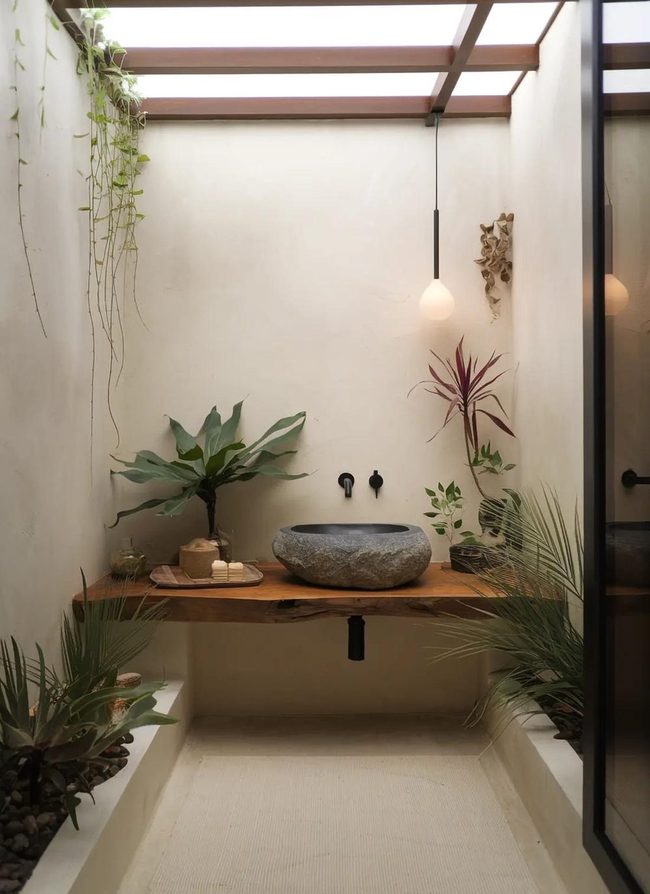
Large stone vessel sink makes an immediate statement in your bathroom space, and pairing it with soft lighting from lanterns or frosted fixtures brings calm into the room.
Natural materials like wood, stone, and bamboo work well together in Japandi design, so consider adding these elements through shelving or small accents.
Plants like bamboo, bonsai, or snake plants sit nicely on shelves or in corners and help purify the air while keeping things serene.
We find that neutral colors such as white, beige, and gray help the space feel open and peaceful rather than cluttered.
Minimalist storage keeps your counters clear, and this simple approach lets each item you display feel purposeful.
Your bathroom becomes a personal retreat where you can unwind and wash away stress from the day.
Even small touches like a wooden bath caddy or stone soap dispenser reinforce that calm, organized feeling throughout the space.
Round Black-Framed Mirror Japandi
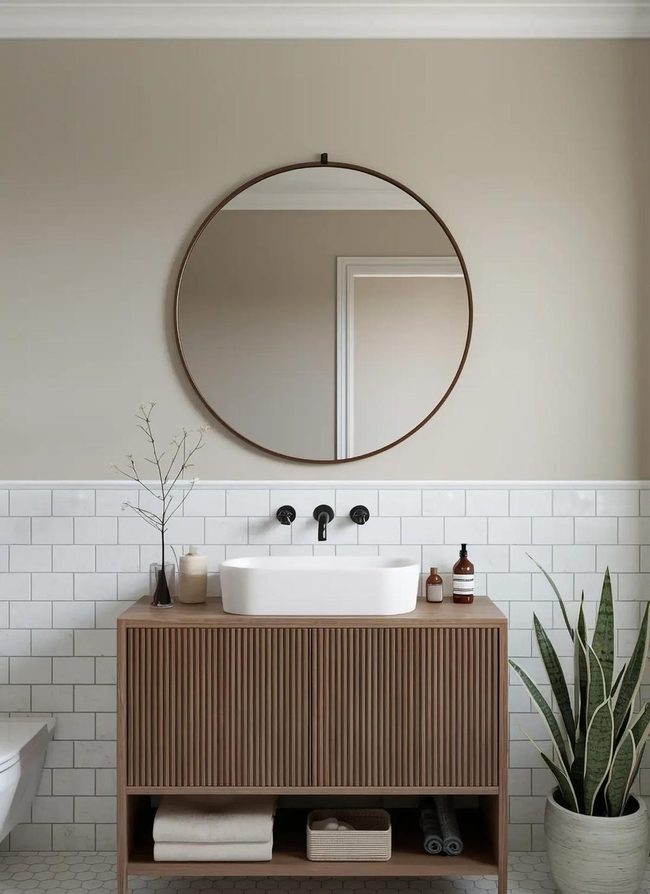
Japandi-style mirror serves double duty in your space, offering both practical reflection and visual interest through its clean lines and uncluttered design.
Round mirrors work particularly well if your room leans toward straight edges and angular furniture, as the soft curves balance out those linear elements.
You'll want to look for frames in black or natural wood tones, which blend naturally with the rest of your décor without demanding attention.
If you have the option, selecting one with built-in lighting is worth considering since it provides a warm glow throughout the space and helps with everyday tasks like getting ready in the morning.
Simple frames keep the aesthetic consistent with Japandi principles, which favor restraint and function over ornamentation.
The mirror becomes part of your room's bones rather than standing out as a separate accent piece.
Light wood frames feel less severe than darker options while still maintaining that minimalist vibe you're going for.
Whether your mirror hangs alone or sits alongside other pieces, its straightforward style lets everything else in the room breathe and maintain its own character.
Marble Veins Meet Wooden Simplicity
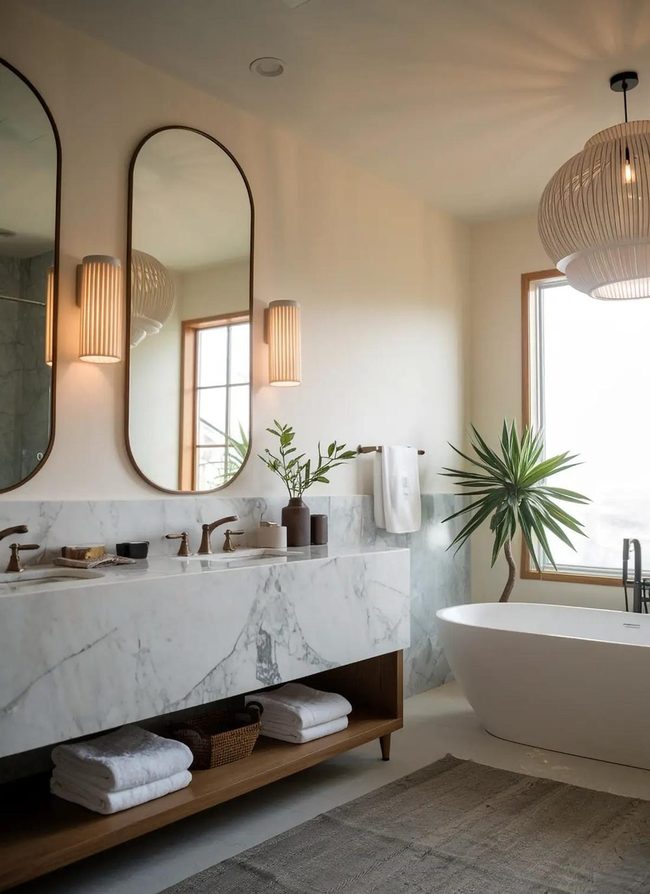
Marble countertops with delicate veining and a soaking tub finished in eggshell tones make an immediate visual statement in a Japandi bathroom, and when you add handcrafted wooden stools to the mix, the space takes on a luxurious yet understated character that feels both grounded and refined.
Designer light fixtures in muted metals or natural stone amplify this sense of quiet elegance without overwhelming the room.
Luxury in this design style doesn't announce itself loudly or demand your attention through bold gestures.
Instead, it reveals itself through quality materials and thoughtful choices that reward you with a calming, elevated retreat.
Pairing these elements together gives you a bathroom that balances indulgence with restraint.
We've learned that this approach to luxury works because it respects the Japandi philosophy of simplicity and authenticity.
You'll find that spaces designed this way feel both indulgent and peaceful at the same time.
It's the kind of bathroom where luxury whispers rather than shouts.
Natural Bamboo Storage Solutions
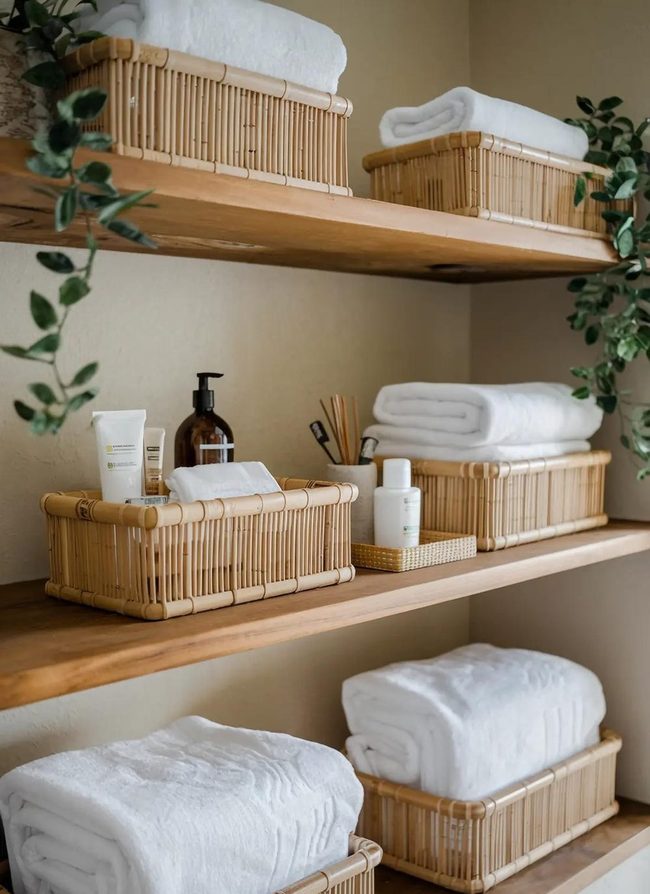
Bamboo storage baskets and trays stand out as one of the most visually striking choices for your Japandi bathroom because their warm, natural tone immediately draws attention and brings character to the space.
You'll find that these pieces work wonderfully alongside wooden elements, and together they soften the room's overall appearance while keeping everything looking balanced.
What makes them so practical is that they're lightweight and genuinely functional, so you can move them around without hassle whenever you need to rearrange.
The natural texture of bamboo blends in seamlessly with other organic materials in your bathroom, making the space feel connected and purposeful.
I like how these baskets serve double duty by handling your storage needs while also looking good doing it.
Beyond the obvious benefits, bamboo storage solutions fit perfectly into the Japandi design philosophy because they honor natural materials and simple beauty.
When you add these pieces to your bathroom, you're not just organizing your space-you're enhancing how it feels and looks all at once.
Muted Botanicals Japandi Wall
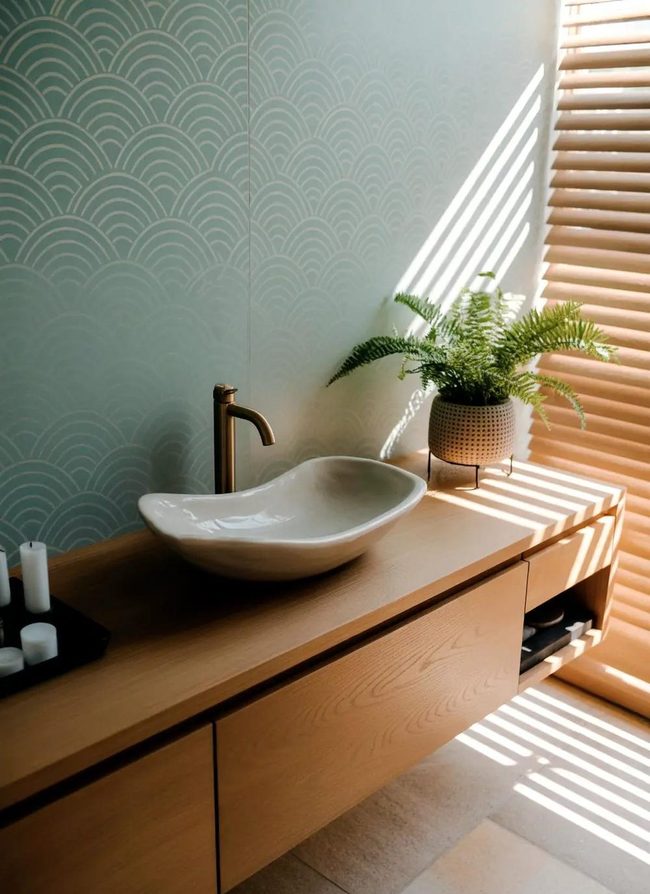
Japandi bathroom wallpaper gives your space a distinctive personality while maintaining that peaceful, minimalist vibe you want.
Nature-inspired prints or soft geometric patterns bring visual interest without overwhelming the room or competing with clean lines.
Wallpaper with these designs works best when you use it on just one accent wall instead of covering every surface.
Soft colors paired with natural motifs keep everything balanced and relaxing rather than busy or chaotic.
We recommend choosing patterns that reference plants, water, or simple shapes in muted tones like grays, blacks, and creams.
Restraint is key here because less truly allows the design to stand out and make an impression.
Your bathroom becomes more personal and thoughtful when you apply these touches with care and wisdom.
Light Wood Minimalism Meets Craftsmanship
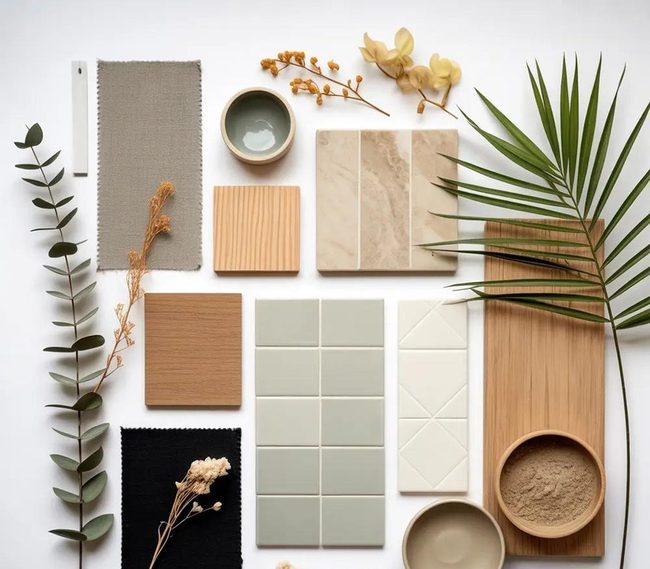
Japandi design merges Japanese and Scandinavian influences into a style that feels both grounded and serene, drawing from Japan's deep respect for craftsmanship and wabi-sabi philosophy, which celebrates imperfection and how materials age naturally over time.
Scandinavian hygge-that philosophy of building warmth and comfort into everyday spaces-layers on top of these Japanese principles and creates something balanced between intentionality and ease.
You'll find this blend works because it honors both the quiet restraint of Japanese design and the cozy, livable approach that Scandinavians bring to their homes Both cultures value simplicity, but they arrive there from different angles: one through meditation and acceptance, the other through a desire to make life comfortable and unpretentious.
The result is a design direction that feels calm without being sparse, and warm without being cluttered.
It's becoming increasingly popular because modern homes can benefit from this balanced approach to living well.
Natural Jute Bathroom Floor Rug
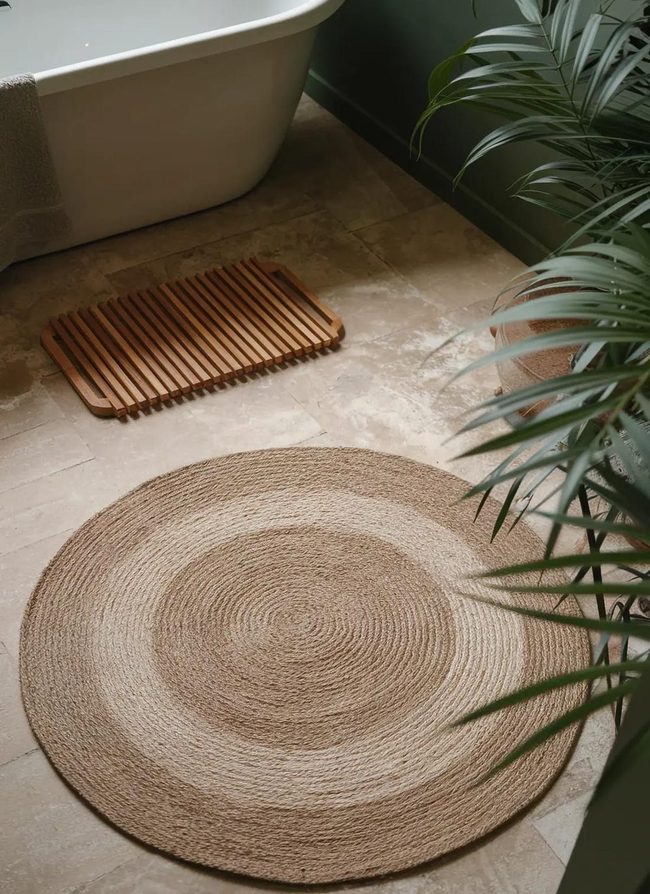
Start with a quality rug that brings comfort underfoot and warmth to your bathroom floor-natural materials like jute or cotton work beautifully for this aesthetic and feel great when you step on them.
Simple patterns and neutral tones are the way to go since they blend seamlessly with the rest of your space and don't compete for attention.
We recommend measuring your bathroom first so you know exactly what size will fit best without overwhelming the room.
These practical floor coverings also help with moisture and safety, making them both functional and nice to look at.
You can layer rugs if you want more texture, or stick with one solid piece for a cleaner appearance.
Most people find that a rug grounds the whole room and makes the space feel more complete and lived-in rather than cold and bare.
Stone Vessel Above Counter
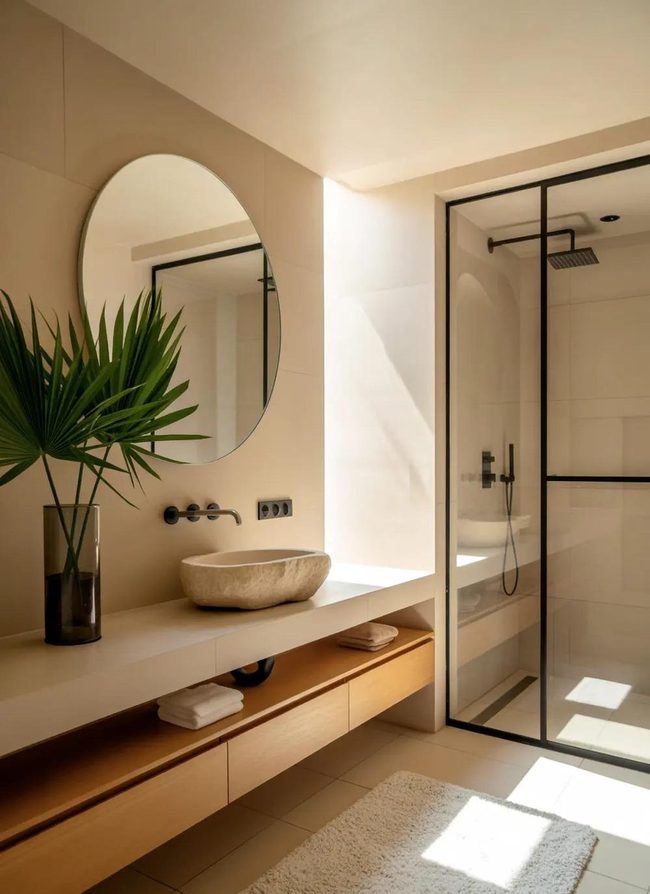
Stone vessel sinks deliver an earthy, grounded presence in your Japandi bathroom space and serve as a natural focal point that connects you to the outdoor world.
You'll notice how their substantial weight and tactile surface quality embody the core principle of this design style, which celebrates nature's materials and forms.
When you pair a stone sink with wooden countertops, the contrast creates a beautiful balance that makes your bathroom feel peaceful rather than cluttered Stone vessels sit above the counter, so they command attention while maintaining that organic, unpretentious quality that defines Japandi design.
Adding one requires minimal effort but shifts the entire feel of your space in a meaningful way.
Even if you're working with a smaller bathroom, a stone sink anchors the area with authenticity and warmth.
It's one of those elements that does its job well and looks beautiful doing it.
Minimal Storage, Maximum Space
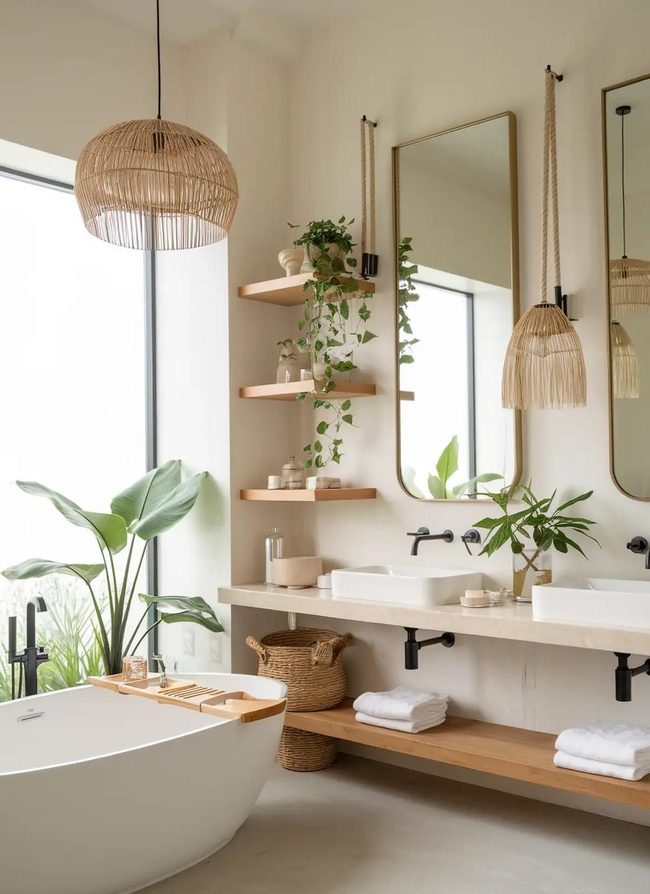
Floating shelves keep a room open while giving you space for everyday items.
Wall niches and hidden compartments help tuck clutter away, which supports the clean and calm feeling of Japandi design.
Curved Stone Tub With Earthy Layers
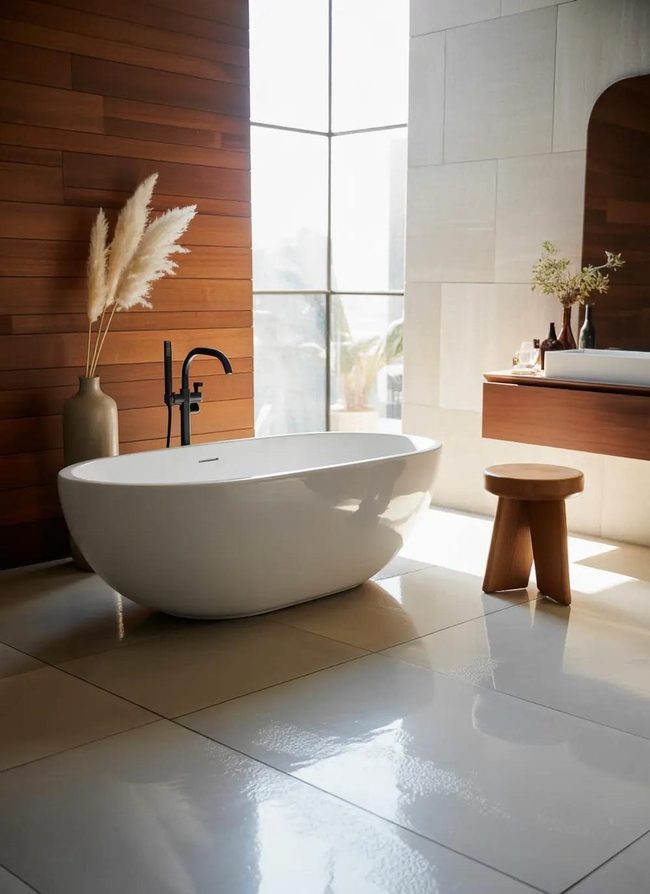
Freestanding bathtubs with their soft curves and smooth finishes in natural stone or ceramic materials become a striking centerpiece in any bathroom and pair perfectly with the Japandi style.
You can build a peaceful atmosphere around the tub by layering in earthy textures and placing plants nearby to establish a soothing visual rhythm.
Wood accents, neutral wall tones, and simple furnishings keep the space feeling balanced and uncluttered.
Natural light streaming through the window enhances the calm mood and highlights the tub's beautiful shape.
We recommend choosing plants that thrive in humid environments so they stay healthy near your bathing area.
Keeping decorative items minimal allows the room's simplicity and function to shine through.
When everything aligns this way, the bathroom becomes a quiet retreat where you can unwind and recharge.
Pale Wood Handle-Free Vanities
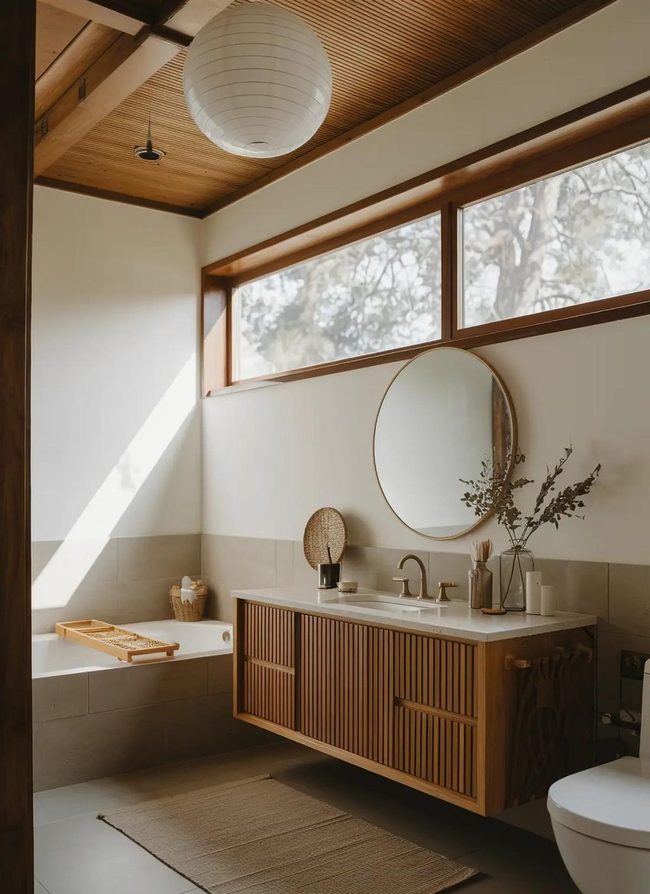
Modern Japandi bathrooms stand out with their sleek handle-free vanities in pale wood that catch the eye immediately, paired with matte finishes and understated lighting that keeps everything balanced and uncluttered.
What makes these spaces so appealing is their approach to restraint-they skip the unnecessary items so nothing competes for your attention.
Smooth surfaces and minimalist hardware work together throughout the design, and even smaller touches like rounded mirrors or thin faucet lines reinforce how form and function blend seamlessly.
You'll notice the calm atmosphere comes from thoughtful choices about what stays and what goes.
We can apply this principle in our own bathrooms by selecting just a few quality pieces rather than filling every corner.
Natural materials like wood bring warmth without overwhelming the space, and matte surfaces avoid any gloss or shine that might feel too busy.
Low-key lighting completes the mood and helps you relax in your own bathroom.
Simple design doesn't mean boring-it means everything earns its place through honest beauty and usefulness.
Alex Morgan
Founder & Head Home Stylist
Expertise
Interior Design and Space Planning, Color Theory and Eco-Friendly Practices, Traditional Art Techniques and Digital Innovation, Conceptual Development and Interdisciplinary Collaboration
Education
Otis College of Art and Design (Los Angeles, CA)
UCLA Extension (Los Angeles, CA)
Alex Morgan is the creative mind behind Nesthance, where he blends art and design to make home styling simple and inspiring. With a background in fine arts from Otis College and an interior design certificate from UCLA Extension, he brings a unique mix of creativity and practicality to every space.
From smart layouts to eco-friendly touches, Alex believes great design should be easy and accessible. Through Nesthance, he shares simple decorating ideas, DIY projects, and creative tips to help people turn their houses into homes.
When he’s not designing, Alex loves exploring LA’s flea markets, sipping coffee at local cafés, and finding fresh inspiration for his next project.